
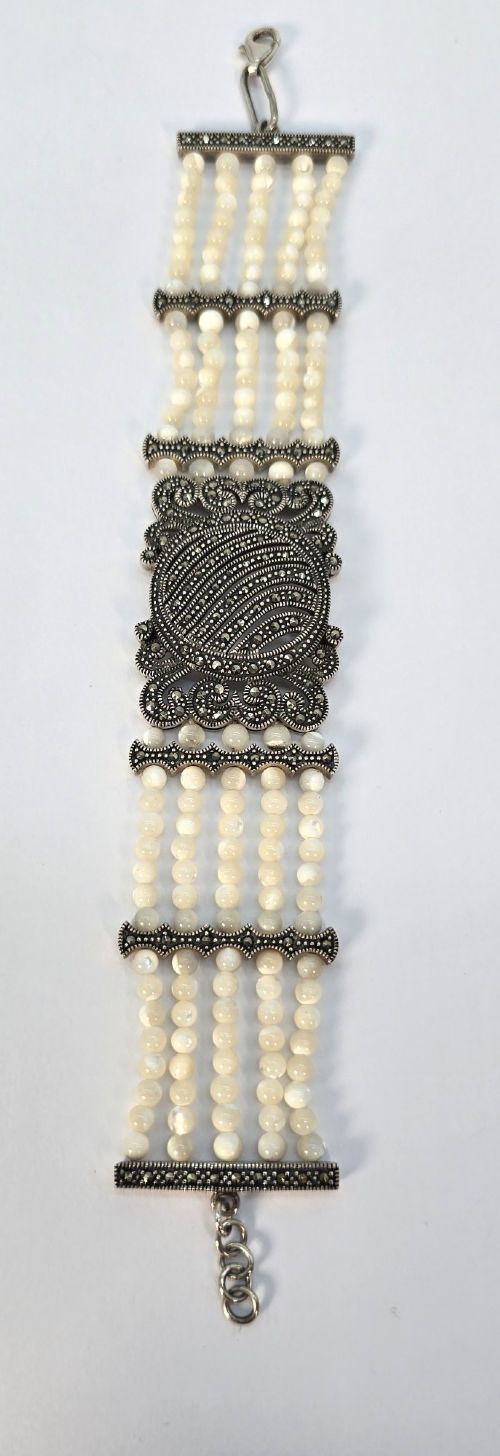


1920s Art Deco Bracelet
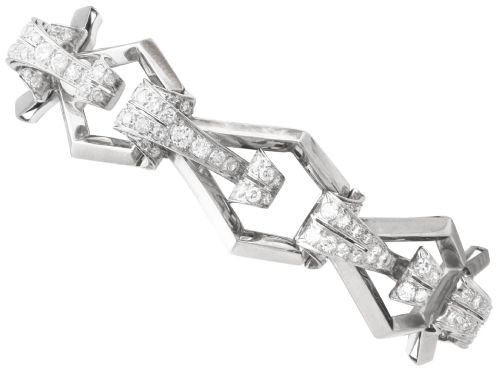
A 1920s art deco bracelet brings geometric brilliance to the wrist through period diamonds and platinum.
1920s Art Deco Bracelet
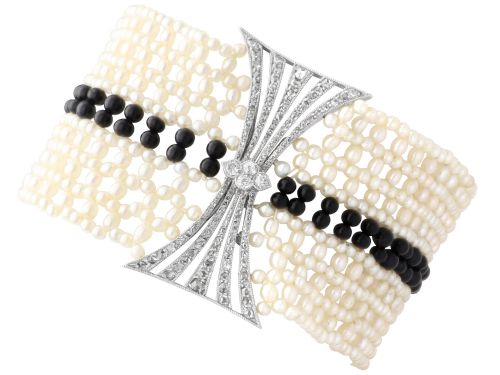
A 1920s art deco bracelet embodies the architectural and geometric design language of the early twentieth century. When searching for a 1920s art deco bracelet, collectors encounter flexible line bracelets, rigid bangles, and integrated cocktail watches. The pieces available range from diamond-set platinum creations to silver, enamel, and Bakelite alternatives.
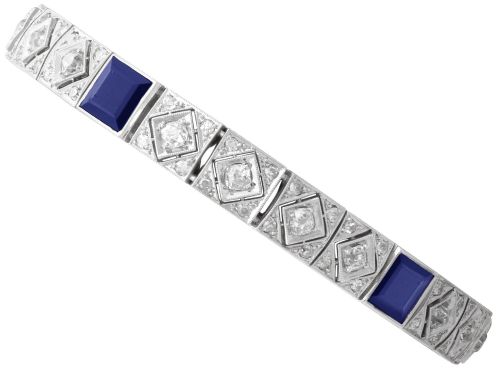
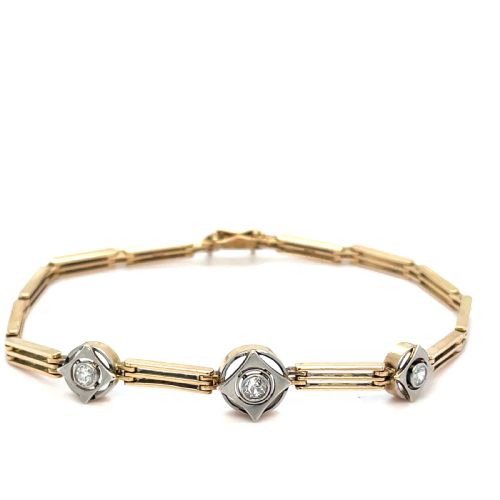
Platinum and white gold dominate the higher-tier offerings, often set with substantial Old European cut diamonds and calibré-cut sapphires. Yellow gold and silver examples frequently incorporate alternative materials such as marcasite, mother-of-pearl, and guilloche enamel. These variations reflect both high-end atelier work and more accessible period manufacture.
Materials and construction
Metalwork during this era relies heavily on platinum alongside 18ct white gold, 14ct gold, and sterling silver. Platinum provided the structural strength needed for delicate knife-edge settings and intricate pierced work without adding bulk.
Gemstone selection defines the aesthetic, pairing brilliant-cut and old-cut diamonds with contrasting emeralds, basaltic sapphires, and onyx. Enamel work, paste stones, and early plastics like Bakelite also appear, demonstrating the diverse techniques employed across different price points.
Listings feature platinum, yellow gold, and silver pieces set with diamonds, sapphires, emeralds, and Bakelite.
Assessing quality and execution
The standard of a 1920s art deco bracelet depends significantly on the precision of its metal piercing and the matching of its stones. Superior pieces display seamless articulation in line bracelets and crisp, mathematically exact geometric motifs without distortion.
Gemstone selection creates the primary divide between ordinary and exceptional examples. Top-tier pieces utilise bright, well-matched old-cut diamonds and vividly saturated sapphires or emeralds, secured in robust platinum mountings rather than softer base metals.
The 1920s Art Deco Bracelet Glossary
- Calibré-cut
- Small gemstones shaped specifically to fit tightly into geometric channel settings. This technique requires meticulous hand-cutting by lapidaries.
- Old European cut
- A round diamond cut prevalent during the late nineteenth and early twenty-first centuries, characterised by a high crown and small table.
- Guilloche enamel
- A decorative technique where translucent enamel is layered over engine-turned metalwork. It produces repeating geometric patterns visible beneath the coloured glaze.
- Tank bracelet
- A robust bracelet style inspired by military vehicle treads, featuring thick, articulated links popular in the post-First World War period.
- Paste
- Hand-cut lead glass used as a brilliant gemstone substitute. High-grade antique paste is meticulously faceted and foiled to mimic real diamonds.
1920s Art Deco Bracelet: Frequently Asked Questions
How do I wear a delicate diamond line bracelet safely?
These delicate platinum and diamond pieces suit evening wear and special occasions rather than daily rough work. Their platinum links offer considerable strength, but the antique stone settings benefit from careful handling.
Store them flat in a lined jewellery box away from harder items to prevent scratching. Periodic inspection by a jeweller ensures the claws holding the diamonds remain secure.
Are silver and enamel bracelets genuine period pieces?
Silver, marcasite, and enamel bracelets from this era represent genuine alternative production rather than modern reproductions. Makers used silver and base metals to offer fashionable geometric designs to a broader market.
Examining the clasp construction, patina, and enamel condition helps confirm their age. Genuine examples show honest wear consistent with decades of gentle use.
How can I tell a 1920s piece from a later reproduction?
Authentic period pieces exhibit hand-finished details such as millegrain borders, hand-cut stones, and traditional box clasps with safety chains. Modern reproductions often display machine-cast uniformity and lack the characteristic patina of antique metal.
Assay marks and hallmarks stamped on the clasp or inner band provide definitive clues to origin and metal purity.