
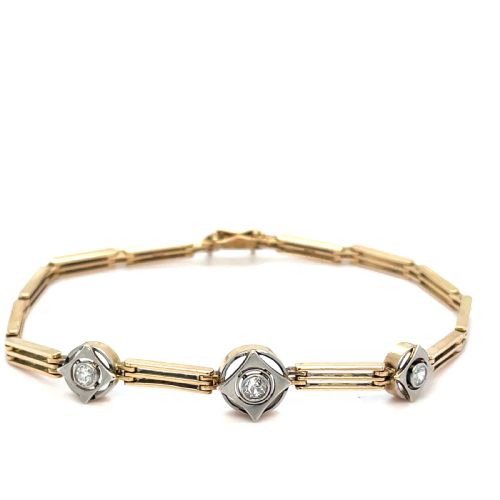


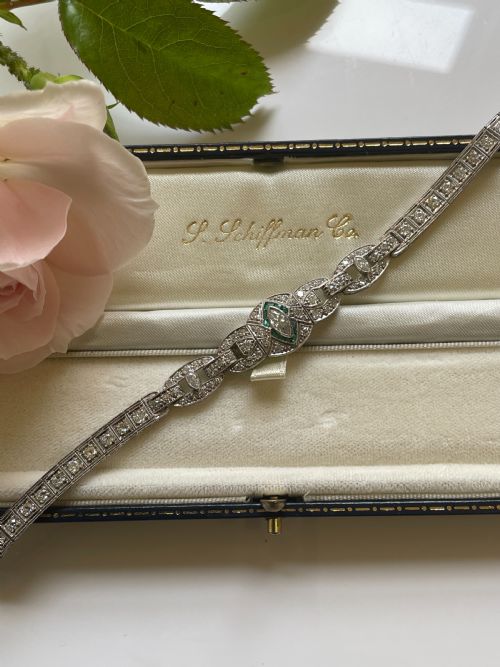

Geometric Link Diamond Bracelet
These geometric link diamond bracelet pieces bring architectural rhythm and crisp sparkle to the wrist, uniting vintage design with enduring precious metals.
Geometric Link Diamond Bracelet
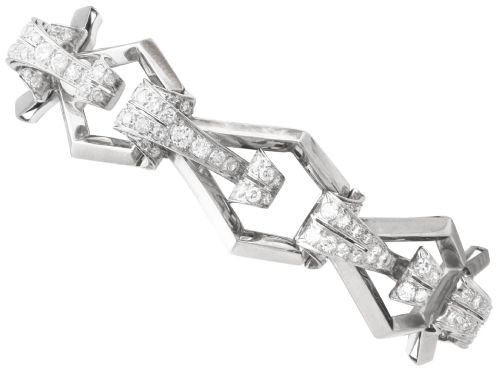
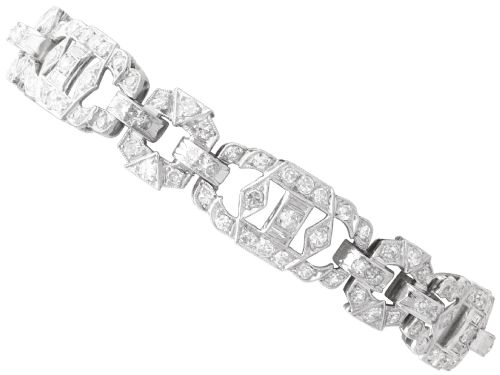
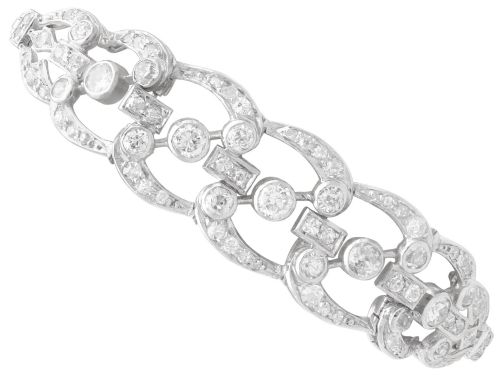
When you search for a geometric link diamond bracelet, you are looking at articulated wrist ornaments structured around clean lines, symmetrical motifs, and channel or bezel set stones. The pieces found here span from the 1910s through the mid-20th century, capturing shifts in design from early twentieth-century classicism to mid-century modernism.
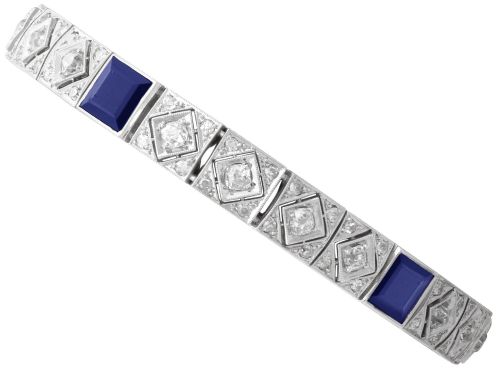
The Art Deco style dominates the selection, bringing repeating rectangular, triangular, and linear links together in continuous bands. Alongside these strictly linear designs, you will encounter sapphire, emerald, and yellow gold highlights that punctuate the diamond fields with touches of colour.
How they were made
Makers constructed these pieces primarily in platinum and various carats of white or yellow gold, setting diamonds alongside occasional sapphires and emeralds. Platinum gained preference for its tensile strength, which allowed jewellers to form delicate, knife-edge linkages and secure fine pavé settings without heavy metal surrounds.
Artisans hinged individual geometric segments meticulously to ensure the band draped flexibly around the wrist while maintaining structural rigidity across the patterned faces. Hand-cutting techniques of the period produced stones tailored precisely to fit complex triangular, square, and baguette mounts.
Some pieces feature hidden box clasps so seamless you might spend five minutes just trying to take the thing off.
What varies in quality
Construction resilience separates standard examples from exceptional ones, particularly in the articulation of the hinge joints and the precision of the metalwork between stones. A superior link bracelet maintains smooth flexibility without looseness, ensuring each geometric module aligns perfectly when laid flat.
Stone integration also dictates value, where uniform diamond clarity, precise matching of accent sapphires or emeralds, and flush claw or bead settings demonstrate the maker's discipline. The depth of hand-engraving on the reverse or side galleries often signals the original investment in the piece.
The Geometric Link Diamond Bracelet Glossary
- Art Deco
- A design style spanning the 1910s to the 1930s characterised by symmetry, geometric repetition, and streamlined industrial motifs. It forms the visual core of most pieces in this collection.
- Platinum
- A dense, durable white metal widely utilised in early twentieth-century jewellery for its ability to hold fine stone settings securely. It remains untarnished and provides a bright backdrop for diamonds.
- Link
- An individual modular unit joined to others to form a flexible chain or bracelet. In these pieces, links take rigid geometric shapes while allowing fluid movement.
- Pavé
- A setting technique where numerous small stones are set closely together with minimal visible metal. This creates a continuous surface of sparkling facets.
- Basaltic Sapphire
- A corundum gemstone originating from alkaline basaltic terrains, often displaying a deep, saturated blue hue. These stones provide contrasting colour accents within diamond-heavy platinum mounts.
Geometric Link Diamond Bracelet: Frequently Asked Questions
How do I wear a geometric link diamond bracelet daily?
These bracelets integrate easily into modern wardrobes by adding structured elegance to evening wear or sharp tailoring. Pair yours alone to let the symmetrical links take focus.
Protect the piece by removing it during manual tasks or heavy lifting to safeguard the delicate hinge joints and claw settings from impact.
What periods do these bracelets represent?
The inventory spans the 1910s through the 1960s, capturing the height of Art Deco design and the transition into mid-century aesthetics. Most pieces originate from the 1920s and 1930s.
Later mid-century examples show slightly broader links and simpler geometric arrangements compared to the intricate millegrain work of the 1920s.
Are coloured gemstones common in these pieces?
While diamonds dominate the selections, many designs incorporate calibre-cut sapphires or emeralds as geometric borders or focal accents. These coloured stones break up the white sparkle of platinum and diamond.
French and Italian makers frequently utilised sapphire and emerald contrasts to accentuate the linear rhythm of the metalwork.
How should I clean my antique bracelet?
Clean your piece gently using warm water, mild washing-up liquid, and a soft-bristled toothbrush to remove oils from behind the stones. Pat dry thoroughly with a lint-free cloth.
Avoid ultrasonic cleaners or harsh chemical dips, as older settings and delicate emeralds can be damaged by aggressive cleaning methods.