


1910s Diamond Dress Ring
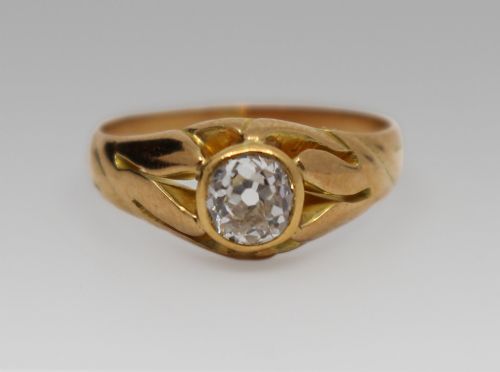
A 1910s diamond dress ring brings together old cut stones, platinum settings and rich gold bands from the Edwardian and George V eras.
1910s Diamond Dress Ring
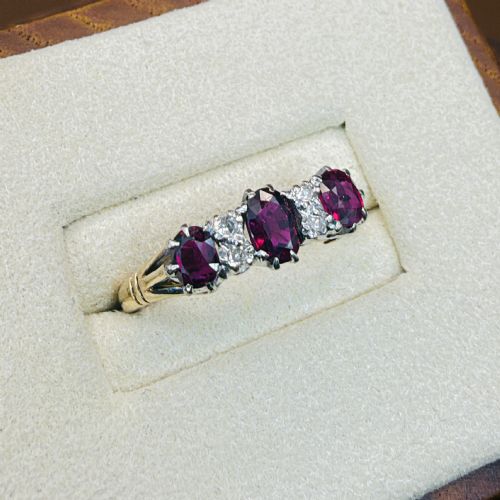
A 1910s diamond dress ring is a finger ornament designed to showcase precious gems during the Edwardian period, George V reign, Art Nouveau era and early Art Deco years. When you browse this selection, you encounter pieces that span roughly from 1900 to the close of the decade.
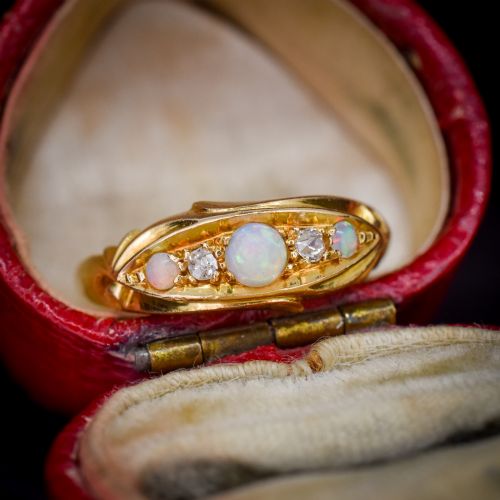
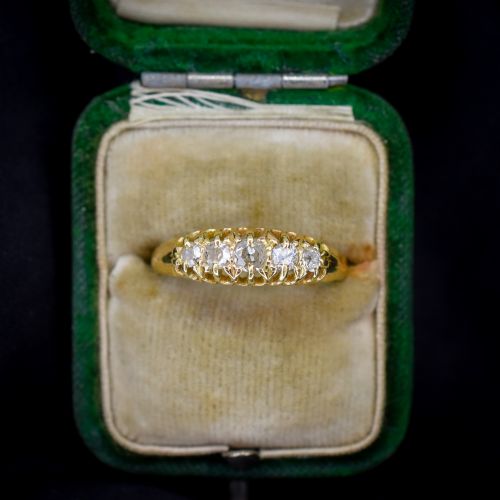
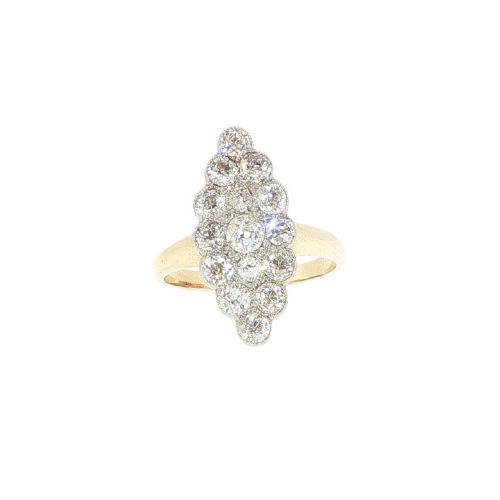
The forms vary from boat rings and navette clusters to five stone rows, starbursts, serpent motifs and toi et moi crossovers. You are most likely to meet clusters and boat shapes set in eighteen carat yellow gold or platinum.
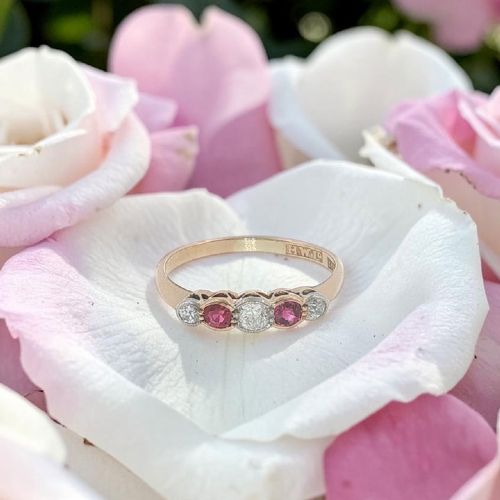
Origin details often emerge from regional assay offices such as Chester and Birmingham alongside date letters. These hallmarks help anchor the jewellery firmly in the second decade of the twentieth century.
How they were made
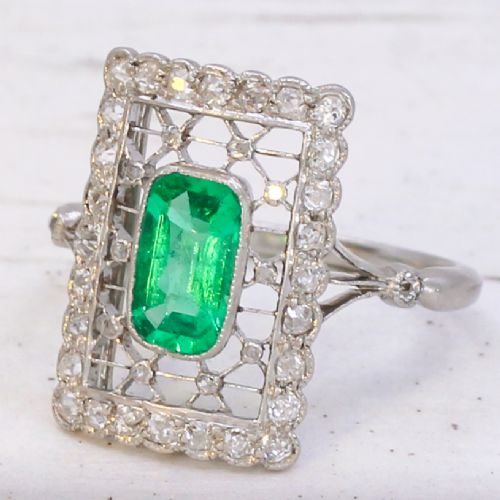
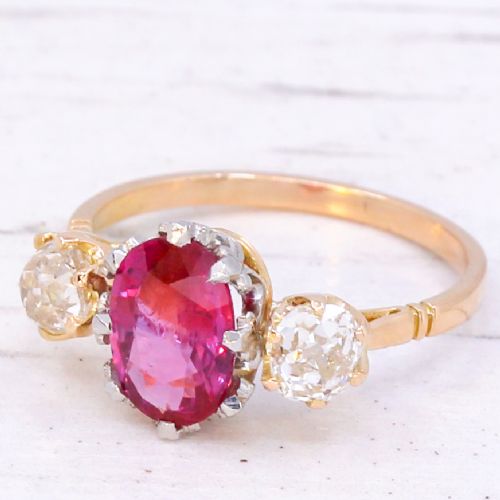
Goldsmiths of the era utilised a combination of yellow gold for sturdy shanks and platinum for crisp, white settings that held diamonds securely without adding heavy visual bulk. Old cut and rose cut diamonds were shaped by hand, giving each stone a soft facet pattern rather than the rigid geometry of modern brilliants.
Coloured gems including rubies, sapphires, emeralds, opals and natural pearls were integrated into clusters and crossover lines alongside the diamonds. Fine claw settings and pierced galleries allowed light to pass through the stones from behind.
What varies in quality
The distinction between ordinary examples and exceptional pieces rests upon the proportion of the stones and the delicacy of the metalwork. Hand-pierced platinum shoulders and symmetrical navette clusters demonstrate superior craftsmanship compared to simpler cast bands.
The character of the old cut diamonds and the saturation of accompanying rubies, sapphires or emeralds determine the visual impact. Crisp hallmarks from Birmingham or Chester also add desirable clarity to a piece's provenance.
The 1910s Diamond Dress Ring Glossary
- Old cut diamond
- A hand-faceted diamond shape typical of the period featuring a small table, high crown and open culet. These stones catch candlelight warmly.
- Navette
- A boat-shaped or marquise-shaped cluster setting that lies lengthwise along the finger. This silhouette creates an elongated appearance on the hand.
- Toi et moi
- A ring style featuring two main stones set side by side in a crossover band. It translates from French as you and me.
- Boat ring
- A curved mounting shaped like a small hull that holds a row of graduated stones. It sits low against the knuckle for everyday wear.
- Hallmark
- A series of stamped marks indicating metal purity, assay office and date letter. British examples often show town marks like Chester or Birmingham.
1910s Diamond Dress Ring: Frequently Asked Questions
How do I wear a 1910s diamond dress ring safely?
These antique rings require gentle care during daily activities because the claws holding old cut diamonds and softer gems like opals can catch on fabrics. Take them off before gardening, swimming or heavy lifting.
Store each ring separately in a fabric-lined box to prevent the platinum and gold settings from scratching adjacent pieces.
What is the difference between Edwardian and George V styles?
Edwardian jewellery leans heavily into light, lacy platinum work paired with floral motifs, garlands and starbursts. The aesthetic feels airy and romantic.
George V pieces, struck closer to the end of the decade, begin to introduce sharper geometric lines that prefigure the coming Art Deco movement.
Can I resize an antique diamond ring?
Most gold and platinum rings from this decade can be adjusted by a skilled jeweller who works with antique pieces. The shank material, whether eighteen carat yellow gold or platinum, dictates the method.
Take care to protect delicate side galleries and hallmark stamps near the back of the band during any alteration.
Are the gemstones in these rings natural?
The listings feature natural gemstones including unheated rubies, Ceylon sapphires, Colombian emeralds, opals and natural pearls alongside genuine antique diamonds. Each stone possesses the geological inclusions characteristic of unenhanced origin.
Documented certificates or dealer notes often accompany exceptional coloured stones to confirm their natural status.