

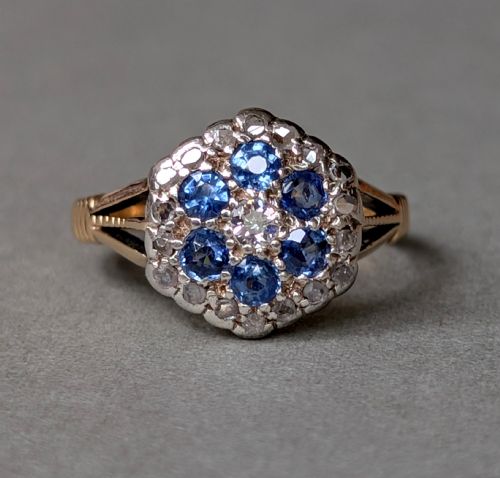

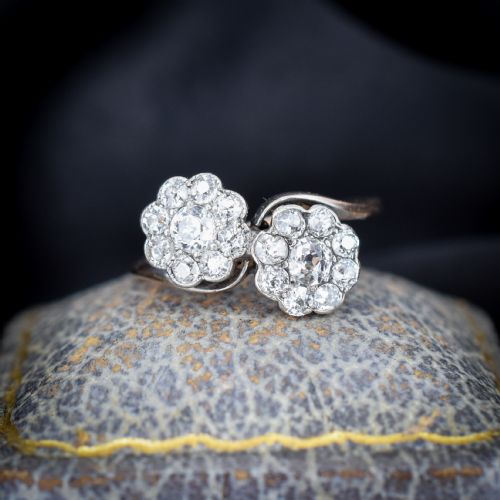


Yellow Gold Daisy Ring
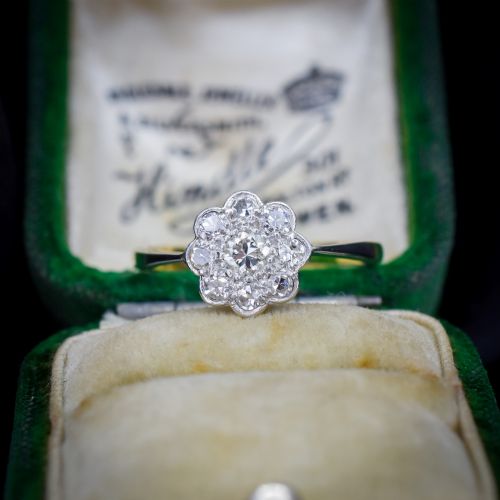
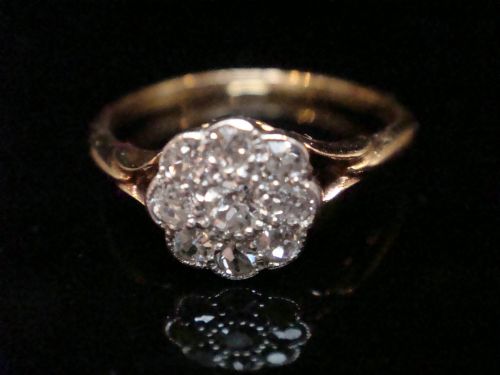
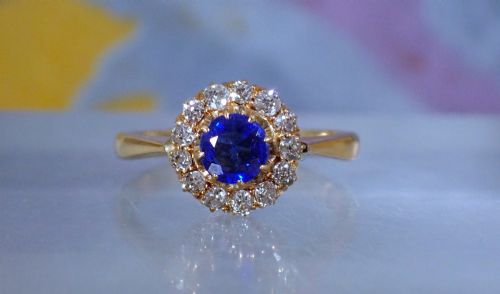
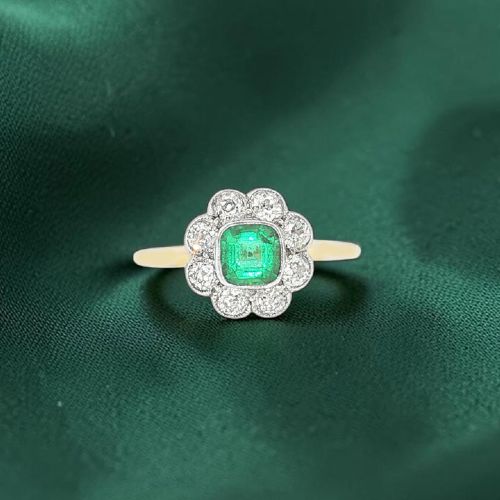
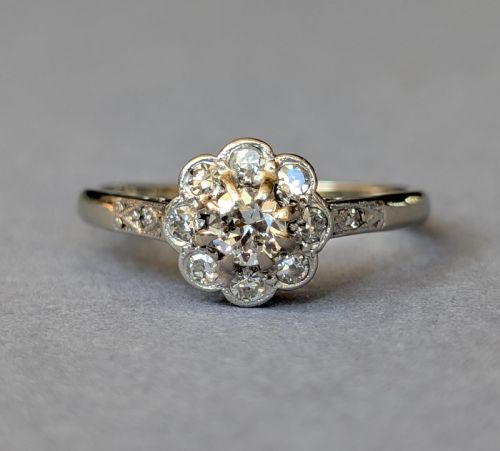
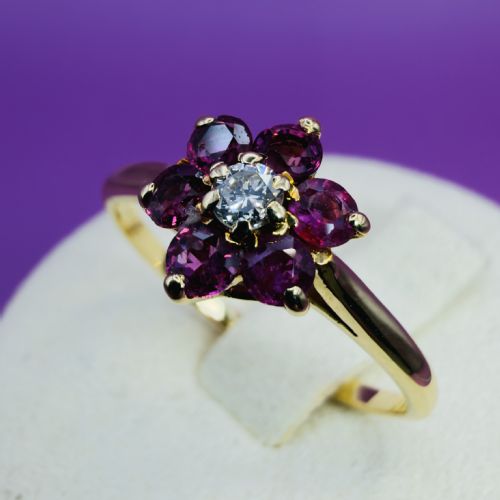
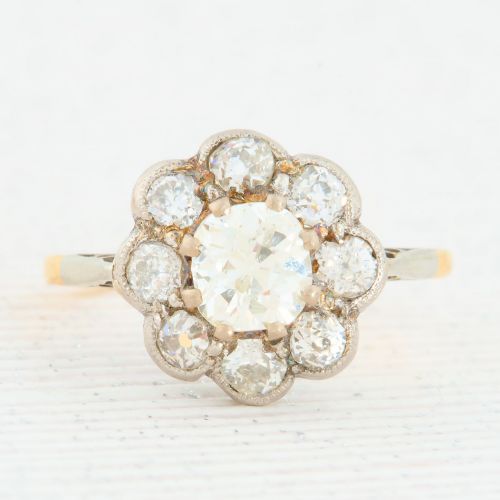
A yellow gold daisy ring brings together a central gemstone encircled by smaller stones, capturing floral motifs from the Edwardian, Victorian, and Art Deco periods.
Yellow Gold Daisy Ring
A yellow gold daisy ring presents a central gem surrounded by a border of smaller stones, forming a distinct floral silhouette. The pieces available span periods from the Victorian era through to the 1960s, with a strong representation of Edwardian and Art Deco examples.
Most pieces pair an 18ct yellow gold shank with a platinum setting for the stones, which enhances the brilliance of the diamonds and coloured gems. The central stone is frequently a diamond, sapphire, ruby, or emerald, framed by matching or contrasting accent stones.
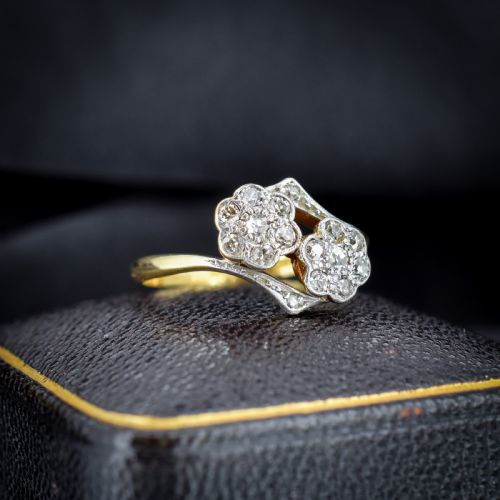
The form functions primarily as a ring, appearing in standard cluster configurations as well as double twist or toi et moi designs. These jewels originate from British, French, and broader European workshops active across the late nineteenth and twentieth centuries.
How they were made
Goldsmiths utilised 18ct yellow gold for the structural shank while frequently employing platinum to form the shoulders and claw settings holding the cluster. This platinum top layer provided high strength with minimal metal visibility around closely grouped diamonds.
Stones in earlier pieces were hand-cut into old mine or old European cuts, featuring larger facets that interact warmly with candle or gas light. Later twentieth-century examples integrate brilliant-cut stones set via precision claw or pavé techniques.
Yellow Gold Daisy Ring Retail Price Guide 2026
Typical asking prices for yellow gold daisy ring among the pieces listed under this phrase on Sellingantiques today, from the lower quarter to the upper quarter. They describe what is for sale here now, not the wider market.
Listings span from Victorian creations through Edwardian, Art Deco, and 1950s periods, executed in 18ct yellow gold, platinum, and diamonds.
What varies in quality
The degree of fineness in a yellow gold daisy ring rests on the symmetry of the petal arrangement and the precise matching of the surrounding stones. Superior examples display balanced proportions where the central gem dominates without overwhelming the surrounding circle.
The integration of the gallery and the weight of the 18ct gold shank indicate the standard of production. Heavier, substantial mountings with intact platinum collets demonstrate better original manufacture than thinner, altered bands.
The Yellow Gold Daisy Ring Glossary
- Cluster ring
- A ring design featuring a central gemstone encircled by a group of smaller stones. This configuration maximises visual presence and light reflection.
- Old cut diamond
- A diamond hand-faceted prior to the standardisation of the modern brilliant cut in the early twentieth century. These stones typically possess smaller tables and higher crowns.
- Toi et moi
- A ring style featuring two main stones positioned side by side or in a slight twist, translating to you and me in French.
- Platinum
- A dense, durable white metal utilised in jewellery manufacturing from the Edwardian era onward. It allows for secure, delicate settings due to its high tensile strength.
- Pavé
- A setting technique where small gemstones are closely set together with minimal visible metal beads. This creates a continuous surface of stones.
Yellow Gold Daisy Ring: Frequently Asked Questions
How do I wear a daisy ring daily?
These rings suit everyday wear provided you consider the height of the cluster and the security of the stones. Edwardian and Victorian pieces benefit from occasional checks by a jeweller to ensure the claws remain tight.
Pair the ring thoughtfully with other bands, or let it stand alone on the hand as a focal point. Removing the jewellery during heavy manual tasks protects the 18ct gold and the settings from unnecessary impact.
How do I tell Edwardian from Art Deco?
Edwardian daisy rings often feature softer, garland-style motifs with delicate millegrain detailing and platinum-topped yellow gold. The overall aesthetic leans towards romantic, airy floral patterns.
Art Deco examples shift towards geometric precision, sharper lines, and stylised symmetry. The mounts become sleeker, reflecting the design transitions of the 1920s and 1930s.
What gemstones are typical in these clusters?
Diamonds form the most common centre and accent stones, often paired with sapphires, rubies, or emeralds. Pearls also appear in specific Edwardian interpretations of the floral motif.
The choice of coloured stones alongside diamonds defines much of the visual variety across the Victorian and mid-century examples.
Are these rings suitable for engagements?
Historical daisy rings served frequently as engagement tokens, particularly during the Edwardian period and the 1920s. Their floral symbolism made them a popular choice for romantic gifting.
Today, their distinct character and variety of gemstones make them a practical and distinctive alternative to modern engagement rings.