


1910 Oak Desk
A 1910 oak desk brings heavy timber and practical working space into a room, offering sturdy construction designed for daily use.
1910 Oak Desk
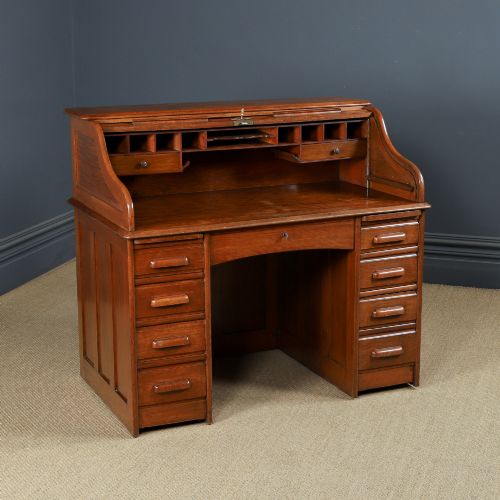
When searching for a 1910 oak desk, buyers encounter functional furniture pieces originating primarily from the Edwardian period and late Victorian era. These objects include pedestal desks, tambour door roll-top desks, writing desks, and accompanying desk chairs designed for study or office environments.
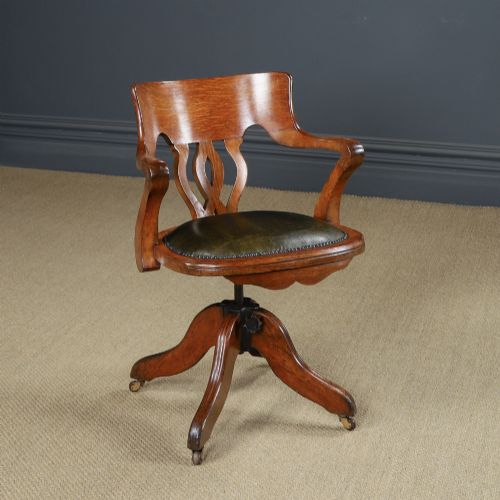
The version most commonly met on this page is the revolving office armchair upholstered in leather, alongside solid timber pedestal desks and schoolmaster chairs. Pieces span English, Scottish, and American workshops, matching the robust commercial output of the early twentieth century.
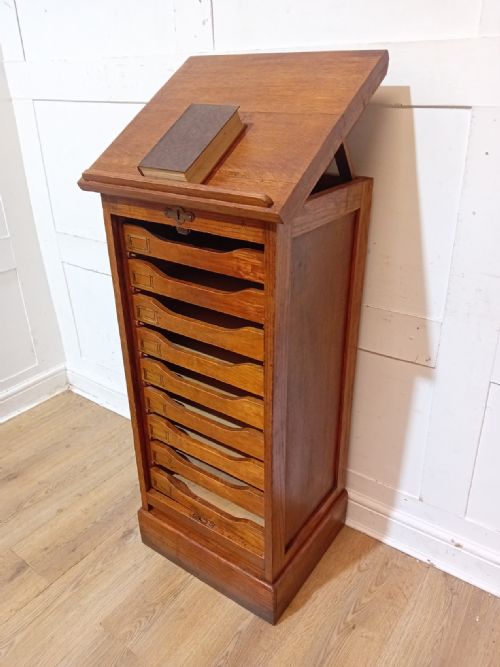
Beyond standard writing surfaces, related forms appear in the listings, such as filing cabinets, dressing tables with oval mirrors, and lecturn tops. Oak remains the unifying material across these functional workplace and domestic items.
Materials and construction methods
Makers utilised solid oak and bentwood for the structural frames of desks and swivel chairs, supported by brass and iron hardware for adjustable mechanisms. Tambour doors and pedestal carcasses relied on sturdy timber joinery to withstand frequent office use.
Writing surfaces and revolving chair seats frequently incorporated inset leather, available in green, red, or crimson shades, often detailed with blind tooling. Iron and brass formed the swivel and reclining spindles beneath adjustable desk chairs.
Listings demonstrate that Edwardian oak furniture frequently pairs solid timber construction with brass hardware and leather upholstery.
Differences in quality and execution
The standard of a piece depends on the depth of the timber selection, the complexity of the mechanism, and the integrity of the joinery. Heavier pedestal constructions and fully operational roll-top tambour doors represent more elaborate manufacturing than simpler side tables.
Upholstery finish also marks gradation, with hand-tooled leather inserts and robust bentwood framing sitting above simpler domestic variants. Maker signatures on revolving office chairs indicate workshop specialisation that alters the standing of an item.
William Birchcraft·Johnson Chair Co.
The 1910 Oak Desk Glossary
- Tambour door
- A flexible shutter formed of narrow strips of wood glued to canvas, allowing a roll-top desk to slide open smoothly.
- Pedestal desk
- A heavy writing table supported by two separate stacks of drawers rather than simple legs.
- Revolving chair
- An office seat mounted on a central iron spindle allowing rotation and often adjustable height.
- Bentwood
- Timber shaped by steam into curved structural components, commonly used in chair arms and backs.
- Carolean style
- A decorative revival drawing on seventeenth-century motifs, featuring carved wooden details.
1910 Oak Desk: Frequently Asked Questions
How do swivel desk chairs operate?
Swivel chairs rest upon a central iron screw or spindle that permits rotation and height adjustment.
Many examples include a tilting mechanism supported by curved bentwood or solid oak arms.
Are these desks strictly English in origin?
While many pieces originate from English workshops, the archive includes examples from Scottish makers and American firms.
Construction techniques remain consistent across regions, relying predominantly on solid oak and leather.
What leather colours appear on the chairs?
Writing surfaces and revolving chair seats frequently feature inset leather panels in green, red, or crimson.
These panels are often bordered with blind tooling to frame the edge of the timber.