
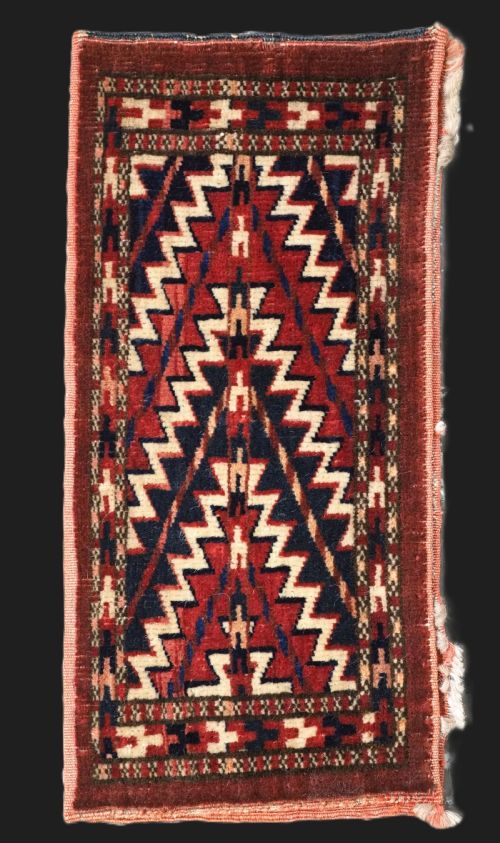


1900s Woven Rug
A 1900s woven rug brings rich tribal heritage and enduring craft directly to your floor from Persian, Caucasian, and Central Asian traditions.
1900s Woven Rug
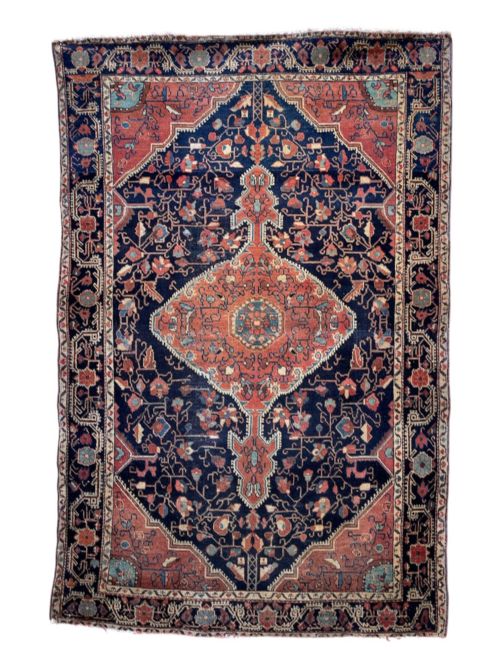
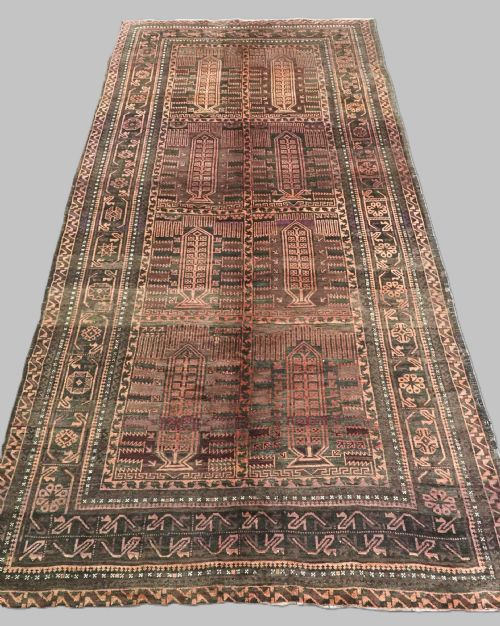
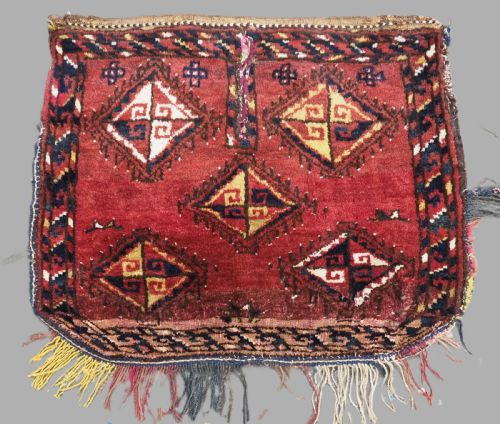
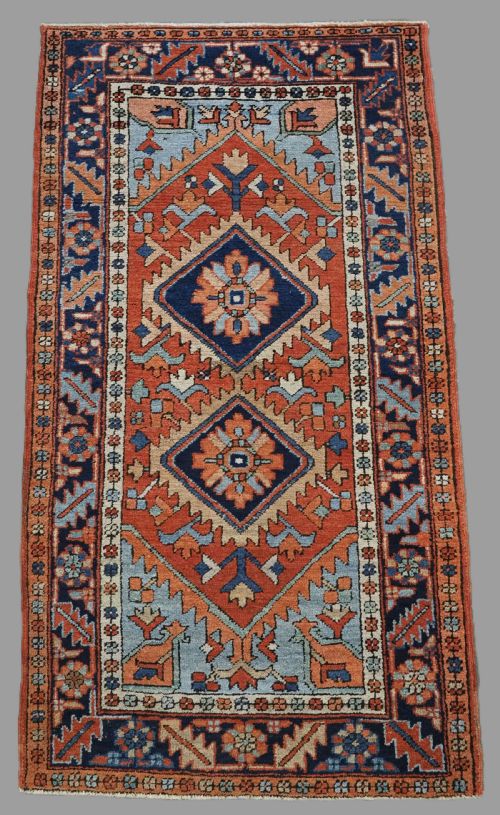
A 1900s woven rug encompasses traditional floor coverings and flatweaves produced around the turn of the twentieth century by tribal and nomadic groups across Persia, the Caucasus, and Central Asia. Buyers exploring this category encounter a diverse array of regional forms, including primary carpets, compact area rugs, prayer rugs, and utilitarian saddlebag faces.
The selection on this page centres heavily on tribal and village expressions, featuring named workshops and regional identifiers such as Baluch, Yomut, Tekke, Ersari, Qashqai, and Heriz. These pieces range from small nomadic fragments and complete saddle bags with original backs to substantial room-size carpets carrying classic medallions, guls, and boteh motifs.
Factors of quality and execution
Quality in these textiles rests upon the fineness of the weave, the clarity of the design motifs, and the integrity of the materials. Pieces featuring exceptionally fine knots or tight flatweave construction demonstrate superior technical mastery by the maker.
The nuance and depth of the natural dyes significantly separate standard examples from finer works, alongside the preservation of original borders, side-cords, and complete backs on bags and smaller formats.
Listings feature cotton and wool materials alongside natural dyes and hand-spun wool across tribal styles.
The 1900s Woven Rug Glossary
- Gul
- An octagonal or medallion-like motif often repeated across Turkmen and Central Asian carpets to denote tribal affiliation.
- Boteh
- A stylised almond or paisley shaped motif representing a floral cluster or palm leaf, frequently seen in Persian and Caucasian weaving.
- Torba
- A small tent-hanging or storage bag face produced by Turkmen weavers, traditionally displayed within nomadic dwellings.
- Kilim
- A flatwoven textile produced without a pile, utilised for rugs, covers, and utilitarian bags.
- Ensi
- A specific type of rug produced by Tekke Turkmen weavers, featuring a characteristic cross design used as a tent door hanging.
1900s Woven Rug: Frequently Asked Questions
How do I identify a tribal rug from this period?
Examine the piece for characteristic motifs such as guls, botehs, or geometric lattices that point to specific nomadic groups like the Baluch, Yomut, or Qashqai. Regional materials and structures also provide strong indicators of tribal origin.
These textiles often display asymmetrical designs and saturated natural dye palettes distinct from urban workshop production.
Where were these rugs originally made?
The pieces originate across Persia, the Caucasus, and Central Asia, encompassing regions from Uzbekistan and Afghanistan to Azerbaijan and Western Persia. Each area developed distinct weaving traditions influenced by local nomadic or village cultures.
Makers utilised locally sourced materials to create works tailored to both daily nomadic life and regional trade.
How should I care for a turn-of-the-century textile?
Protect the piece by placing it in low-traffic areas or mounting it securely if it is a delicate fragment, saddlebag face, or flatweave kilim. Regular, gentle vacuuming without a rotating brush helps maintain the wool pile.
Keep the textile out of direct sunlight to preserve the stability of the natural dyes over time.
What is the difference between a rug and a saddlebag face?
A rug is woven as an independent floor covering or prayer mat, whereas a saddlebag face represents the front panel of a larger utilitarian container used for nomadic transport. Saddlebag faces often retain specific structural edges where they were detached from their original reverse sides.
Both forms share similar wool materials and regional design vocabulary from the turn of the century.