

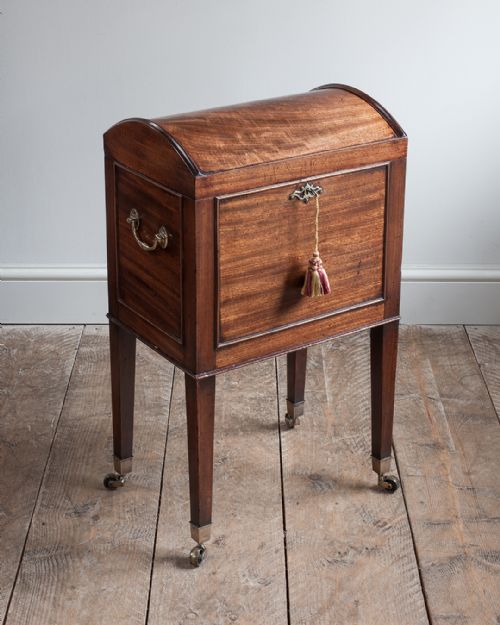


18th Century Wine Cellarette
An 18th century wine cellarette is a heavy timber container built to keep bottles cool at the dining table, prized for rich mahogany and brass work.
18th Century Wine Cellarette
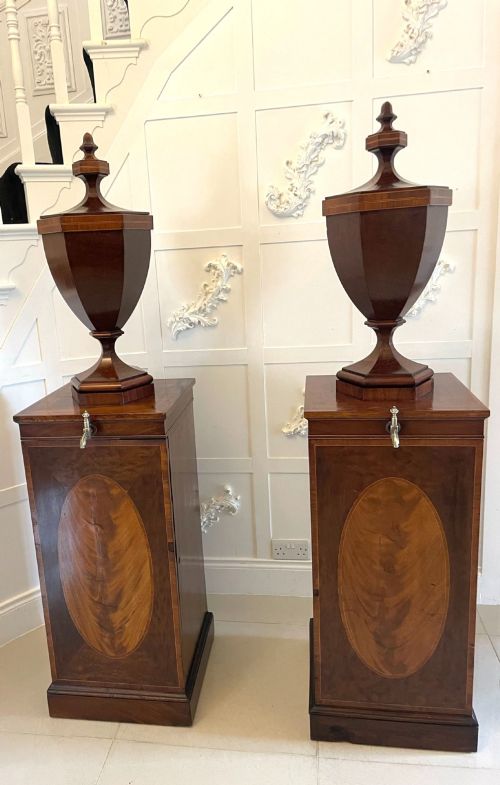
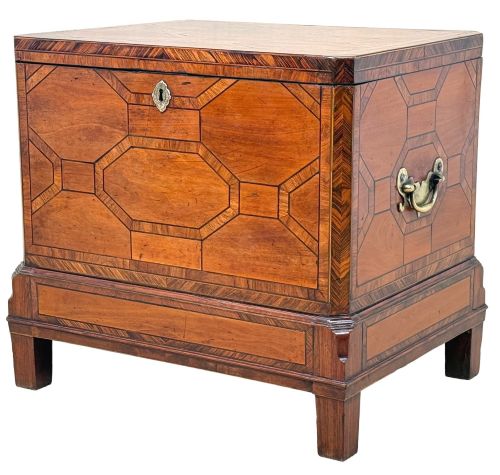
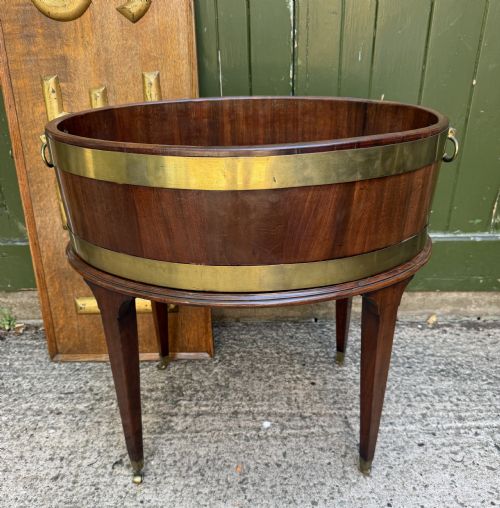
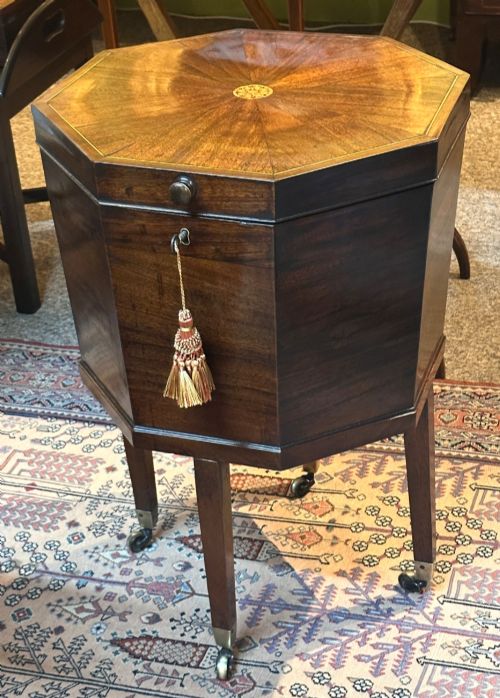
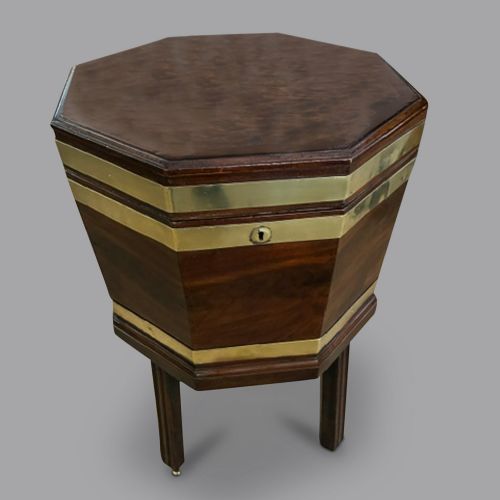
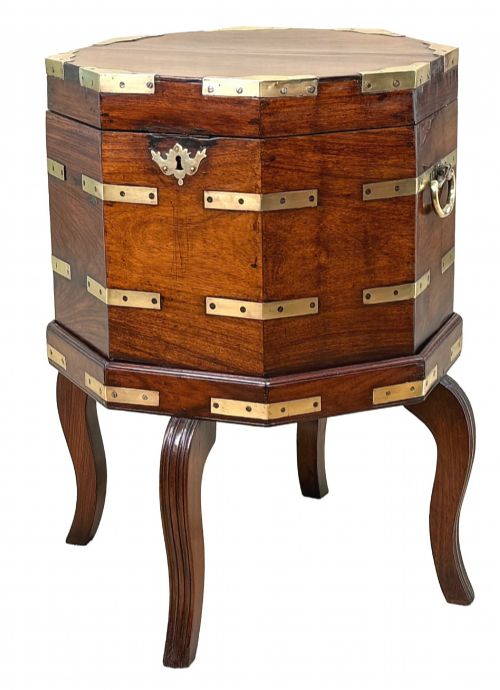
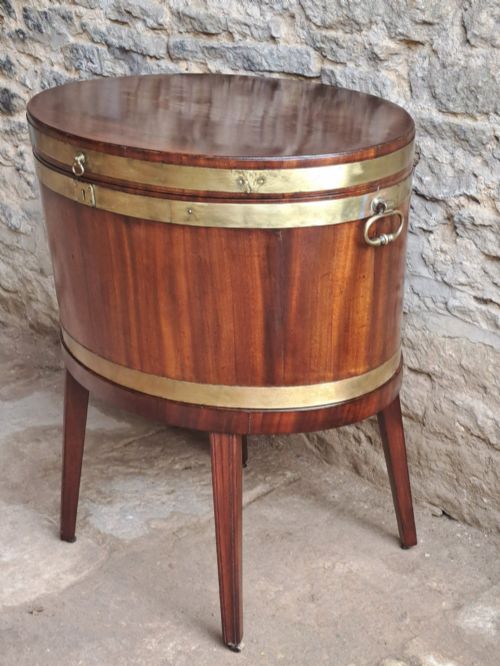
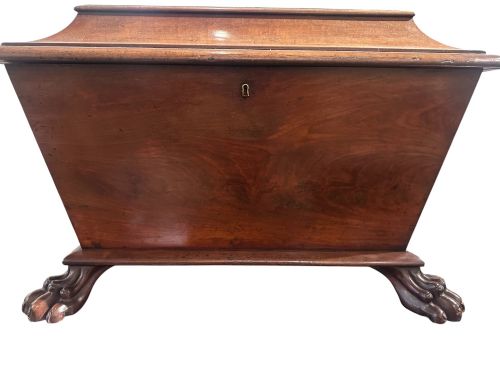
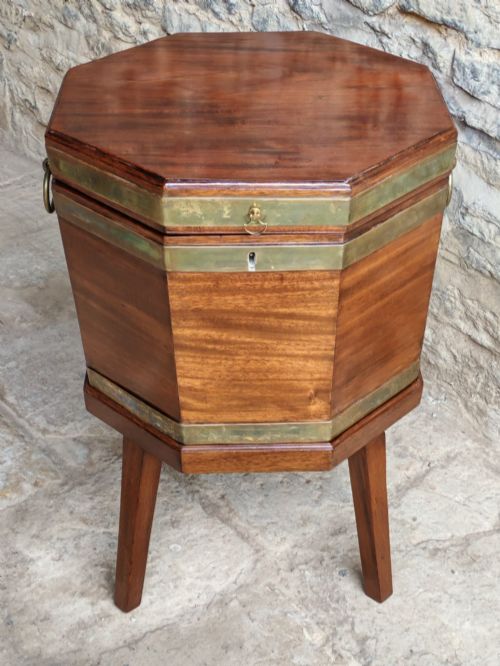
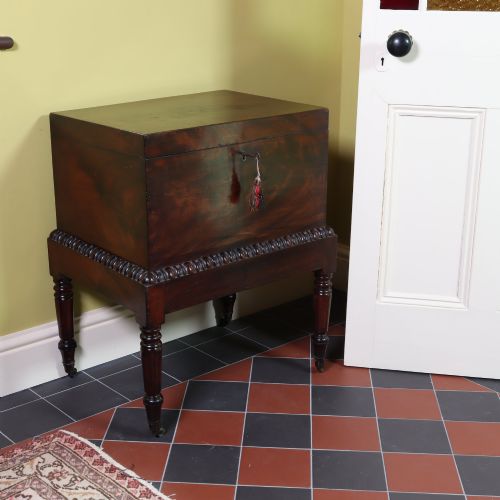
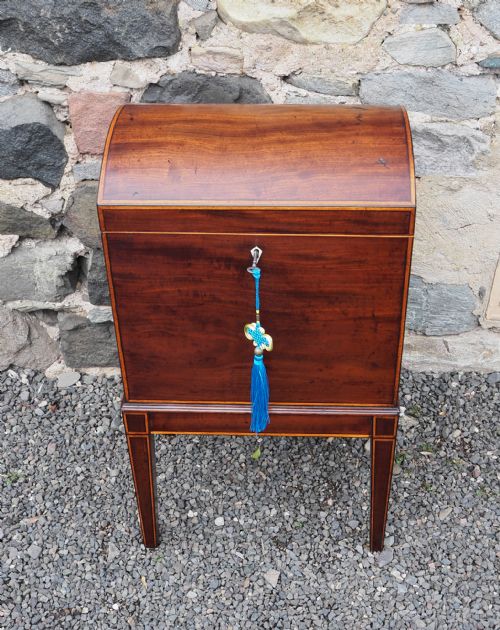
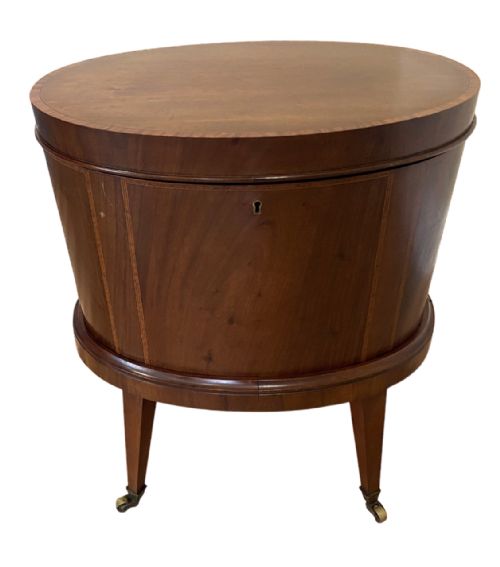
An 18th century wine cellarette typically appears as an octagonal, oval, or rectangular wooden box, often raised on a dedicated stand or fitted with sturdy legs. These pieces originate primarily from the Georgian period, spanning the mid to late eighteenth century and into the turn of the nineteenth century.
Buyers will frequently encounter mahogany examples, sometimes enhanced with brass banding or intricate boxwood inlay. Alternative timbers such as walnut, satinwood, and padouk also surface, reflecting diverse regional British and colonial cabinet-making traditions.
Construction and Materials
Cabinet-makers constructed these containers using dense primary timbers like solid and flame mahogany, walnut, and exotic woods such as kingwood and padouk. Selected pieces incorporate delicate boxwood and satinwood inlay to define geometric panels and borders.
Metal components played a structural and decorative role, featuring heavy brass bindings, carrying handles, and internal zinc linings designed to hold ice and water safely without rotting the surrounding timber.
Listings feature mahogany predominantly, alongside walnut, satinwood, and padouk timber constructions.
Craftsmanship and Proportion
The distinction between standard containers and exceptional examples rests in timber selection, such as richly figured flame mahogany and crisp marquetry work. Original stands, matching brass fixtures, and intact internal lead or zinc linings elevate a piece significantly above modified or altered items.
Proportion and joinery dictate overall elegance, where finely dovetailed corners and harmonious brass band placement separate disciplined workshop production from utilitarian storage boxes.
The 18th Century Wine Cellarette Glossary
- Cellarette
- A lockable container used for storing wine bottles near the dining table. They frequently feature internal divisions and metal linings.
- Brass-bound
- A construction technique where metal hoops encircle the wooden body of the cooler. This adds structural reinforcement and a decorative contrast.
- Marquetry
- The art of applying fitted pieces of veneer to a structure to form decorative patterns. Craftsmen utilised contrasting timbers like satinwood and rosewood.
- Pedestal
- A supporting base or column upon which a wine urn or cooler rests. Certain examples integrate cupboard storage beneath the main vessel.
- Jardiniere
- A decorative stand or pot designed to hold plants or flowers. These share similar forms and construction methods with period wine coolers.
18th Century Wine Cellarette: Frequently Asked Questions
What is an 18th century wine cellarette?
An 18th century wine cellarette is a specialised wooden box built to hold and chill wine bottles during formal dining.
Craftsmen designed these containers to sit beneath sideboards or upon dedicated stands within the dining room.
How were these wine coolers used?
Servants filled the internal zinc or metal linings with ice and water to chill bottles before they reached the table.
The lockable lids secured expensive vintages away from household staff.
How do I identify a Georgian cellarette?
Georgian examples rely on dense timbers like mahogany and walnut, frequently accented with brass bands and carrying handles.
Shapes lean towards octagonal, oval, or rectangular boxes reflecting prevailing neoclassical design trends.
Where should I place a cellarette at home?
These sturdy containers function well as standalone statement pieces in dining rooms or living spaces.
Their deep interiors also suit alternative storage uses, such as holding spare blankets or magazines.