




18th Century Wine Caddy
An 18th century wine caddy brings the presence of Georgian dining to a room, offering a sturdy vessel for holding bottles close at hand.
18th Century Wine Caddy
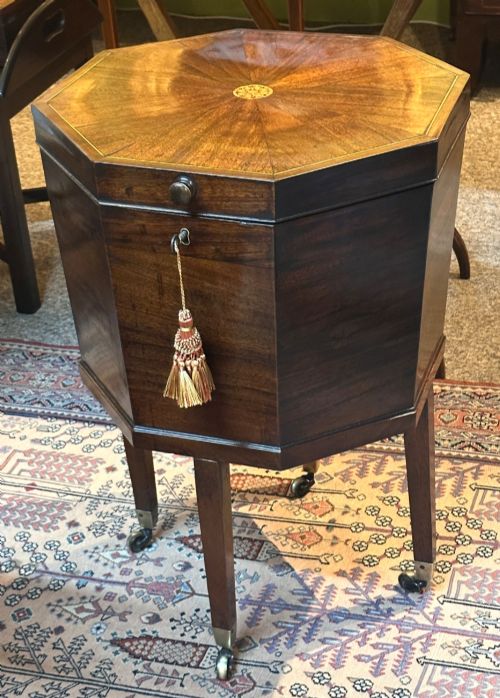
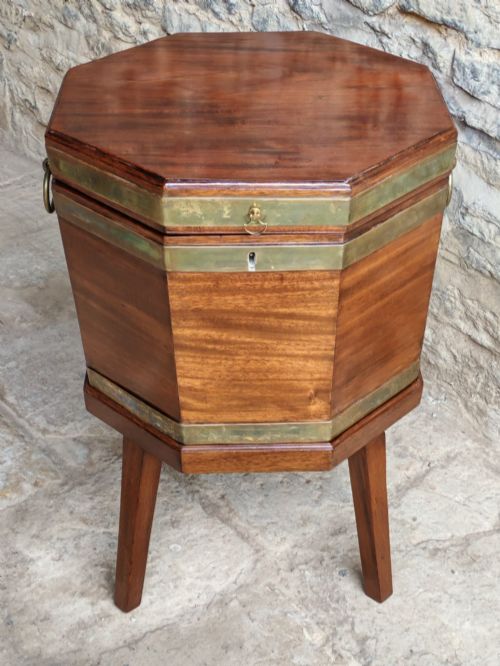
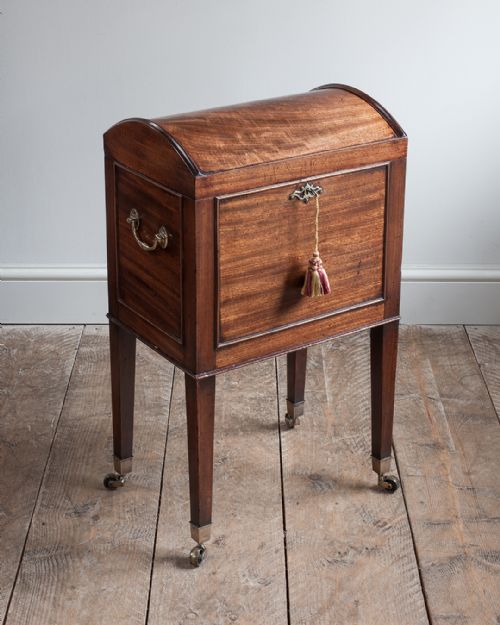
When searching for an 18th century wine caddy, you are looking at substantial drinking vessels and bottle carriers designed for the Georgian dining room. The pieces appearing here span cellarettes, wine coolers, bottle stands, and bottle carriers created during the eighteenth century and around 1800.
Mahogany forms the dominant material across these examples, often enriched with brass banding, satinwood, wood inlay, or padouk. The dominant style is George III, alongside Chippendale and Anglo-Indian Colonial variations that reflect the global reach of British cabinet makers.
The forms vary from octagonal and oval cellarettes to freestanding coasters and two or four section bottle carriers. You are most likely to encounter mahogany octagonal wine coolers and brass bound cellarettes carrying the hallmarks of the Georgian period.
Materials and construction
Cabinet makers utilised solid mahogany and wood veneers to build these robust cellarettes and bottle carriers, shaping octagonal and oval bodies to house glass bottles securely. Wood inlay and satinwood provided decorative contrast on select surfaces.
Brass fittings, including bands and carrying handles, were integrated to reinforce the timber structures and manage the heavy loads of wine bottles. These metal elements were fastened directly to the wood to withstand frequent movement around the dining table.
18th Century Wine Caddy Retail Price Guide 2026
Typical asking prices for 18th century wine caddy among the pieces listed under this phrase on Sellingantiques today, from the lower quarter to the upper quarter. They describe what is for sale here now, not the wider market.
Several pieces feature four distinct sections, proving that eighteenth-century hosts took their bottle organisation quite seriously.
Distinctions in quality
Quality in these pieces rests in the crispness of the cabinet work, the depth of the mahogany grain, and the preservation of the surface patina. Better examples display careful selection of timber veneers and precise alignment of brass banding.
Proportion and structural integrity separate standard utility pieces from finer works. The integration of decorative elements like wood inlay and the original condition of the brass sections determine the standing of each item.
The 18th Century Wine Caddy Glossary
- Cellarette
- A lockable container used to hold bottles of wine beneath the dining table or sideboard. These were built with sturdy timber frames to secure contents safely.
- Wine cooler
- A large vessel designed to hold bottles and ice during dining. They frequently share forms with cellarettes in the Georgian period.
- Patina
- The surface sheen developed on wood through age and handling. A deep patina indicates long-term care and organic wear.
- Padouk
- A dense tropical timber utilised in Anglo-Indian colonial furniture. Its heavy weight and rich colour suited durable case pieces.
18th Century Wine Caddy: Frequently Asked Questions
What is an 18th century wine caddy?
An 18th century wine caddy is a wooden container or carrier built to store and transport glass wine bottles during the Georgian era.
These pieces range from partitioned bottle carriers to large floor-standing cellarettes and wine coolers.
How were these pieces used?
They sat beside or beneath the dining table to keep wine bottles secure and accessible during long meals.
Servants would draw bottles from the caddy or cooler as required by the company.
How do I care for mahogany furniture?
Keep mahogany pieces away from direct sunlight and steady heat sources to protect the timber and veneer from drying out.
Apply a traditional wax polish occasionally to maintain the surface and preserve the natural patina.
How do I recognise George III style?
George III pieces display classical proportions, disciplined carving, and a reliance on quality mahogany timbers.
Details like brass banding, octagonal geometry, and subtle inlay work point directly to this period of British design.