
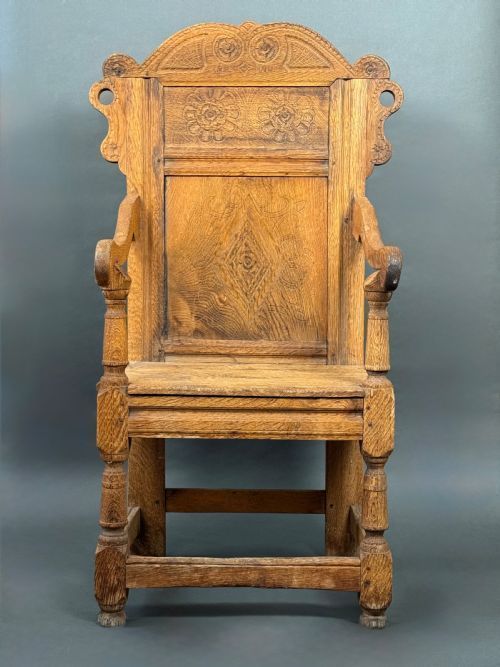
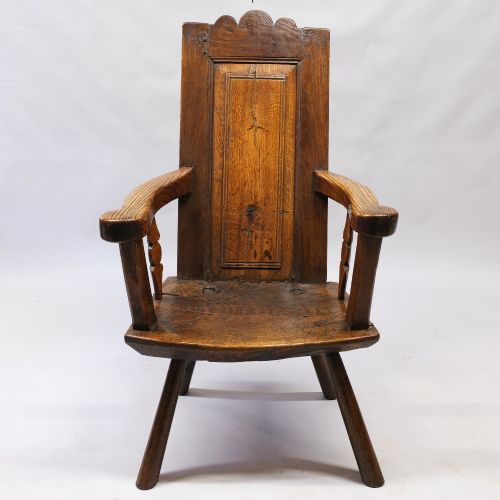
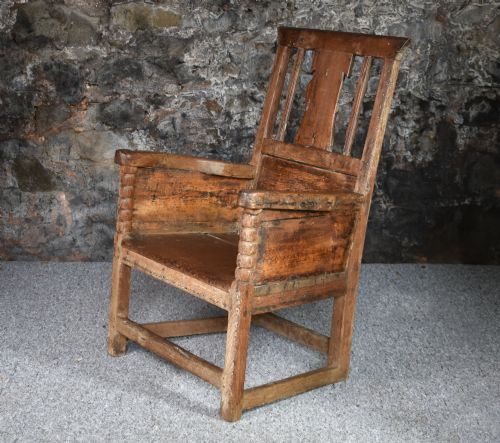


18th Century Wainscot Armchair
An 18th century wainscot armchair is a heavy wooden seat built for permanence, bringing solid joinery and honest country styles into any room.
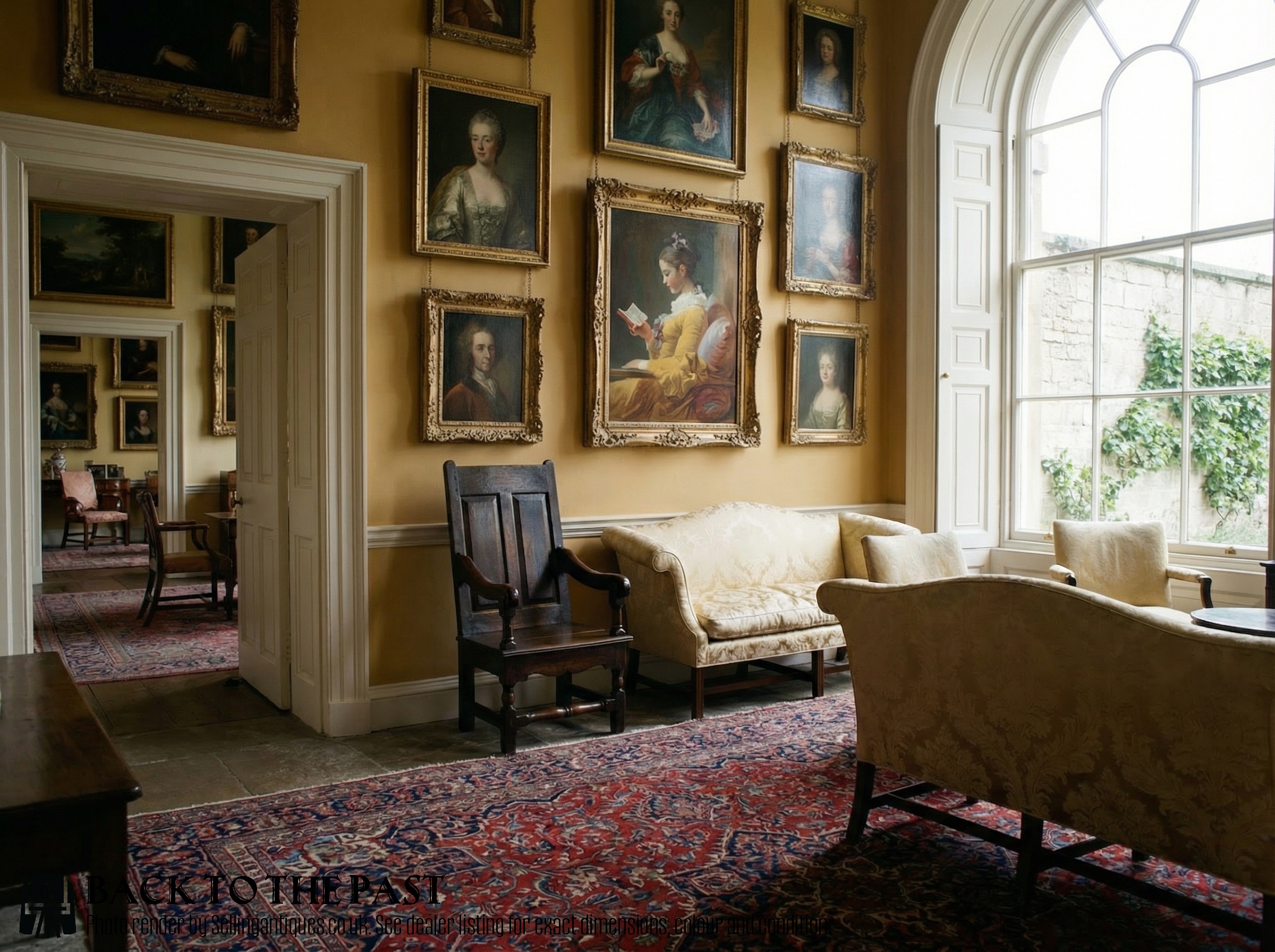
18th Century Wainscot Armchair
The 18th century wainscot armchair is a sturdy wooden seat rooted in early vernacular traditions, constructed with panelled backs and substantial armrests. Buyers searching for an 18th century wainscot armchair encounter heavy timber seating designed to withstand daily use over generations.
Most examples found on this page hail from English, Welsh, and Scottish workshops, utilising regional building methods common to country houses and farmsteads. These chairs often feature solid oak construction, sometimes complemented by elm, fruitwood, or pine timbers.
Variations within the category include panel-backed Windsor forms, hall chairs, and regional vernacular seating dated across the seventeen-hundreds. Each piece reflects the utilitarian needs of its period, prioritising robust joinery and structural endurance above delicate ornamentation.
Assessing quality and authenticity
Quality in these armchairs rests upon the integrity of the original timber and the survival of early joinery without extensive modern intervention. Pieces retaining their original panel backs, arms, and structural pegging demonstrate higher craft integrity than those with replaced elements.
The depth of patination and surface wear distinguishes well-preserved examples from heavily restored ones. Natural ageing across the oak or fruitwood grain shows how the chair interacted with its environment over centuries.
Some country makers incorporated extra-wide armrests specifically designed to hold a tankard of ale firmly in place.
The 18th Century Wainscot Armchair Glossary
- Wainscot
- A heavy wooden armchair characterised by panelled construction, solid armrests, and a boxed seat base. This form evolved from earlier box seats into a mobile chair.
- Vernacular
- Objects designed for everyday use by local craftsmen rather than following high-style urban fashions. These pieces reflect regional materials and practical domestic requirements.
- Patination
- The surface alteration of timber caused by age, light, friction, and repeated handling. Good patination reveals warm tones and a smooth touch across the wood.
- Jointure
- The method by which wooden components lock together, typically using mortise and tenon joints secured with wooden pegs. Original joinery indicates structural authenticity.
18th Century Wainscot Armchair: Frequently Asked Questions
How do I identify an authentic period piece?
Authentic examples display consistent wear patterns, traditional peg construction, and native timbers appropriate to their claimed region. Look for natural patination that matches the age of the wooden frame.
Examine the underside and joints for hand-cut tool marks and period-appropriate joinery methods. Modern replacements or alterations often disrupt the continuity of the timber's surface ageing.
Where were these armchairs originally used?
These sturdy seats originated in substantial farmhouses, country cottages, and halls where heavy furniture served practical domestic needs. Their solid construction protected occupants from draughts near open hearths.
Over time, they moved into various rooms as secondary seating or decorative items. Their robust build ensured survival across diverse domestic environments.
How should I care for old oak furniture?
Maintain stable indoor humidity levels to prevent the timber from drying out or splitting over seasonal changes. Avoid placing the chair near direct heat sources or strong sunlight.
Apply occasional appropriate wax polish to nourish the surface and preserve the natural patination. Clean gently with a soft, dry cloth to remove dust without harming the wood.
What is the difference between regional vernacular styles?
Regional styles depend on local timber availability and the specific building traditions of English, Welsh, or Scottish cabinetmakers. Welsh examples often incorporate distinctive carving or proportions compared to English counterparts.
Country makers adapted standard forms to suit local domestic habits, resulting in diverse panel arrangements and arm designs. These subtle variations help identify where a chair was made.