



18th Century Tea Service
An 18th century tea service brings porcelain and silver to the table, offering a complete set for the ritual of pouring tea.
18th Century Tea Service
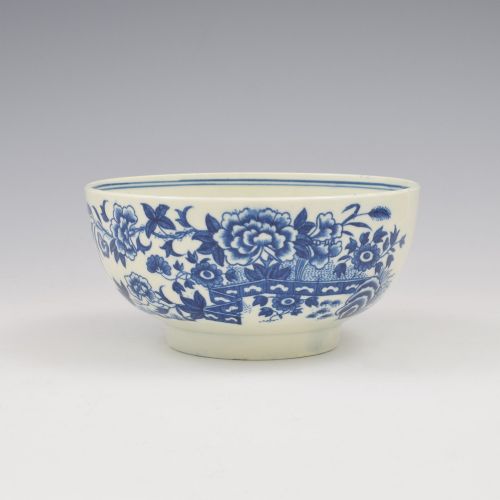
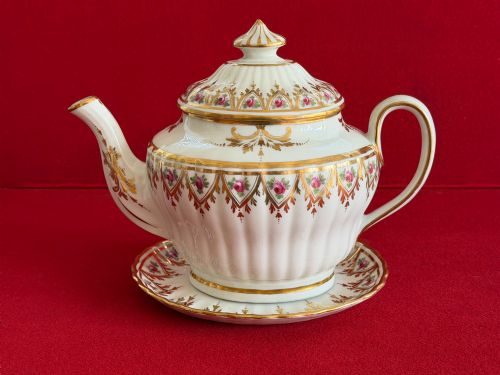
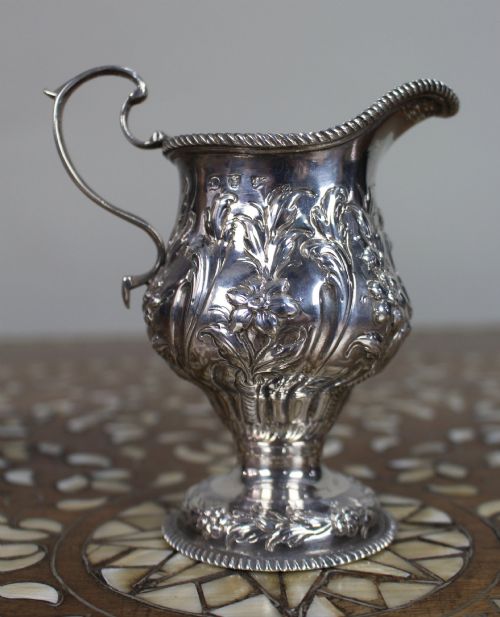
An 18th century tea service comprises individual items for serving tea, spanning teapots, cream jugs, sugar bowls, and cups and saucers. Buyers find components and matched groupings originating from the 18th century, Georgian period, Regency era, and Kangxi period.
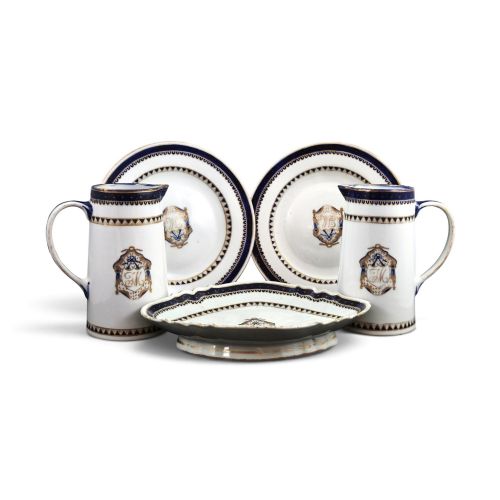
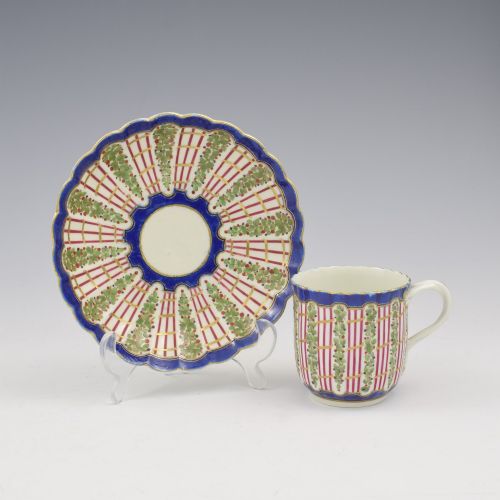
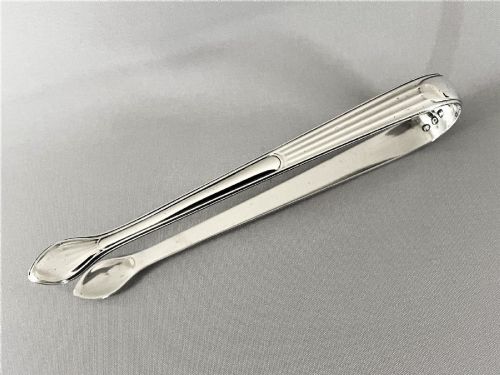
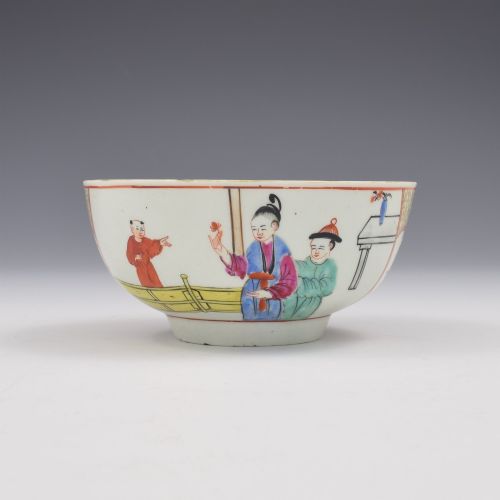
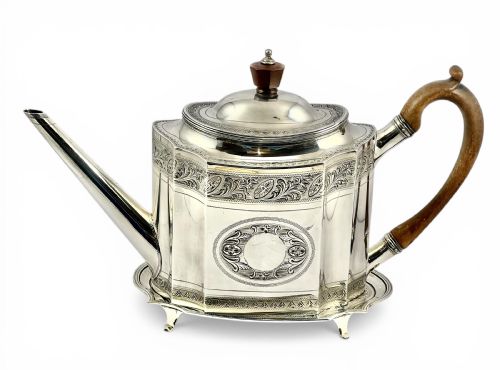
The ceramic components include Derby porcelain, Chinese export porcelain, and Dr Wall period Worcester porcelain decorated with enamel flowers, blue and white patterns, and mandarin figures. Silver components range from sterling silver teapots and cream jugs to sugar tongs and nips.
Forms vary from octagonal teapots and slop bowls to sugar boxes with covers, often bearing monograms or specific patterns like the Hop Trellis and Immortelle designs. These objects reflect the social dining habits and domestic rituals of the Georgian period.
What varies in quality
Quality in porcelain pieces depends on the crispness of the enamel painting, the preservation of the gilding, and the delicacy of the soft-paste body. Early Worcester and Derby pieces show varying detail in hand-painted motifs like floral sprays and Chinese figures.
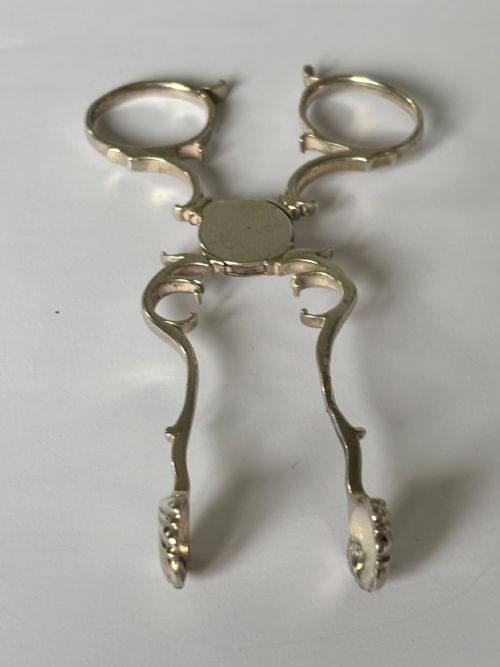
Sugar nips were shaped like miniature scissors to snip precise portions from solid sugar loaves before sugar cubes existed.
Bateman Family·Robert Hennell I·Thomas Tookey·Peter and Ann Bateman·Thomas Wolfe
The 18th Century Tea Service Glossary
- Soft-paste porcelain
- A type of ceramic paste fired at lower temperatures than hard-paste porcelain, commonly produced by English factories in the eighteenth century.
- Sucrier
- A small sugar bowl or pot with a cover, designed to hold loose sugar for tea service.
- Slop bowl
- A bowl used during tea service to discard unwanted tea leaves or dregs from the cups.
- Sugar nips
- A spring-loaded or scissor-type utensil used for picking up sugar lumps.
- First Period Worcester
- The initial era of porcelain production at the Worcester factory, spanning roughly from 1751 to 1783.
18th Century Tea Service: Frequently Asked Questions
What pieces make up a set?
An 18th century tea service typically consists of teapots, cream jugs, sugar bowls, and cups and saucers. Individual components like slop bowls and sugar nips are also found.
Complete matched services are uncommon, and buyers often assemble collections from matching periods or factories.
What is Chinese export porcelain?
Chinese export porcelain refers to ceramics made in China specifically for the European market during the 17th and 18th centuries. These pieces often feature Western monograms or specific European-requested designs.
They combine traditional Chinese manufacturing techniques with shapes and motifs popular in Georgian Britain.
How should silver teaware be cared for?
Sterling silver teapots, cream jugs, and sugar tongs require gentle cleaning with appropriate silver polishes to maintain the metal finish. Avoid abrasive materials that can wear down hallmarks and engraved details.
Store pieces in stable environments away from excessive moisture to preserve the silver and any applied gilding.