


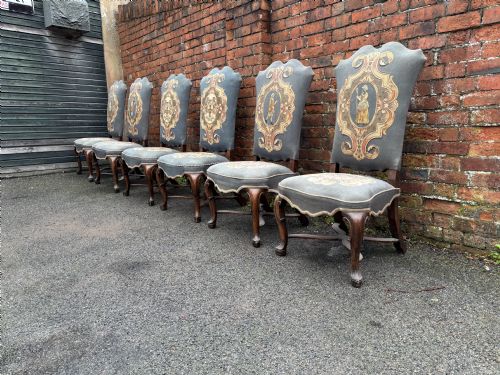


18th Century Tapestry Seating
These 18th century tapestry seating pieces bring period needlework and carved timber together into functional domestic furniture.
18th Century Tapestry Seating
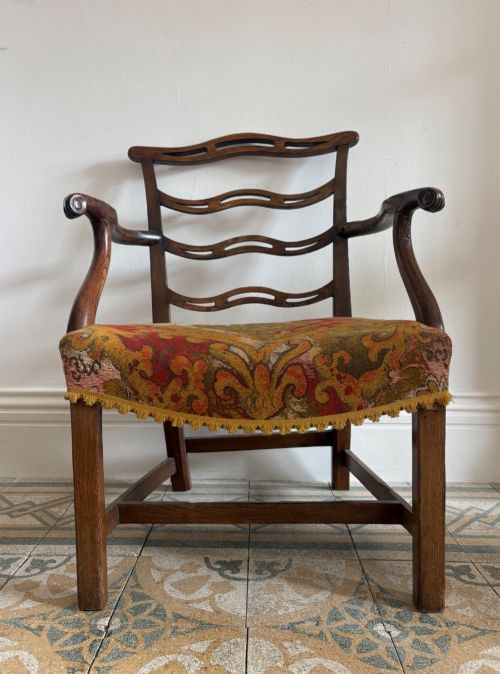
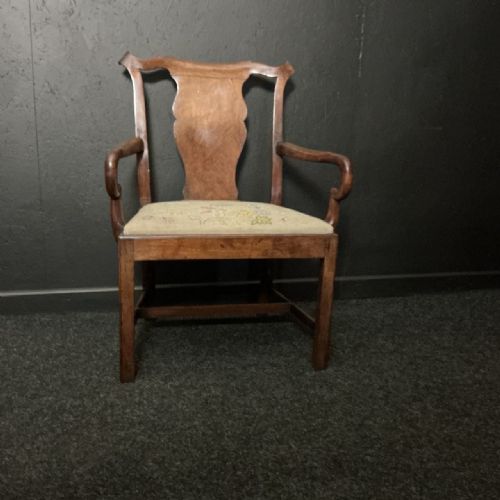
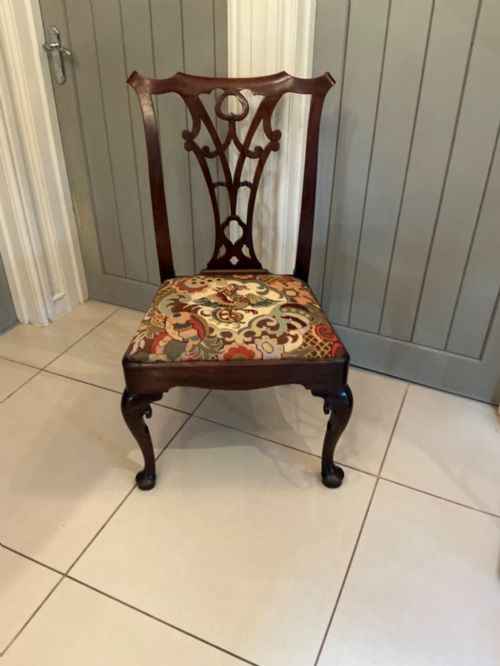
18th century tapestry seating covers a diverse range of chairs, settees, and stools upholstered in period textiles and needlework. Buyers encounter everything from single side chairs to large sets of dining chairs alongside grand armchairs and settees.
The selection includes English Georgian forms in mahogany, walnut, and oak alongside French Louis XV and Louis XVI examples. Country versions in elm and regional pieces appear alongside formal urban seating.
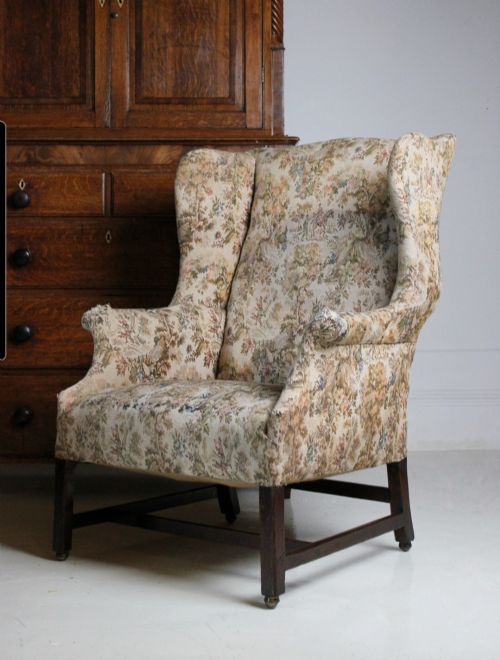
Forms span dining chairs, armchairs, wingbacks, corner chairs, children's seating, footstools, and settees. Many retain their original or early needlework and tapestry covers woven in wool and textile fabrics.
Factors affecting quality
Quality rests heavily on the crispness of the timber carving and the integrity of the frame construction across different regional styles. Finer pieces demonstrate superior joinery and more ambitious design, whether in English mahogany or French painted frames.
The condition and fineness of the tapestry or needlepoint upholstery significantly influence the character of each piece. Intricate hand-stitched needlework panels elevate an armchair or side chair above standard fabric upholstery.
Listings feature 18th century and Victorian periods with styles spanning Georgian, George I, George II, George III, Louis XV, and Louis XVI.
The 18th Century Tapestry Seating Glossary
- Tapestry
- A form of textile art, traditionally woven on a loom, used here for upholstery on chairs and settees. These covers define the visual appeal of period seating.
- Needlepoint
- Embroidery stitched onto a canvas mesh ground, often seen in fine period chair seats and open armchair panels. It differs from loom-woven tapestry.
- Wingback armchair
- An upholstered chair with side panels designed to shield the sitter from drafts. 18th century examples often feature textile upholstery.
- Corner chair
- A chair designed to fit into the corner of a room, typically featuring a square seat set diagonally with a rounded backrest.
- Settee
- A long upholstered seat with a back and arms, accommodating multiple sitters. 18th century versions match the prevailing styles of contemporary armchairs.
18th Century Tapestry Seating: Frequently Asked Questions
How do I identify an 18th century chair?
Look to the timber species, joinery methods, and proportions characteristic of Georgian, Louis, or regional workshops. Period pieces display hand-cut joints and timber patination built up over centuries.
Compare the stretcher placement and carving details against documented examples from the same era. Regional pieces like Welsh or Scottish chairs often display distinct local timber choices.
Are tapestry seats original?
Many pieces retain period needlework or tapestry covers, though textiles frequently require conservation or replacement over centuries of use. Some items feature later traditional upholstery that matches the age of the frame.
Examine the attachment methods and wear patterns on the fabric to understand its relationship to the wooden structure. Needlework panels are sometimes preserved from earlier textiles and mounted onto later chairs.
How should I care for antique upholstery?
Protect wool and textile tapestry covers from direct sunlight to prevent fading of the dyed threads. Gentle vacuuming through a mesh screen helps remove dust without stressing fragile fibres.
Maintain stable humidity levels in the room to preserve both the timber frame and the historic textile. Avoid harsh cleaning products on antique needlework.