



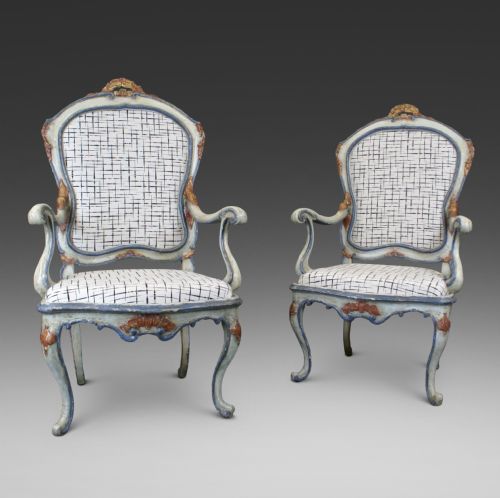


18th Century Style Fauteuils
These 18th century style fauteuils bring structural grace and period upholstery to a room, offering open arms and carved frames designed for relaxed seating.
18th Century Style Fauteuils
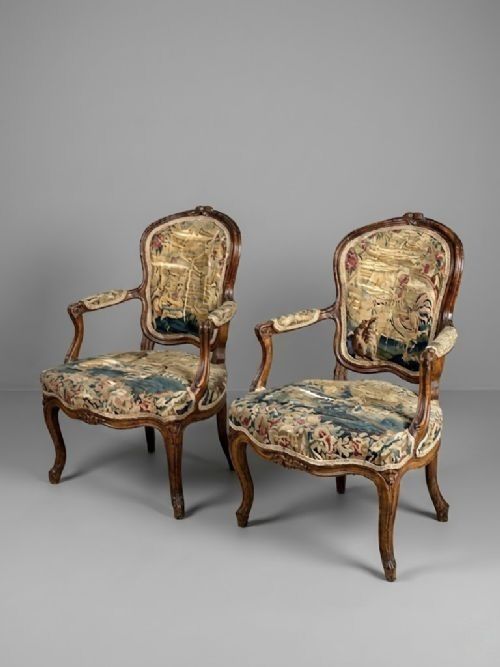
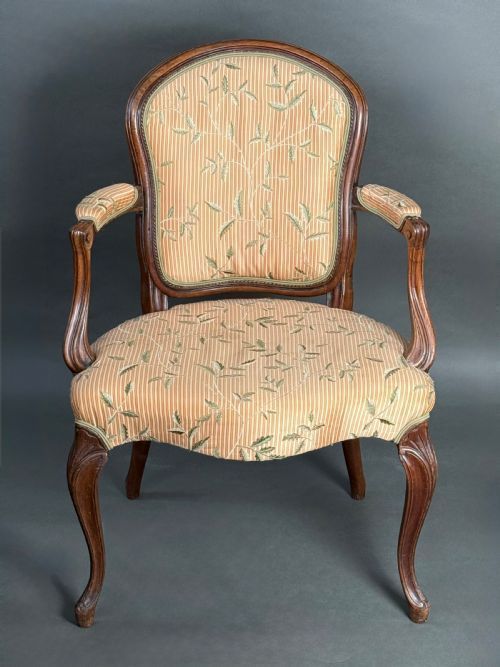
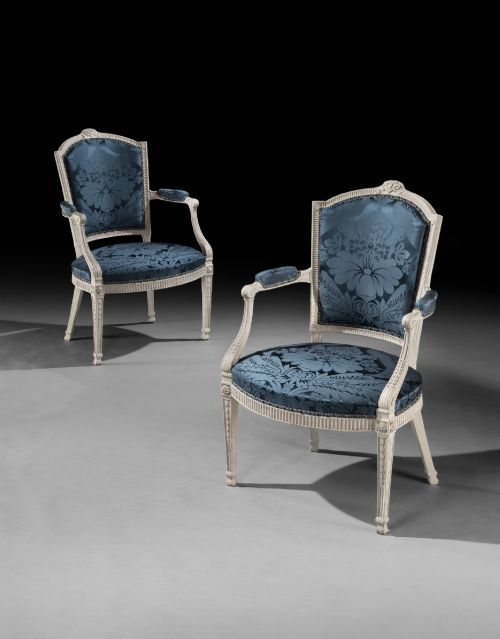
When searching for 18th century style fauteuils, a buyer explores open armchairs rooted in French and English design traditions spanning the seventeenth through the twentieth centuries. The versions met most often on this page include French Louis XV and Hepplewhite forms alongside George III salon chairs.
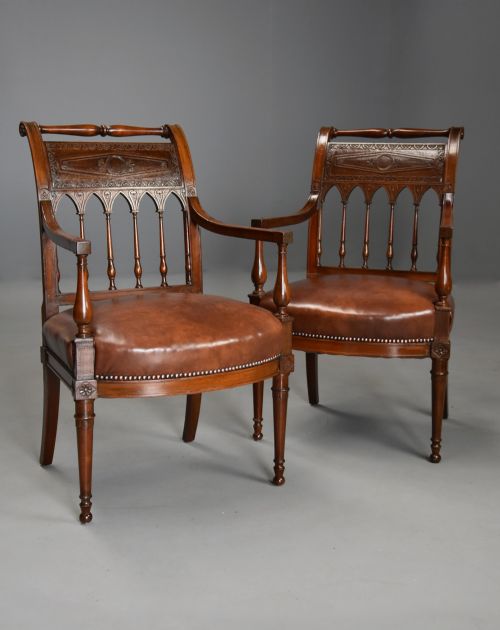
Makers and workshops across these periods adopted varied regional interpretations, yielding Italian Barocchetto pieces, French Directoire armchairs, and English mahogany examples. These seats function as prominent focal points in a drawing room or salon while retaining their historical proportions.
The selection encompasses matched pairs and single chairs upholstered in silk, tapestry, and needlework. Such seating bridges decorative arts and functional utility, reflecting the evolving aesthetic preferences of European craftspeople.
How they were made
The primary structural frames rely on hardwoods including walnut and mahogany, alongside carved and gilded wood or gesso surfaces. Artisans shaped these materials using traditional joinery to support the load-bearing requirements of an open armchair.
Surface ornamentation ranges from parcel gilding and paint to intricate wood carving. Upholstery methods incorporate brass tacks securing coverings of silk, Aubusson tapestry, and needlework directly to the wooden armature.
18th Century Style Fauteuils Retail Price Guide 2026
Typical asking prices for 18th century style fauteuils among the pieces listed under this phrase on Sellingantiques today, from the lower quarter to the upper quarter. They describe what is for sale here now, not the wider market.
What varies in quality
The distinction between tiers rests upon the crispness of the wood carving and the integrity of the original giltwood or painted finish. Superior examples display fluent hand-carved details on the arms and cabriole legs rather than mechanical repetition.
Quality also appears in the selection and preservation of textile coverings, such as period silk or hand-worked needlework. Structural firmness in the frame construction determines how well the chair sustains its historical form.
The 18th Century Style Fauteuils Glossary
- Fauteuil
- An open-armed upholstered armchair with wooden framing exposed around the sides and back. This French seating form emerged to provide comfortable elegance in domestic interiors.
- Giltwood
- Wood coated with thin gold leaf or powder over a prepared ground. This finish catches candlelight and daylight in formal rooms.
- Hepplewhite
- A neoclassical furniture style characterised by slender tapered legs and shield or oval backs. English and French interpretations of this design feature prominently in chair production.
- Aubusson
- Tapestry woven in the French town of the same name, frequently utilised for period chair coverings. These textiles depict floral or figurative scenes.
- Directoire
- A transitional style bridging Louis XVI and Empire periods, notable for restrained classical motifs. Pieces from this era employ simplified geometric lines.
18th Century Style Fauteuils: Frequently Asked Questions
What is a fauteuil?
A fauteuil is an upholstered armchair featuring open wooden sides that originated in France during the seventeenth century. The style prioritised relaxed posture and visual lightness compared to earlier enclosed seating.
These chairs served in formal salons and private chambers alike. Their open arm design accommodated the voluminous fashion of the period.
How do I style these armchairs?
These armchairs fit naturally into sitting rooms, libraries, or grand hallways as statement seating. They pair effectively with period or contemporary tables.
Placing a matched pair opposite a fireplace or flanking a console creates formal symmetry. Their decorative carved frames allow them to stand independently in an interior.
How do I distinguish regional styles?
Regional differences appear in the carving motifs, leg shapes, and wood selections of the frame. French pieces often display asymmetric Rococo curves or restrained Directoire geometry, while English examples emphasise mahogany or painted Hepplewhite forms.
Italian variants like the Barocchetto exhibit bolder sculptural flourishes. Examining the underlying structure reveals these distinct workshop traditions.
What materials are used for upholstery?
Upholstery materials on these chairs include silk, tapestry, and needlework secured with brass tacks. Textile selection often reflects the period and region of the frame's origin.
Aubusson covers and hand-stitched needlework provide traditional texture. These fabrics complement the carved wood and gesso finishes of the armchairs.