
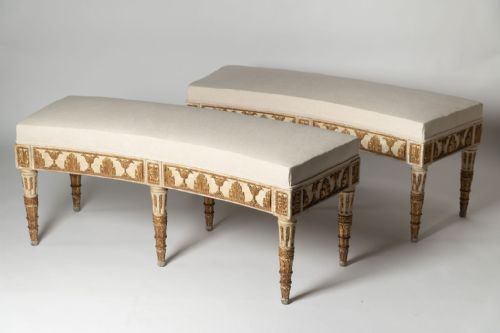


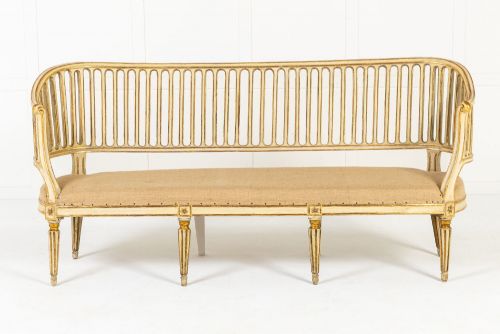


18th Century Style Bench
An 18th century style bench brings classical proportion and substantial timber seating into a room.
18th Century Style Bench
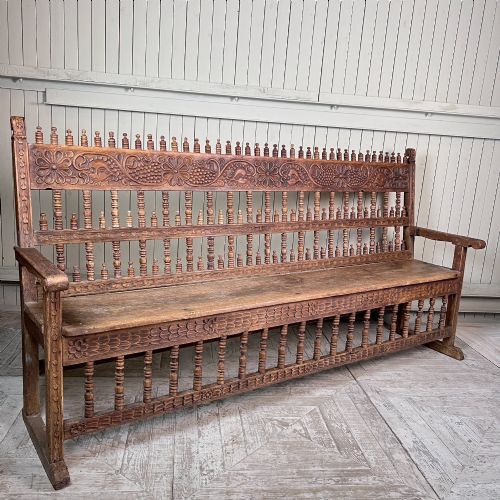
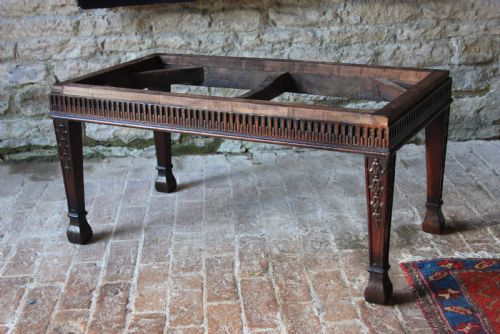
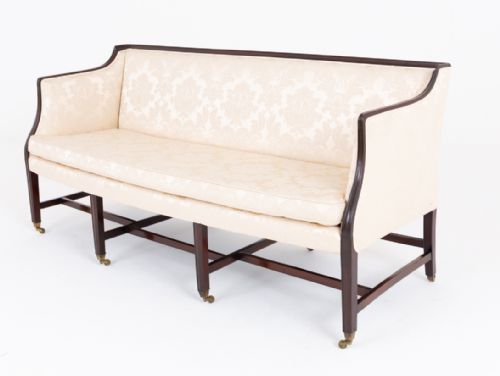
An 18th century style bench encompasses large hardwood settees, window seats, and long footstools originating from Georgian, Rococo, and Neoclassical traditions. These seating forms range from substantial carved mahogany settees to painted Swedish Gustavian pieces designed for formal domestic interiors.
Buyers most frequently encounter George II style framework, Chippendale proportion, and Dutch walnut or oak constructions across these listings. Many pieces pair carved wooden frames with patterned upholstery fabric, brass hardware, and giltwood detailing.
Origins stretch across British, Italian, Spanish Colonial, and Scandinavian workshops, reflecting diverse regional interpretations of 18th-century forms. Makers utilised local hardwoods and specific regional carving motifs to distinguish domestic seating from grand saloon furniture.
How they were made
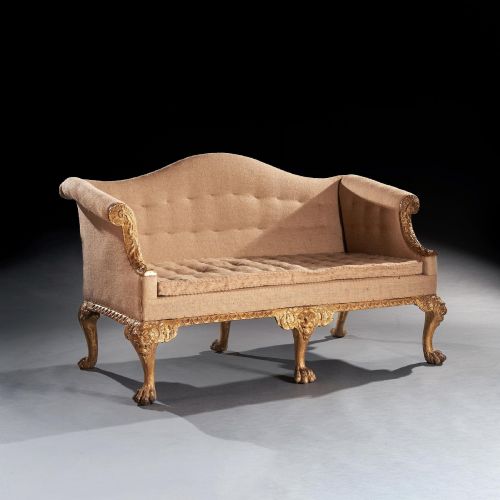
Craftsmen built these benches using dense hardwoods such as mahogany, oak, walnut, and sometimes softer painted woods. Frames frequently feature hand-carved decorative elements, ranging from lion mask hairy paw feet to intricate chairback piercings.
Surface finishes vary between polished timber, giltwood application, and original painted or distressed wooden layers. Upholstery fabric is fastened over traditional stuffing, supported by internal wooden webbing and solid rail construction.
Several listings highlight regional European origins, notably Swedish Gustavian and Italian Rococo aesthetic traditions.
What varies in quality
Quality rests in the crispness of the hand-carved details and the structural integrity of the timber frame. Fine examples exhibit deeply carved motifs, such as animal paws or scrollwork, executed with precision rather than superficial moulding.
The choice of primary wood and the preservation of original paint or rich patina dictate the standing of a piece. Superior proportions and harmonious joinery separate standard workshop output from exceptional cabinet work.
Giles Grendey
The 18th Century Style Bench Glossary
- Settee
- A long wooden or upholstered seat with a back and arms, designed to accommodate multiple people. These forms often mirror the stylistic vocabulary of contemporary dining chairs.
- Giltwood
- Timber coated with a thin layer of gold leaf or metallic gilt. This finish appeared frequently on high-status Neoclassical and Rococo frames.
- Gustavian
- A Swedish aesthetic movement blending French Rococo and Neoclassical lines with lighter, brighter painted finishes. It provides a restrained alternative to heavier British and Italian designs.
- Chippendale
- A British furniture style characterised by carved mahogany, cabriole legs, and intricate ribbon-back or ladder-back designs. It remains a benchmark for mid-century craftsmanship.
- Footstool
- A low upholstered or wooden stool intended to support the feet when seated. Larger variants double as window seats or long benches.
18th Century Style Bench: Frequently Asked Questions
Where did people place these benches?
These pieces sat in grand hallways, drawing rooms, and long galleries to provide formal seating for guests. Window seats were specifically positioned in deep architectural window recesses.
Smaller footstools and long benches served various utility roles across private chambers and public reception areas, adapting to domestic needs.
How do I care for timber frames?
Maintain wooden surfaces by keeping them away from direct heat sources and sudden humidity shifts. Regular dusting with a soft cloth preserves the natural timber sheen.
Avoid chemical polishes that can degrade historic wax finishes or original painted surfaces over time.
Can I reupholster these historic pieces?
Upholstery can be replaced to match modern interiors while respecting the underlying webbing and frame construction. Traditional stuffing materials are often retained during restoration.
Consulting a specialist ensures the historical integrity of the seat rail and wooden structure remains undisturbed.