





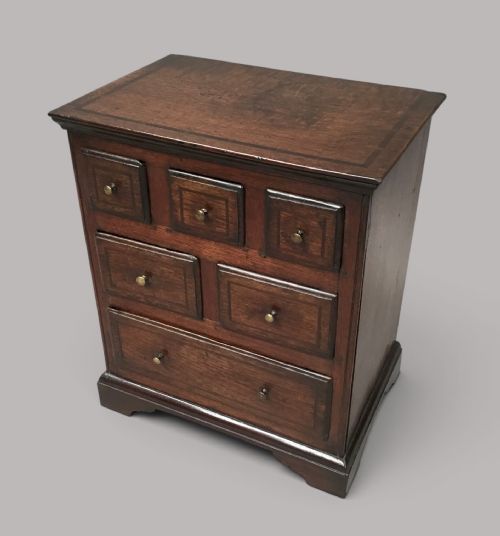


18th Century Spice Chest
An 18th century spice chest offers compact period storage, bringing dense domestic history and warm timber grain into modern rooms.
18th Century Spice Chest
An 18th century spice chest comprises small tabletop boxes, wall-hanging cupboards and miniature drawer units designed originally to secure valuable culinary goods. Buyers seeking an 18th century spice chest encounter compact Georgian forms intended for domestic organisation.
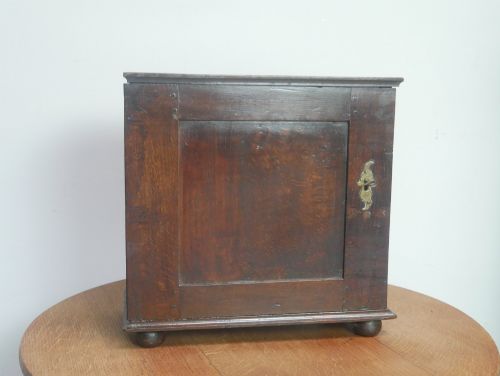
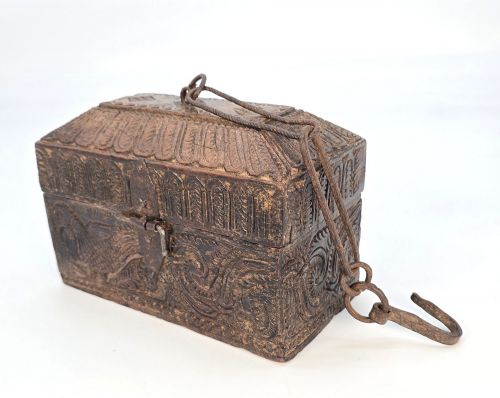
The selections span early Georgian country pieces to regional Welsh vernacular items and British examples. Workshops also produced teak boxes in India during the same period for export.
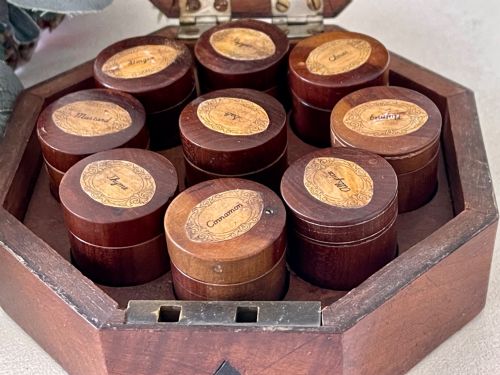
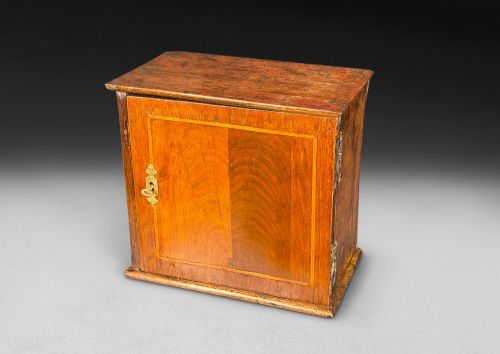
Most items survive in oak and walnut, fashioned as wall cabinets or small tabletop storage boxes with internal compartments. These miniature receptacles mirror the architectural details of larger period furniture on a domestic scale.
How they were made
Cabinet makers built these small chests primarily using solid oak and walnut timber, joined with traditional pegged or dovetailed construction. Iron and brass hardware, including strap hinges and escutcheons, secured the doors and lids.
Some regional pieces incorporate inlaid decoration or paper linings within the internal compartments, whilst Indian examples utilise carved teak. Toleware variations introduce painted metal construction into the category.
18th Century Spice Chest Retail Price Guide 2026
Typical asking prices for 18th century spice chest among the pieces listed under this phrase on Sellingantiques today, from the lower quarter to the upper quarter. They describe what is for sale here now, not the wider market.
What varies in quality
Quality rests upon the crispness of the timber joinery and the survival of original brass or iron hardware. Pieces that retain their internal pots or fitted drawers demonstrate higher craftsmanship.
Regional variation influences refinement, shifting from simple vernacular oak construction to sophisticated walnut surfaces with detailed inlay. The integrity of the original timber patina distinguishes superior examples.
The 18th Century Spice Chest Glossary
- Vernacular
- Furniture made by local country craftsmen for domestic use rather than urban workshops. These pieces often utilise regional timbers like Welsh oak.
- Escutcheon
- A protective plate surrounding a keyhole, usually fashioned from brass or iron. It prevents the timber around the lock from splitting with repeated use.
- Dovetail
- A joint formed by interlocking wedge-shaped fingers of wood, providing strong tensile strength for drawer corners and cabinet boxes.
- Toleware
- Lacquered or enamelled metalware popular in the Georgian period. It offers a smooth painted surface distinct from traditional timber construction.
- Miniature
- A scaled-down version of a larger furniture form, such as a court cupboard or chest of drawers. Makers utilised these small formats to demonstrate skill or for specialised storage.
18th Century Spice Chest: Frequently Asked Questions
What were 18th century spice chests used for?
Households utilised these small cabinets to store expensive imported spices, herbs and medicinal ingredients safely away from damp air and pilfering. The internal drawers and pots kept volatile seasonings contained.
Today, owners repurpose the compartments to hold jewellery, small keepsakes or collection items while displaying the antique woodwork on walls or tables.
How do I mount a wall hanging spice cupboard?
Period wall-hanging cupboards typically feature original hanging brackets or reinforced rear boards designed for secure placement on sturdy walls. Position them away from direct heat sources to protect the historic timber.
Ensure fixings match the weight of the solid oak or walnut structure to support the cabinet safely without straining the ancient joints.
How can I tell early Georgian pieces apart?
Early Georgian cabinets often display simpler vernacular construction using solid oak, sometimes featuring heavy mouldings and iron strap hinges. Mid-century examples incorporate refined walnut veneers and more complex internal drawer layouts.
Regional differences also help distinguish origins, such as Welsh vernacular characteristics compared to urban British workshop standards.