



18th Century Sketch
An 18th century sketch captures the direct hand of a period artist through ink, chalk, or wash on paper.
18th Century Sketch
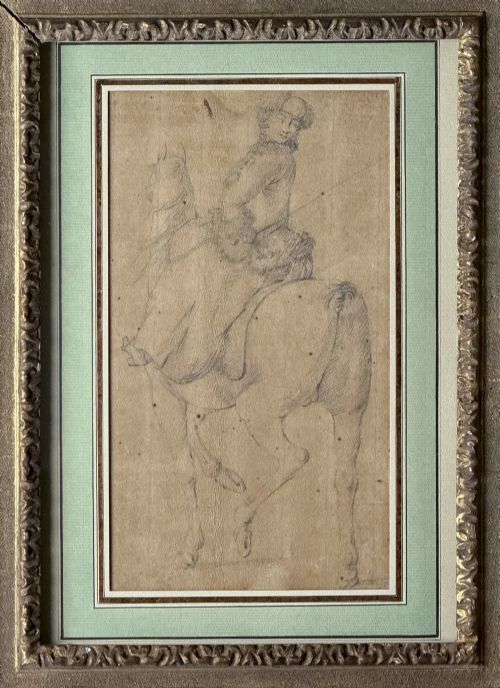
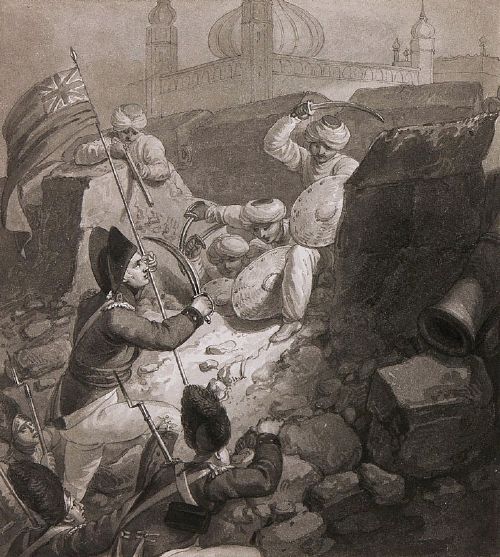
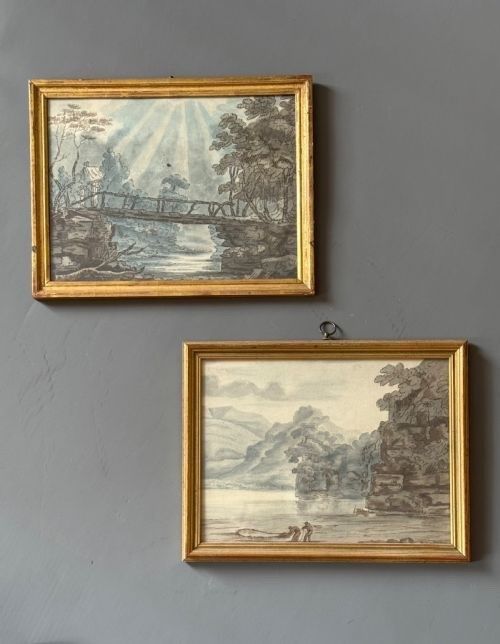
An 18th century sketch encompasses original works on paper such as pen and ink drawings, portrait studies, and landscape watercolours from the Georgian era and continental European schools. Buyers encounter framed artworks depicting equestrian scenes, architectural studies, and character portraits attributed to named masters or period hands. These surviving sheets offer intimate glimpses into the preparatory working methods and spontaneous observations of historical artists.
The material surface primarily consists of antique laid or woven paper housed in period frames of wood, often with glass protection. Surviving examples range from rapid compositional notations in graphite and charcoal to finished wash drawings intended as independent works. Regional schools from England, France, Italy, and Northern Europe contribute distinct stylistic traits to the available selection.
Materials and Technique
Artists of the period utilised organic media including iron gall ink, red and black chalk, graphite, and charcoal applied directly to handmade paper sheets. Washes of diluted watercolour or bistre provided tonal depth and shadow to linear frameworks.
Support materials frequently included laid paper bearing historical watermarks, occasionally mounted onto secondary panels or boards. Framing techniques involved carved wood moulding, gilt scroll mounts, and protective glass glazing to preserve the delicate pigments.
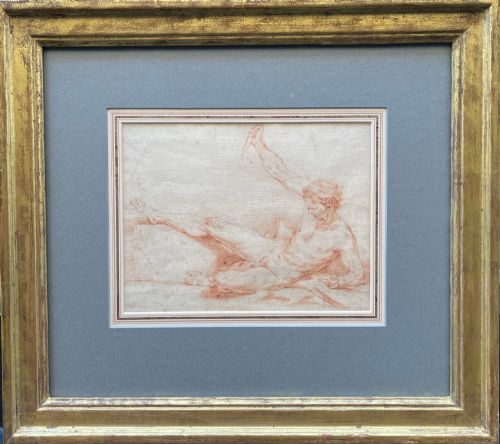
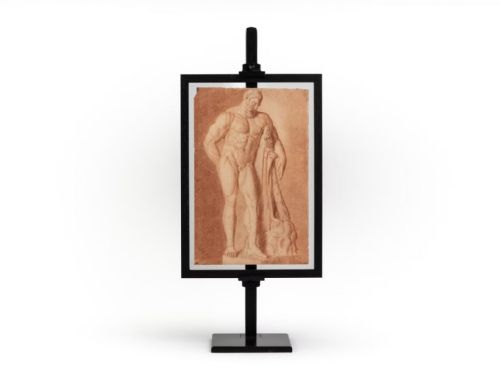
One resourceful artist utilised both sides of the same paper sheet, leaving Hercules staring intently at the blank wall behind him.
Assessing Quality and Execution
Quality rests upon the confidence of the line and the expressive economy of the draftsmanship rather than the finished polish of a formal oil painting. Superior sheets demonstrate anatomical certainty, dynamic gesture, and assured handling of shadow without heavy reworking.
Condition plays a decisive role, distinguishing crisp, unfaded ink and vibrant chalk from sheets marred by excessive foxing, water staining, or brittle paper degradation. The integrity of the original mount and framing contributes significantly to the historical coherence of the piece.
Francois Boucher·Thomas Rowlandson·Pio Panfili·John Hoppner·Sir Joshua Reynolds
The 18th Century Sketch Glossary
- Wash
- A technique where diluted ink or watercolour is brushed across paper to create tonal gradations and shadow. This method adds atmospheric depth to linear framework sketches.
- Recto and verso
- Terms denoting the front and back of a single sheet of paper. Sketches frequently appear on both sides when paper was scarce or used for preliminary studies.
- Plumbago
- A drawing executed in pure graphite, named after the Latin word for lead ore. These detailed monochrome portraits gained popularity during the seventeenth and eighteenth centuries.
- Old Master
- A term describing a European artist of high skill working before the nineteenth century. These drawings reflect academic training and traditional studio practices.
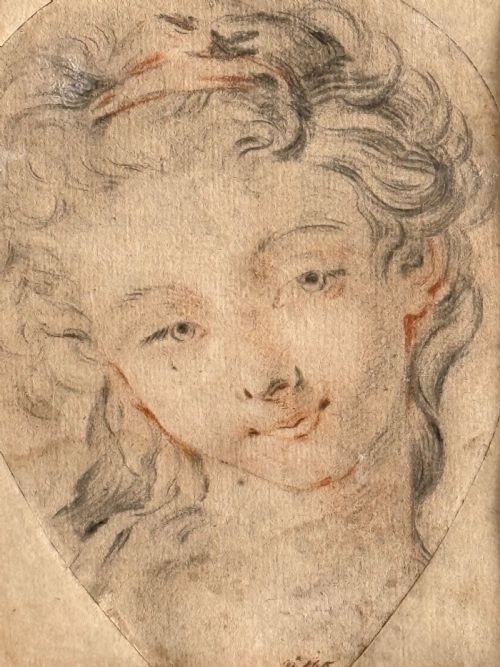
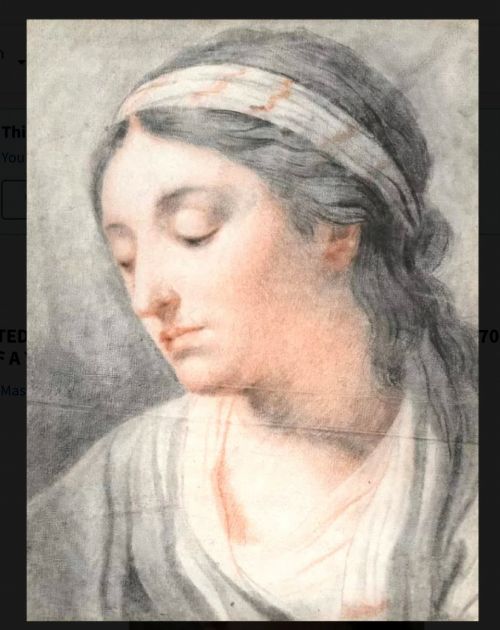
- Bandeau
- A narrow headband or ribbon worn in the hair as a decorative ornament. Portrait subjects of the period often wear this fashion accessory.
18th Century Sketch: Frequently Asked Questions
What is an 18th century sketch?
An 18th century sketch is an original work on paper created using media like ink, chalk, graphite, or wash during the seventeen-hundreds. These pieces range from rapid compositional ideas to detailed portrait studies and landscapes.
Created by European and British artists, these drawings provide direct insight into historical artistic techniques and observational methods.
How were these drawings used?
Artists produced these sketches as preparatory studies for larger paintings, records of travel, or independent works of art for patrons. They served as immediate exploratory exercises rather than final exhibition pieces.
Collectors valued them for capturing the unvarnished creative process and spontaneous hand of the draftsman.
How do I live with antique sketches?
Paper works require careful placement away from direct sunlight to prevent fading of inks, chalks, and watercolours. Maintaining stable indoor humidity protects the fragile organic fibres of historical paper.
Framing with UV-resistant glass ensures these delicate pieces survive safely on domestic walls.
How can I tell periods apart?
Period distinction relies on analyzing paper watermarks, framing styles, and the specific characteristics of the drawing media. Georgian English works differ noticeably in palette and subject matter from French Rococo or Italian Old Master examples.
Stylistic conventions and costume details in portraiture also help narrow down the exact decade of creation.