




18th Century Seating Set
An 18th century seating set brings matched historical form to a dining room, offering coordinated seating built during the Georgian era.
18th Century Seating Set
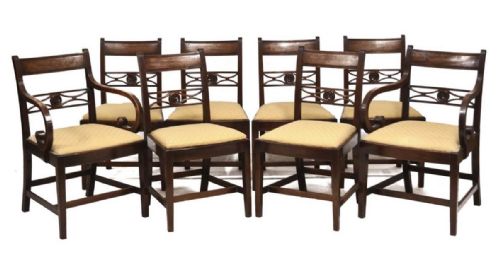
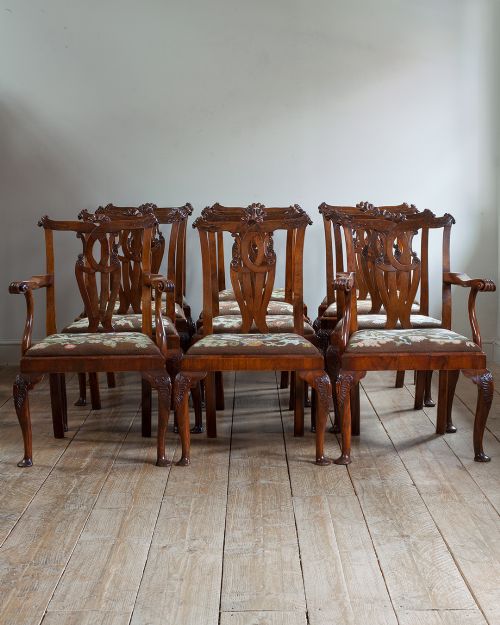
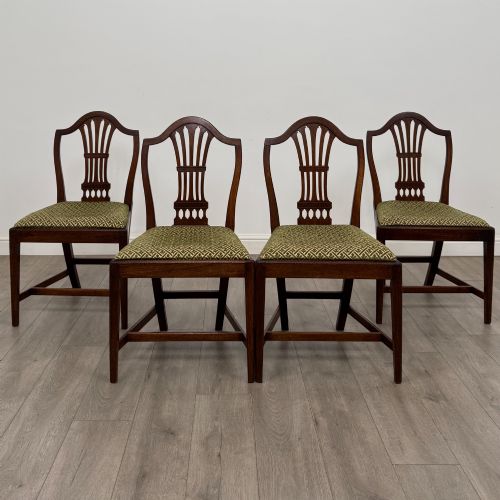
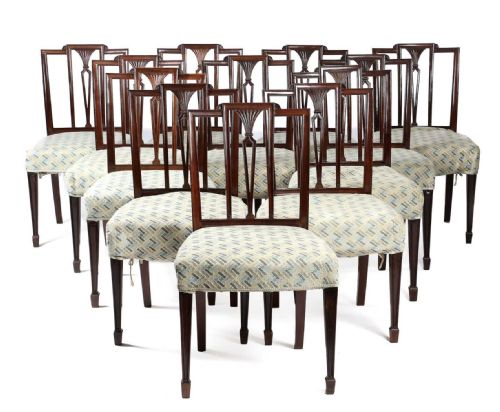
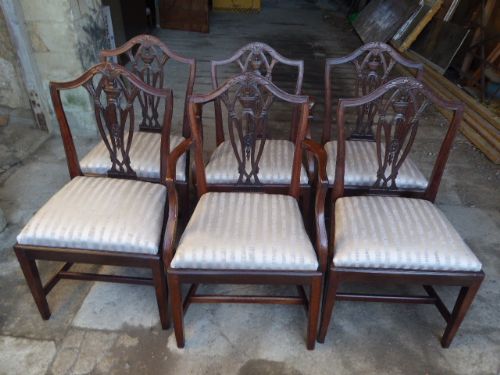
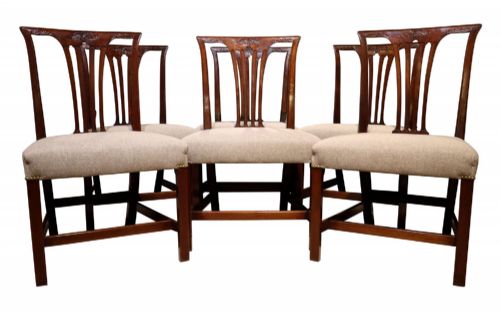
An 18th century seating set comprises matched groups of dining chairs or hall chairs dating predominantly from the Georgian period. Sets range in number from four up to twelve pieces, frequently combining single chairs with matching armchairs.
Mahogany and walnut form the primary timber framework across English and Italian origins, accompanied by regional variations in elm, fruitwood, and oak. Surviving examples reflect designs attributed to the Georgian era alongside later revival interpretations.
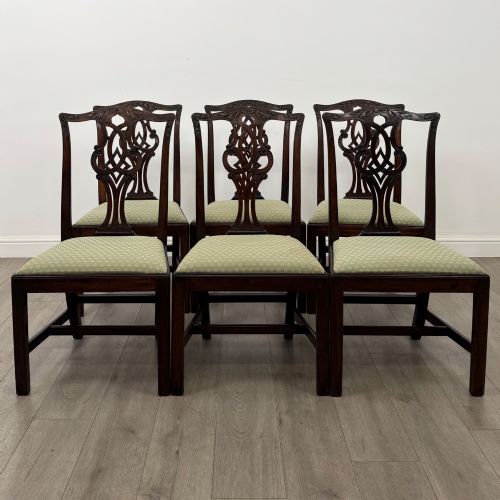
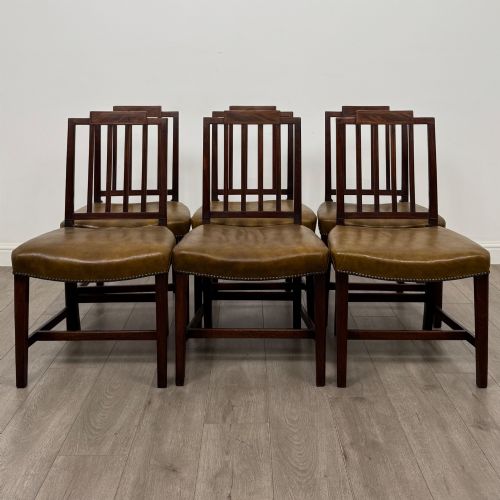
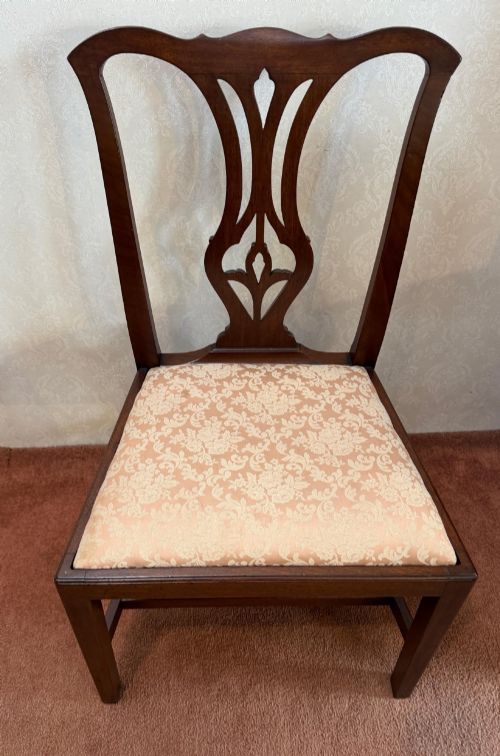
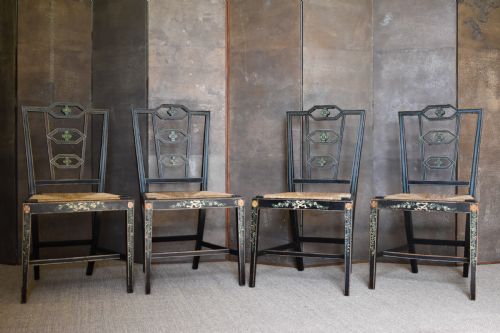
Dining chairs dominate the selection, appearing with solid splats, ladder backs, or inlaid decoration. Hall chairs and spindleback designs complete the available formats within this group.
Craftsmanship and Survival
Superior sets display crisp carving along the splats and crest rails, demonstrating the hand of a skilled maker. Lower quality or later revival examples often exhibit softer detail and simpler joinery.
The integrity of the original timber frame and the uniformity across all pieces in the set determine the overall standing. Matched sets that retain their original surfaces command greater appreciation than those assembled later from disparate components.
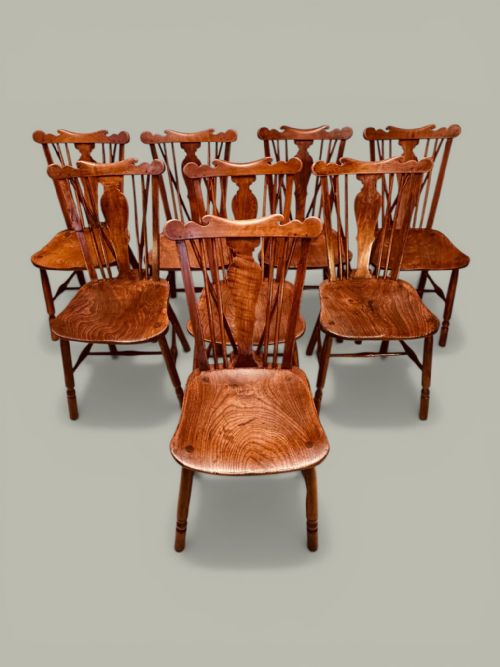
A sturdy fruitwood and elm comb-back Windsor set from around 1780 offers rustic country charm alongside formal dining chairs.
The 18th Century Seating Set Glossary
- George III
- The period spanning the reign of George III from 1760 to 1820, encompassing major developments in English chair design. Pieces from this era often display refined classical proportions.
- Hepplewhite
- A style of furniture associated with the designer George Hepplewhite, characterised by shield-back chairs and slender tapered legs. This aesthetic gained popularity in the late 18th century.
- Splats
- The vertical wooden strip down the centre of a chair back, connecting the crest rail to the seat. Carved splats provide key stylistic indicators for dating.
- Marquetry
- The art of applying decorative pieces of veneer to a structure to form intricate patterns. Dutch workshops frequently employed this technique on walnut high-back chairs.
- Comb-back
- A Windsor chair variation featuring vertical spindles rising through a bentwood arm bow to form a comb-like headrest. This regional country construction offers robust everyday seating.
18th Century Seating Set: Frequently Asked Questions
How many chairs make a complete set?
Sets typically comprise four, six, eight, ten, or twelve pieces to accommodate various dining table lengths. Many larger groups combine single chairs with a pair of matching armchairs.
Finding sets larger than six pieces remains less common because many chairs did not survive intact over the centuries.
Were these chairs used only for dining?
While the majority served formal dining purposes, hall chairs functioned in entrance spaces to display family crests or architectural painting. Windsor and spindleback variants served regional domestic settings.
Dining sets remained grouped around large tables during formal meals and were pushed against room perimeters when not in use.
How do I care for antique wood seating?
Keep wooden frames away from direct heat sources and dramatic humidity fluctuations to prevent timber splitting. Regular dusting with a dry cloth maintains the polished finish without stripping the surface.
Avoid chemical polishes that can damage historic finishes, opting instead for traditional beeswax applied sparingly.
How can I distinguish period pieces from later copies?
Examine the underside and joinery for hand-cut marks, timber shrinkage, and consistency in wear matching the stated age. Revival pieces from later centuries often utilise different construction tolerances and machine-sawn components.
Comparing the patina across all chairs in a set helps confirm whether the group originated together or was assembled later.