



18th Century Pastel Portraits
These 18th century pastel portraits are delicate works on paper capturing sitters with remarkable immediacy, offering collectors a direct glimpse into Georgian society.
18th Century Pastel Portraits
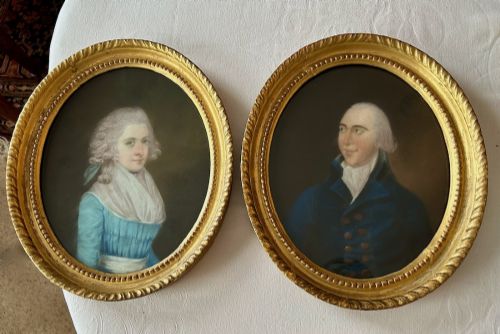
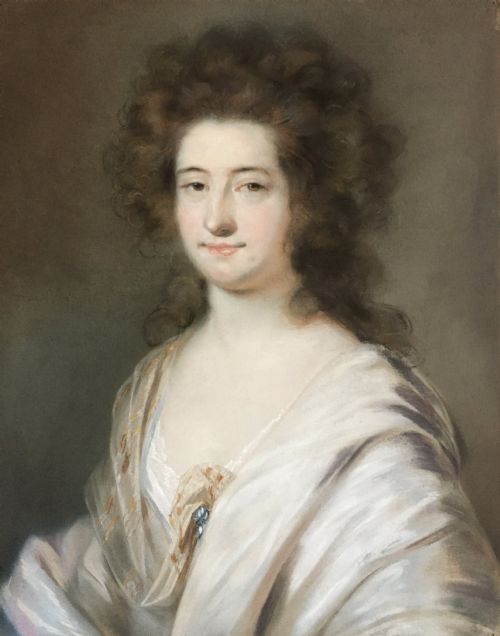
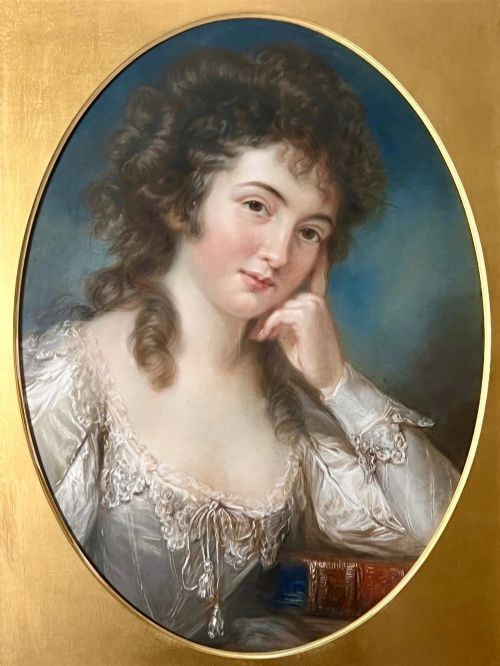
When you search for 18th century pastel portraits, you encounter fine art works executed primarily on paper using coloured pigments in stick form. These portrait paintings capture sitters ranging from young boys in red jackets to notable ladies, often rendered with striking realism.
The pieces on this page span the 18th century, Georgian era, and the year 1800, alongside occasional 19th-century examples. You will find both individual works and matched pairs, presented as framed artwork ready for wall display.
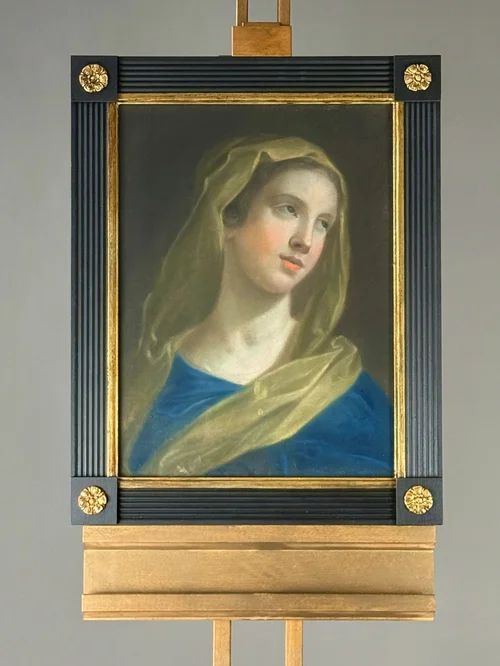
Subjects include specific named individuals like Miss Mary Linwood and General Sir James Henry Craig, as well as anonymous sitters and religious subjects such as the Madonna. Formats vary from standard pastel portrait paintings down to intimate portrait miniatures.
How they were made
Artists created these works by applying dry pastel pigments directly onto paper surfaces, building up tones and textures without the use of liquid binders. This technique allowed for subtle blending of colour, particularly effective in rendering the soft textures of skin, hair, and fabric.
Finished works required careful mounting beneath glass to protect the fragile pigment layers from disturbance and airborne moisture. Traditional framing utilised wood, giltwood, and gold leaf, often in styles reflecting Italian Baroque or 18th-century Rococo aesthetics.
Listings feature paper supports housed within wooden, giltwood, and gold leaf frames across 18th-century, Georgian, and 19th-century periods.
What varies in quality
The integrity of the original paper and the condition of the pastel surface determine much of the distinction between pieces. Works that retain their vibrant un-rubbed tones and sit within period giltwood frames command greater appreciation than those with significant pigment loss or later alterations.
James Sharples·Benedetto Luti·John Russell·John Raphael Smith·Nathaniel Bermingham·Arthur Pond·Gerrit Schipper
The 18th Century Pastel Portraits Glossary
- Pastel
- A dry painting medium composed of powdered pigment and a binder, shaped into sticks. It offers a velvety texture and an extensive range of soft hues.
- Giltwood
- Wood carved and coated with a thin layer of gold leaf or metallic powder. It provides a luminous decorative border common in Georgian frames.
- Miniature
- A small-scale portrait designed for intimate viewing. These compact works require exceptional precision due to their restricted dimensions.
- Rococo
- An 18th-century decorative style characterised by ornate curves, asymmetry, and elaborate ornamentation. It frequently influences the carved frames housing these portraits.
- Baroque
- A preceding artistic style marked by grandeur, rich detail, and dramatic contrast. Italian Baroque influence appears in certain religious and secular subjects on this page.
18th Century Pastel Portraits: Frequently Asked Questions
Where should I hang these portraits?
Hang your pastel portrait in a room with stable humidity and away from direct sunlight, which causes fugitive pigments to fade.
Interior walls protected from strong temperature fluctuations help preserve both the paper support and the antique wooden frame.
Are these portraits always signed?
Many works from this period remain unsigned or attributed through stylistic comparison to followers and circles of known masters.
A signature enhances documentation, but unassigned works frequently display the same high standard of artistic skill.
Why are pastels framed under glass?
Glass is essential for protecting the friable pastel surface from physical touch, dust, and atmospheric pollution.
Without this physical barrier, the unbound pigment particles would brush off the paper at the slightest contact.