
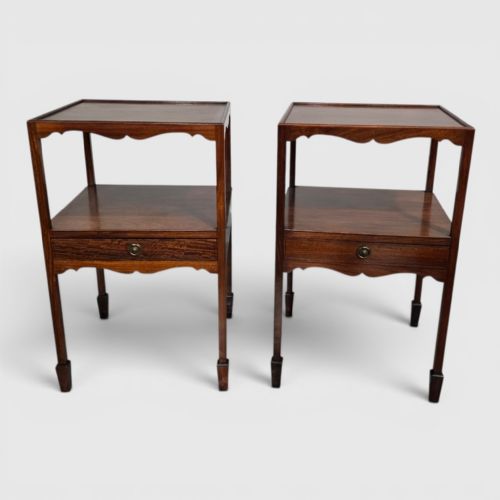

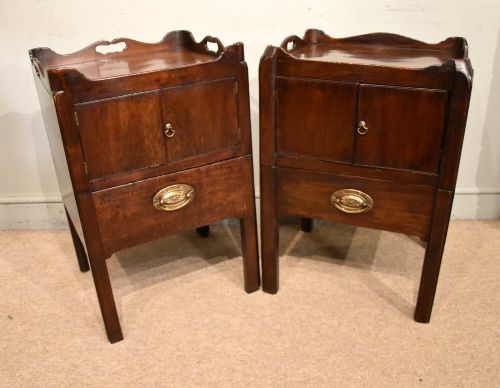
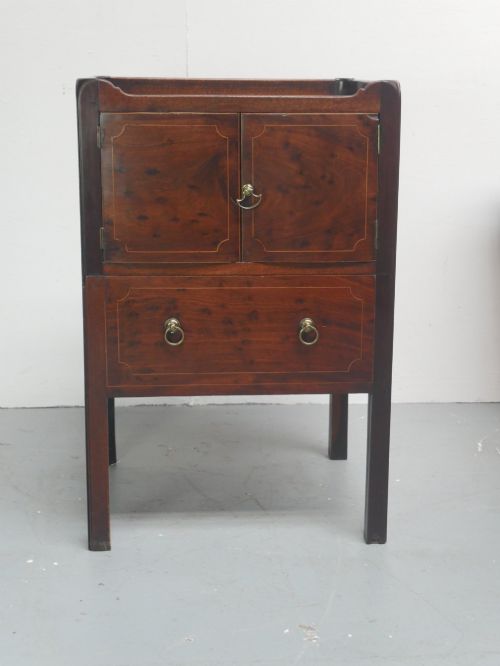
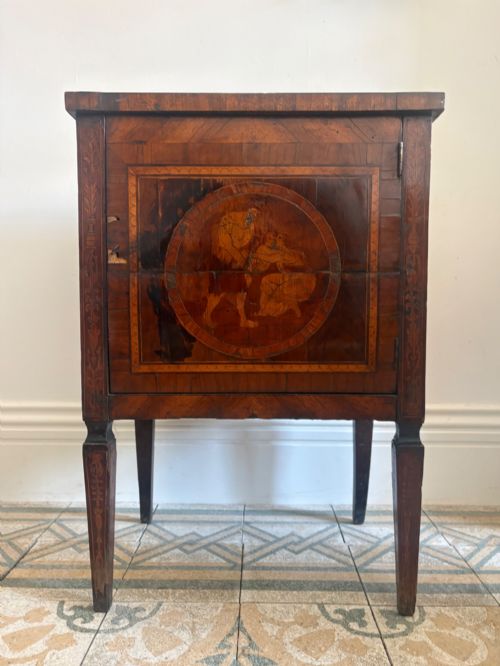
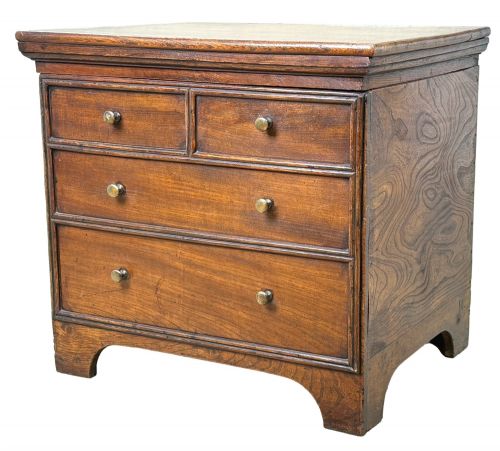
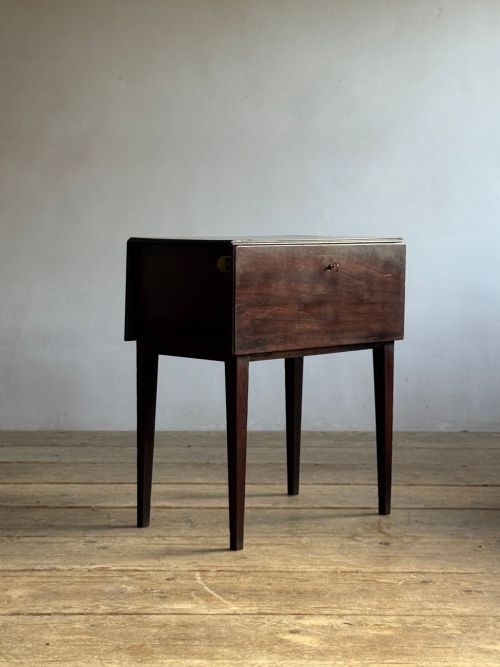


18th Century Night Table
An 18th century night table is a practical bedside companion that brings period character and discreet storage to a bedroom.
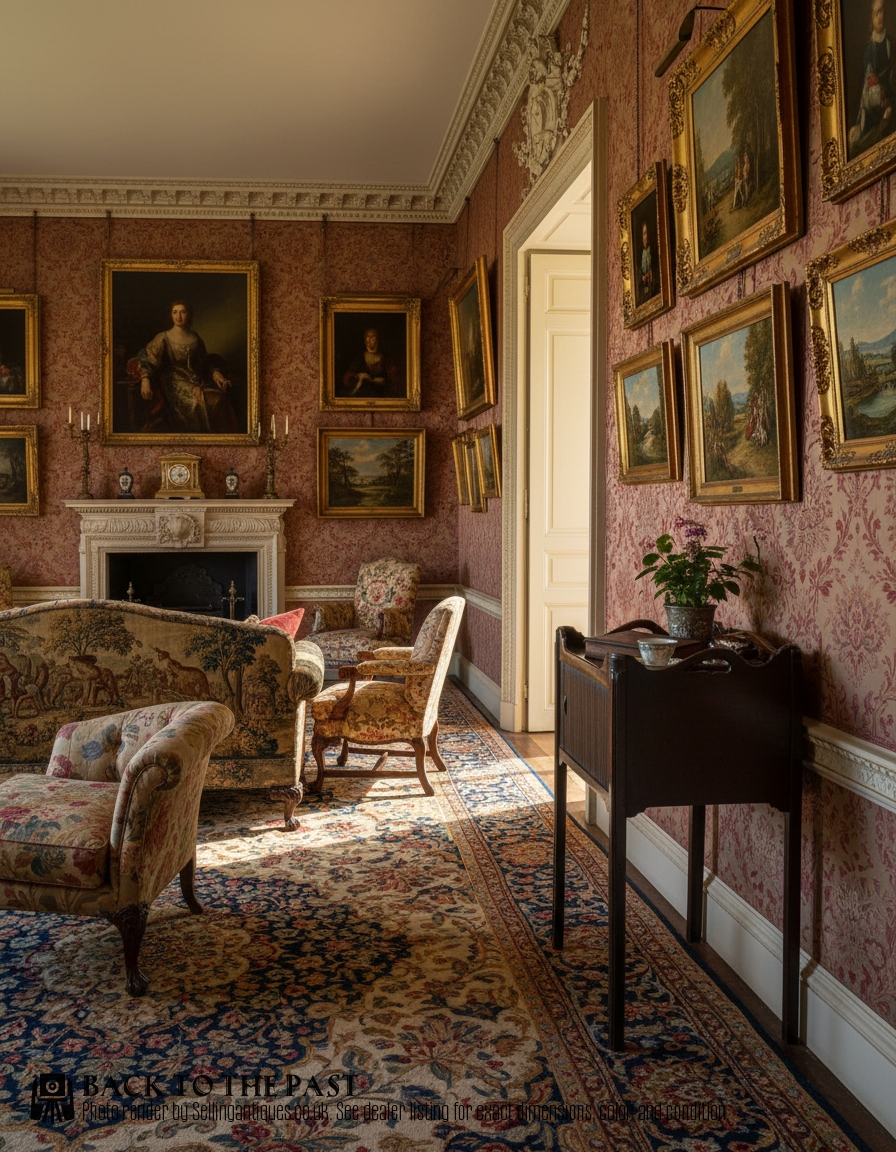
18th Century Night Table
An 18th century night table encompasses a variety of compact bedside forms, most commonly appearing as mahogany tray-top cupboards or commodes from the Georgian and George III periods. These pieces were designed to hold chamber pots or personal items out of sight, fulfilling a utilitarian role in domestic life.
The selection includes serpentine fronts, tambour doors, and enclosed cupboards alongside simpler lamp tables and occasional stands. Walnut and elm also appear alongside the dominant mahogany, sometimes featuring boxwood inlay or marquetry details.
Makers and cabinet-makers of the period produced these items in matched pairs as well as single pieces, catering to the specific needs of gentleman's and lady's bedchambers.
How They Were Made
Cabinet-makers relied primarily on solid and veneered mahogany, often selecting dense timbers that allowed for crisp shaping of serpentine profiles and raised tray tops. Boxwood inlay and delicate stringing provided contrast on select surfaces.
Construction techniques included dovetailed drawer boxes and mortise and tenon frames, ensuring stability for pieces subjected to daily use. Tambour slides required precise wooden slat construction to move smoothly within enclosed tracks.
Mahogany is the predominant timber across these listings, accompanied by walnut, elm, and fruitwood.
What Varies in Quality
Quality rests in the crispness of the timber carving, the subtlety of the proportions, and the selection of figured grain across drawer fronts and top surfaces. Superior examples demonstrate rigorous joinery and well-integrated hardware that complement the original design.
The integrity of the timber and the depth of the finish determine the visual success of a piece, separating straightforward utilitarian furniture from refined chamber furnishings.
The 18th Century Night Table Glossary
- Tray top
- A moulded or raised gallery edge surrounding the upper surface of a table to prevent items from rolling off. This feature is particularly common on Georgian bedside commodes.
- Commode
- A low cabinet or chest with doors or drawers, frequently used in the 18th century as a bedside piece to house a chamber pot. The term covers several variations of enclosed bedside stands.
- Tambour
- A flexible sliding shutter formed from narrow vertical strips of wood glued to a canvas backing. It allows access to enclosed compartments without requiring clearance for hinged doors.
- Serpentine
- A curved line that undulates with a convex centre flanked by concave sides, or vice versa. This shaping demands advanced cabinet-making skill to execute cleanly in solid mahogany.
18th Century Night Table: Frequently Asked Questions
What is an 18th century night table used for?
These pieces served historical bedchambers as enclosed storage for chamber pots, washing basins, and personal belongings. Their compact dimensions kept necessary items close to the bed while maintaining a tidy room.
Today, they function as bedside tables or lamp tables, providing concealed storage and a convenient surface beside a modern bed.
How do I tell a George III night table apart from later copies?
Examine the timber construction, secondary woods used inside drawer linings, and the method of joint assembly. Period pieces exhibit hand-cut dovetails and timber movement appropriate to eighteenth-century workshop practices.
Surface wear, patination, and the integration of hardware also offer clear indicators of age that mechanical reproduction cannot replicate.
Were night tables made in pairs?
Cabinet-makers did produce matched pairs for symmetrical bedroom arrangements, though many survived individually over the centuries. Finding a matching pair is less common than discovering single examples.
Pairs often command distinct interest from collectors seeking balance in a larger bedroom setting.
How do I care for an antique mahogany night table?
Protect the polished mahogany surface from direct sunlight, excess moisture, and extreme temperature fluctuations. Gentle dusting with a soft, dry cloth preserves the finish and natural patina.
Avoid silicone-based polishes and apply traditional wax sparingly only when the timber appears dry.