



18th Century Marble Table
An 18th century marble table brings weight and structural rhythm to a room through carved timber and cool stone.
18th Century Marble Table
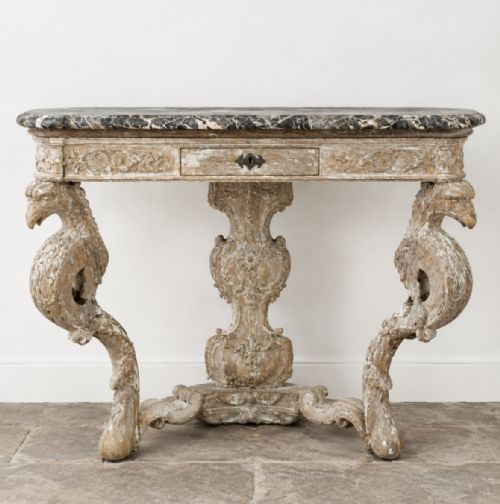
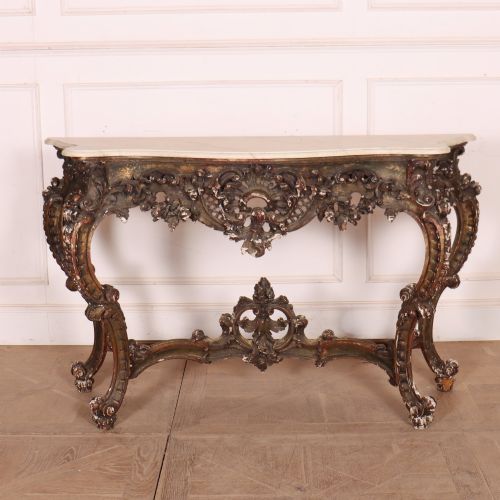
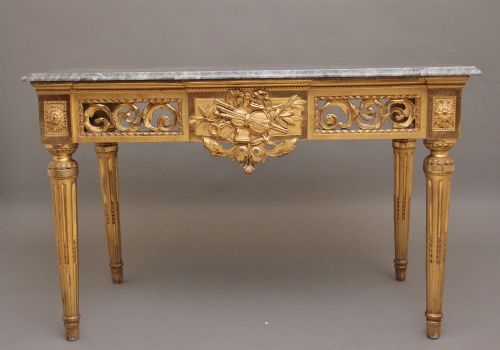
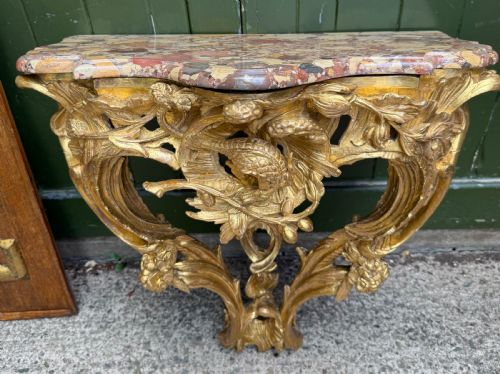
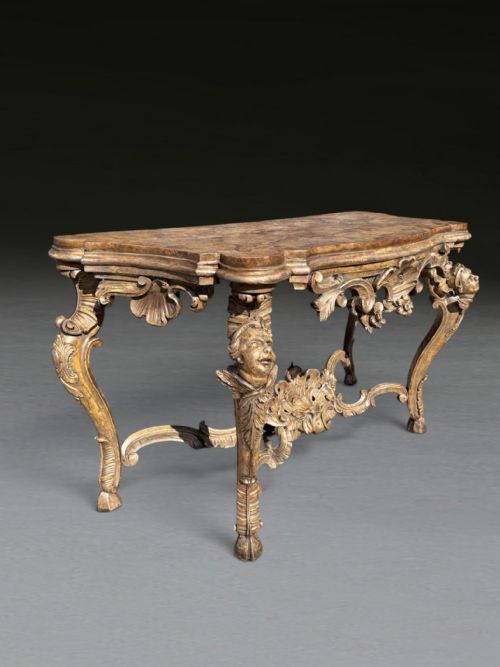
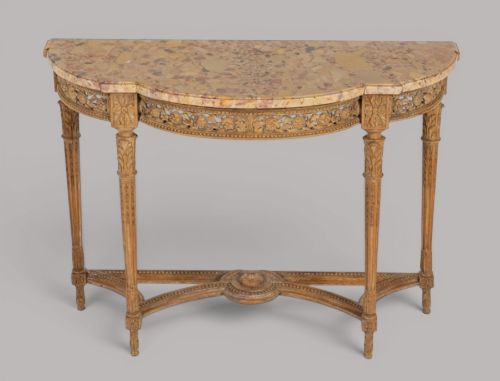
When searching for an 18th century marble table, buyers encounter grand console tables designed to stand against walls beneath mirrors, alongside proportioned side and centre tables. The version most frequently met on this page is the Italian or French console table, uniting a carved wooden base with a heavy fitted marble top.
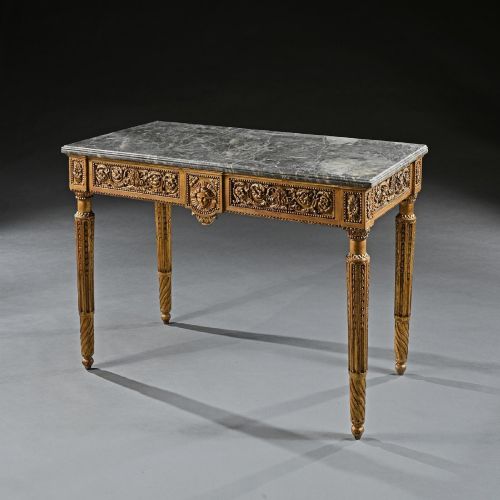
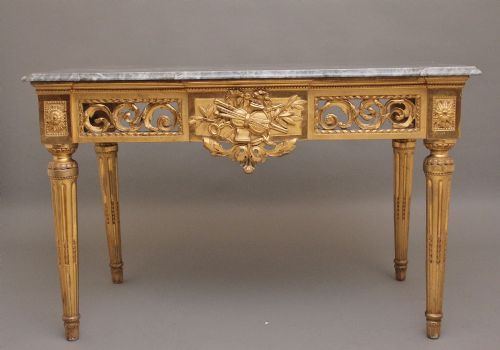
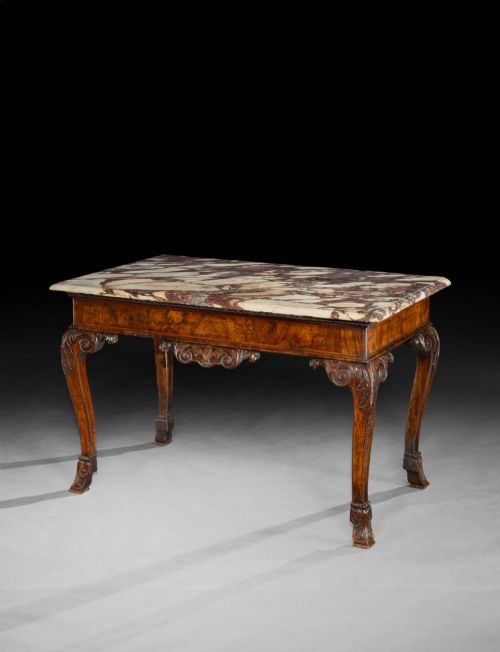
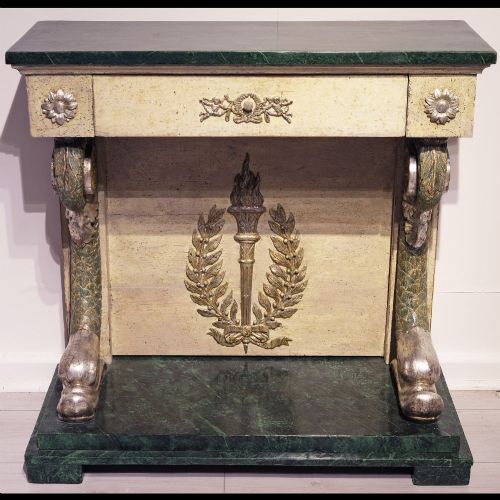
The evidence shows these forms appearing in walnut, oak, and pine, as well as heavily gilt and painted timber frames that reflect Rococo, Neoclassical, and Baroque aesthetics. Regional variants range from gilded Venetian and Neoclassical frames to British George II walnut designs and French Louis XVI pieces.
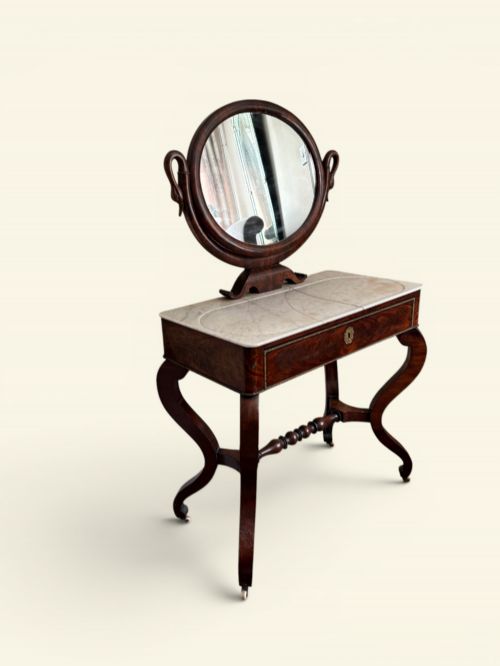
Beyond wall-mounted consoles, listings include free-standing centre tables and dressing tables that employ similar stone slabs. These furniture pieces served as decorative surfaces in formal reception rooms and domestic interiors across Britain and continental Europe.
Materials and Construction
Makers formed the structural frames of an 18th century marble table from native timbers such as oak, walnut, pine, lime wood, and fruitwood. Carpenters shaped and joined these woods to bear the considerable weight of solid stone slabs.
Surfaces were frequently finished with gesso and gold leaf, or treated with paint, faux porphyry, and silver gilt to achieve rich decorative effects. French and Italian workshops utilised intricate carving techniques to render scrolling foliage, animal figures, and architectural details along the aprons and legs.
The marble slabs resting atop these frames were quarried, cut, and polished to fit the serpentine, rectangular, or circular contours of each base. Some iterations incorporated inlaid specimen marbles or figured varieties like breche d'alep.
Several tables share space in the records with portrait paintings depicting ladies posing directly beside their marble furniture.
Assessing Quality and Execution
Quality in these furniture pieces rests primarily on the depth and crispness of the wood carving. Skilled carvers executed undercut foliage and figures with sharp relief, whereas lesser examples rely on flat, repetitive moulding.
The treatment of the giltwood, gesso, or paint finish dictates the visual presence of the piece. Superior examples display restrained application and ageing that preserves the integrity of the underlying timber and gesso layers.
The integration between the stone top and the wooden base signals the tier of the piece. A harmoniously fitted marble slab that matches the specific contour of the frame demonstrates bespoke coordination during manufacture.
Louis Goret·Sacre
The 18th Century Marble Table Glossary
- Console table
- A wall-mounted or bracket-supported table designed to stand against a vertical surface, frequently paired with a matching wall mirror. These pieces form the vast majority of surviving stone-topped furniture from the period.
- Giltwood
- Timber coated with a thin layer of gold leaf over a prepared gesso ground. This finish provides a reflective surface that catches interior candlelight and daylight.
- Breche d'alep
- A decorative quarried marble featuring a brecciated pattern of mixed angular fragments in tones of brown, cream, and amber. It appears frequently on French tables of the period.
- Rococo
- An ornate artistic style characterised by asymmetrical scrolls, C-curves, and naturalistic shell motifs. It dominates many of the Italian and French frames seen in these listings.
- Neoclassical
- A later 18th-century design movement inspired by classical antiquity, featuring straight lines, symmetrical fluting, and architectural proportions. This style provides a visual contrast to earlier curved Baroque forms.
18th Century Marble Table: Frequently Asked Questions
What rooms suit an 18th century marble table?
These tables function effectively in entrance halls, dining rooms, and living spaces where a solid focal point is required. Their heavy stone tops and decorative carved bases anchor the surrounding furniture.
Because console variants rest against walls, they occupy a minimal floor footprint while offering a substantial surface area for display.
How were these tables used originally?
In formal 18th-century interiors, console tables served as decorative sideboards for displaying silver, porcelain, and candelabra. They were positioned beneath large wall mirrors to multiply light within reception rooms.
Centre tables allowed movement around all sides, functioning as gathering points or display surfaces in the middle of large chambers.
How do I identify a French piece from an Italian one?
French examples often lean towards refined Louis XVI or restrained Rococo lines, frequently utilising walnut, oak, or gilded surfaces with subtle carved motifs. Italian versions tend towards exuberant Baroque or Neoclassical carving, heavily employing giltwood, silver gilt, and painted finishes.
Regional timber choices also offer clues, with continental workshops frequently selecting native fruitwoods or lime wood alongside standard walnut.
How do I care for antique marble tops?
Marble requires gentle cleaning with a damp cloth and neutral soap, avoiding acidic solutions or abrasive scourers that can etch the polished surface. Placing felt pads beneath objects helps prevent scratching the historic stone.
Periodic application of appropriate stone wax preserves the sheen without trapping moisture within the pores of the material.