





18th Century Instrument
An 18th century instrument brings scientific precision and domestic utility into daily life through brass, mahogany, and glass.
18th Century Instrument
When you search for an 18th century instrument, you encounter scientific and domestic apparatus from the Georgian era, principally barometers, telescopes, and sundials. These objects reflect the scientific curiosity and maritime pursuits of the period.
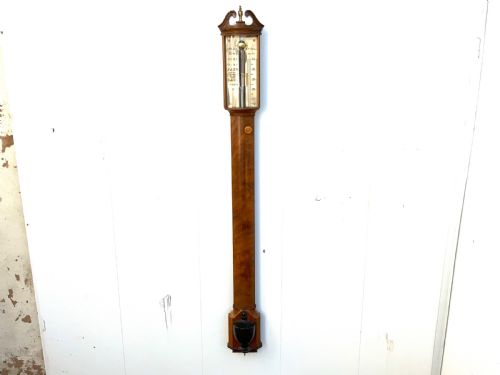
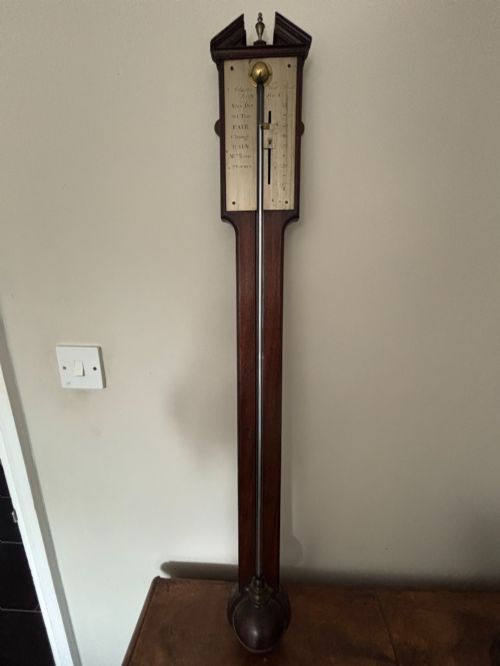
The most common form on this page is the mahogany stick barometer, often paired with a silvered scale and architectural top. Alongside these barometers, portable telescopes and pocket sundials appear regularly.
Origins span London workshops and wider British centres, with occasional European pieces. The materials reflect practical utility combined with decorative cabinet-making.
Materials and construction
Makers utilised dense timbers like mahogany, boxwood, and ebony for instrument bodies and travel cases. These woods were turned, carved, and occasionally inlaid with lighter strings to define the profile.
Optical and barometric components combined brass, silvered metal, and blown glass. Metal dials received precision engraving, while lenses and tubes required careful alignment.
18th Century Instrument Retail Price Guide 2026
Typical asking prices for 18th century instrument among the pieces listed under this phrase on Sellingantiques today, from the lower quarter to the upper quarter. They describe what is for sale here now, not the wider market.
Barometers and telescopes dominate the 18th century instrument categories on this page.
Assessing craftsmanship and condition
Superior examples demonstrate crisp engraving on silvered scales and refined proportions in the wooden casework. The reputation of the maker, often signed on the dial face or trade paper, elevates the standing of an item.
Original components, such as unbroken glass tubes in barometers or matching wooden cases for telescopes, separate standard utilitarian survivals from exceptional collector pieces.
Nairne and Blunt·George Adams·John Gilbert·Miller and Adie·John Dodd
The 18th Century Instrument Glossary
- Stick barometer
- A tall, narrow wall instrument using a column of mercury in a glass tube to measure atmospheric pressure. These typically feature exposed scales protected by a glazed door.
- Silvered scale
- A brass plate treated to achieve a silvery finish and engraved with measurement graduations. These plates reflect light gently and take fine, dark-filled lettering.
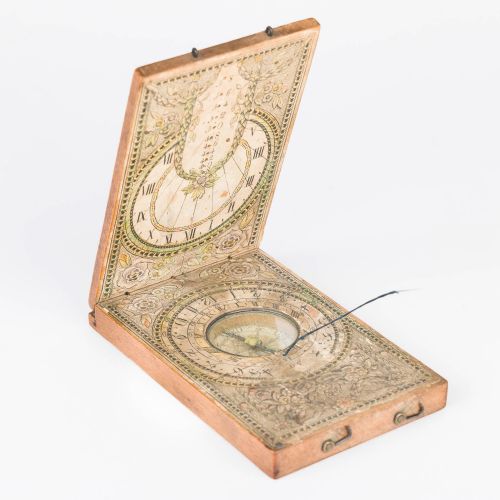
- Diptych sundial
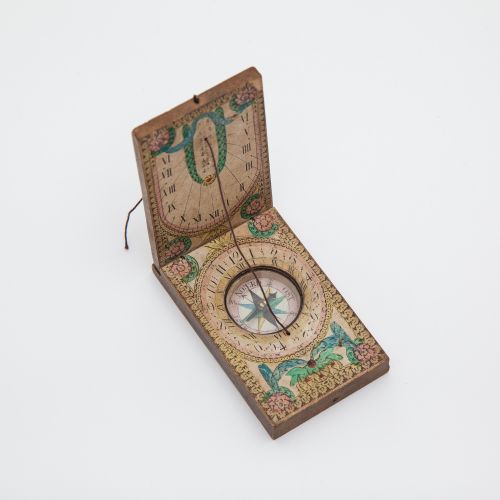
- A portable pocket timekeeper formed of two hinged wooden leaves enclosing a compass and string gnomon. Users aligned the compass to true north to read the solar time.
- Non achromatic telescope
- An early optical device that uses simple lenses without colour correction. These instruments offer historic perspective on eighteenth-century physics.
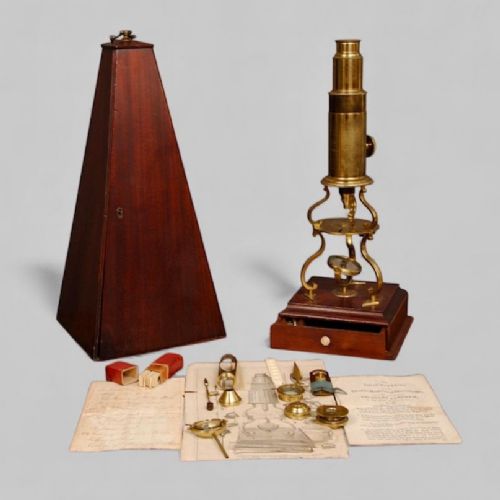
- Culpeper microscope
- A tripod-mounted scientific instrument popular during the Georgian period for examining specimens. It uses mirrors and multiple stages for illumination.
18th Century Instrument: Frequently Asked Questions
How do I read a stick barometer?
The silvered scale displays graduations measured in inches of mercury. You align the movable indicator, or vernier, with the top of the fluid column to track changes in atmospheric pressure.
Rising columns generally indicate fair weather, while falling levels suggest approaching rain or wind.
Were these telescopes used at sea?
Many portable telescopes and diptych dials served a maritime function, aiding navigation and observation on board ships. Compact wooden bodies and draw tubes protected the optics during travel.
Land-based instruments remained in libraries and private studies for terrestrial viewing and stargazing.
How do I care for mahogany cases?
Keep wooden instruments away from direct sunlight and sudden temperature shifts to prevent timber warping or veneer cracking. Gentle dusting with a dry cloth maintains the surface.
Avoid liquid polishes, which can seep into historic joints or damage delicate paper trade labels inside.
What is the purpose of trade papers?
Trade papers act as original maker labels pasted inside instrument cases or lids. They record the workshop name, address, and commercial specialisms of the retailer.
These documents help attribute uncredited pieces and provide provenance regarding where the instrument was sold.