



18th Century Handguns
These 18th century handguns are flintlock and snaphaunce arms spanning Georgian, Ottoman, and European workshops, sought after for their mechanical ingenuity and period craftsmanship.
18th Century Handguns
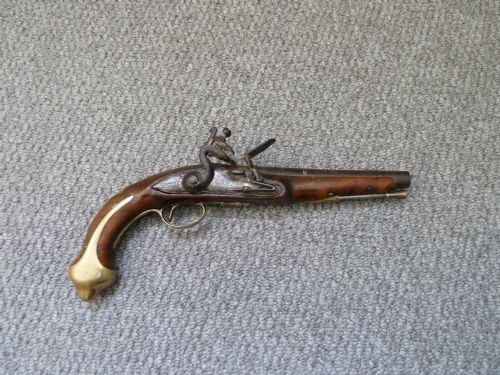
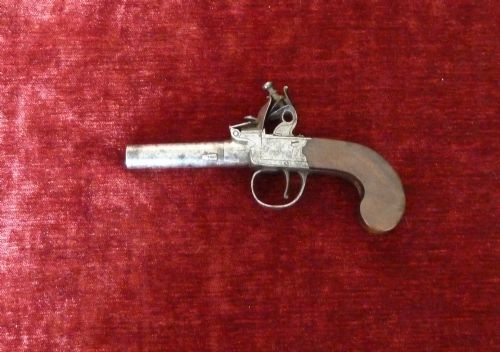
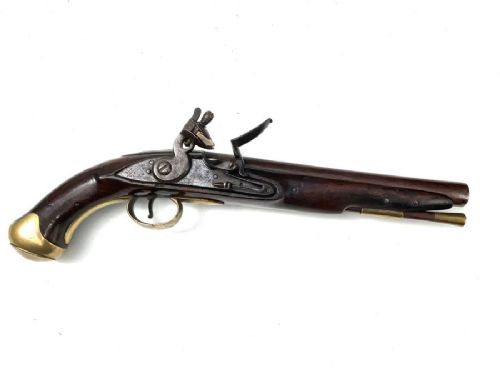
When searching for 18th century handguns, collectors encounter a diverse array of firearms including flintlock pocket pistols, cavalry holster pistols, and heavy dragoon arms. The selections span British, French, Irish, and Ottoman origins, showcasing regional military and civilian designs from the 1750s through to the Napoleonic era.
The most common variants on this page are flintlock pistols featuring walnut stocks and brass or steel barrels. Pieces range from compact travelling and muff pistols designed for personal defence to large military service arms bearing London proofs or Tower armoury markings.
Geographical styles vary widely, featuring British Queen Anne turn-off pistols alongside Balkan and Ottoman weapons adorned with distinctive rat-tail details, miquelet locks, and intricate silver inlay. Each piece reflects the specific tactical requirements and aesthetic tastes of its country of origin during the Georgian period.
How they were made
Stocks are predominantly fashioned from figured walnut, occasionally enhanced with detailed silver wire inlay or carved grotesque butt caps. Metal components rely on forged steel for barrels and locks, paired with cast brass for furniture, trigger guards, and mountings.
Specialised regional techniques include the integration of mother-of-pearl mounts and cast barrel decorations with gilt inlay on Ottoman pieces. British and Irish makers employed mechanical precision for screw-barrel cannon designs and proof-marked actions.
What varies in quality
Quality separates through the crispness of engraving on brass furniture and lock plates, as well as the delicacy of silver wire inlay embedded within the walnut stocks. Maker attribution also dictates distinction, with signed works from recognised London or provincial gunsmiths holding greater documentary interest.
The integrity of the flintlock mechanism and the matching of original components across the barrel, stock, and lock plate define the preservation standard of each firearm.
Harrison of London·T. Potts, London·John Campbell of Doune·La Motte·James Barber, London·Timothy Hughes, Cork·Thomas Anelli·R. Willoughby, Birmingham·John Rimes, London·Barber of Newark·Dutton, London
The 18th Century Handguns Glossary
- Flintlock
- A firearm ignition mechanism that uses a flint struck against a steel frizzen to create sparks that ignite the gunpowder charge. This system dominated European and colonial weaponry throughout the 18th century.
- Snaphaunce
- An early predecessor to the flintlock utilising a manually cocked steel cover over the pan. It appears frequently in Balkan and Ottoman arms of this era.
- Miquelet
- A form of snaplock ignition featuring an external mainspring and a combined steel and frizzen. It is characteristic of Mediterranean, Spanish, and Ottoman firearms.
- Cannon Barrel
- A barrel shaped like a small cannon, widening at the muzzle and typically screwed off for loading at the breech. This form is common on Queen Anne style pocket pistols.
- Bore
- The interior diameter of the firearm barrel, historically measured by the number of lead balls of that diameter that equal one pound in weight.
18th Century Handguns: Frequently Asked Questions
How do I identify a genuine 18th century pistol?
Examine the lock mechanism, wood grain, and any visible proof marks stamped onto the metal. Genuine pieces display period-appropriate construction methods such as hand-forged steel and pinned barrel fastenings.
Look for maker signatures engraved on the lock plate and check the style of the brass furniture to confirm the era of manufacture.
What is the difference between a pocket pistol and a holster pistol?
Pocket pistols are smaller, often featuring shorter cannon barrels designed for discreet personal carry and self-defence. They frequently omit cumbersome side plates.
Holster pistols are significantly larger military or civilian arms built to be carried in saddle holsters by cavalry officers and travellers during the Georgian period.
How should I clean and maintain my antique pistol?
Maintain antique firearms by keeping them in a stable, dry environment free from excessive humidity. Lightly oil metal surfaces with a museum-grade preservative to prevent corrosion.
Avoid using modern chemical solvents on historic wood stocks or original finishes, relying instead on dry microfiber cloths for dusting.
Can these flintlock pistols still be fired today?
Most antique handguns on the market are sold as collector artefacts rather than functional modern firearms. Firing them requires professional inspection by a qualified gunsmith to ensure structural integrity.
Even with working actions, original components from the 18th century face high risks of stress and failure if loaded with gunpowder.