


18th Century Gate Leg Table
An 18th century gate leg table offers folding leaves and sturdy charm, bringing period timber and clever mechanics to any room.
18th Century Gate Leg Table
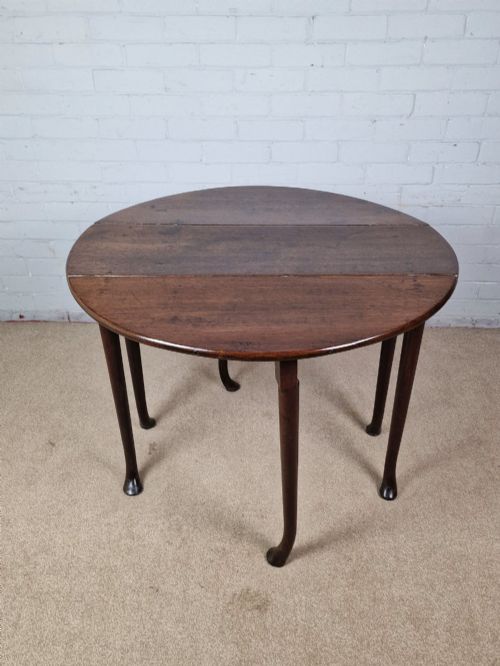
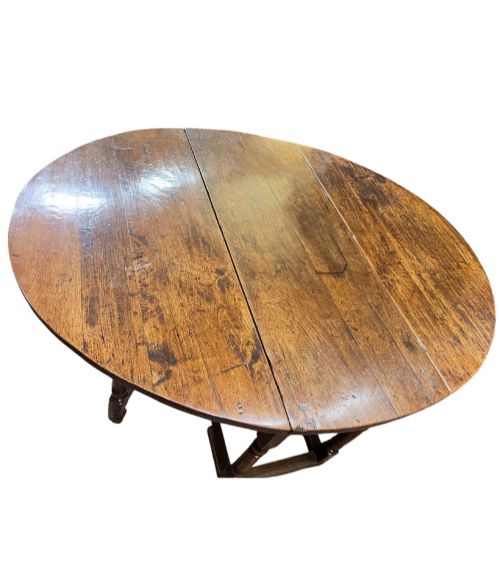
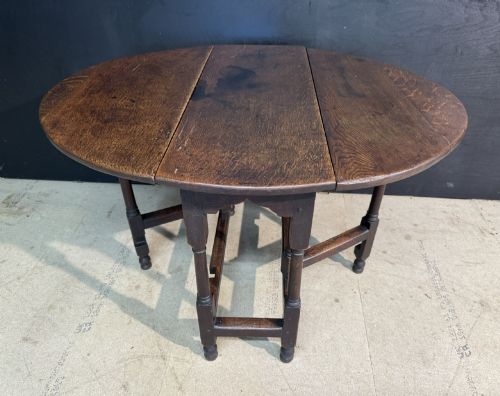
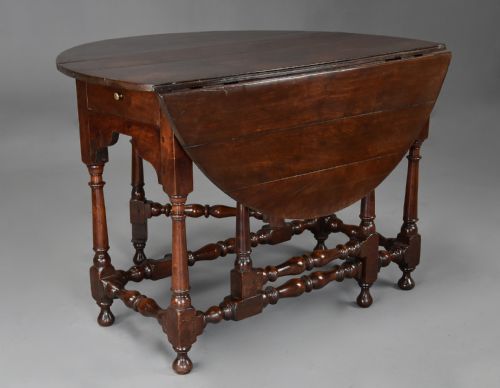
An 18th century gate leg table is a clever folding piece designed to expand for dining and shrink against a wall when not in use. When you search for this phrase, you find tables built primarily during the Georgian period and the early 18th century, spanning styles from Queen Anne to George III.
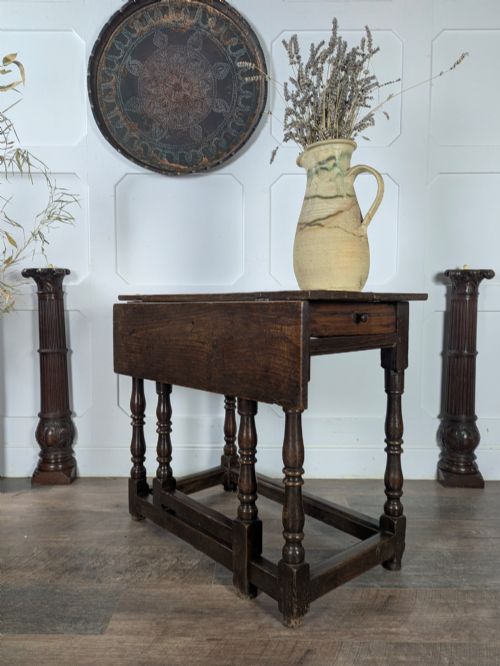
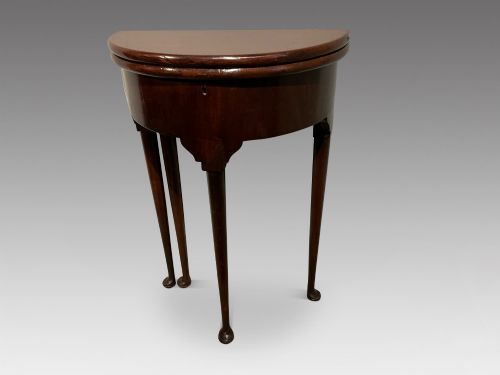
The pieces you meet most often on this page are constructed from oak, walnut, or mahogany, taking forms ranging from large oval dining tables to smaller side and console tables. Some examples feature slender spider legs or drop-leaf supper designs, while others provide seating for four.
Makers of the era built these tables to serve multiple functions within the home, adapting them as dining tables or occasional tables depending on the household needs. Surviving examples reflect the practical domestic requirements of the 1700s alongside evolving stylistic tastes in timber furniture.
How they were made
Joiners built an 18th century gate leg table using solid timber frames of oak, walnut, fruitwood, or mahogany, pegged and jointed for heavy daily use. The central frame supports hinged leaves that swing out on pivoting legs, creating a stable surface when extended.
Metal components such as brass hinges and iron fittings occasionally reinforced the pivot points and structural joints of the swinging legs. Skilled cabinet makers finished the timber surfaces with oil or polish, enhancing the natural grain of the wood over decades of handling.
Some tables hide their swinging legs so cleverly that guests occasionally try to sit on the folding flap.
What varies in quality
Quality in these tables rests heavily on the choice of primary timber and the stability of the timber frame. Dense, well-figured walnut or rich mahogany commands attention for its depth of grain, whereas sturdy oak provides the robust structural foundation expected of earlier vernacular pieces.
The integrity of the pivot mechanism and the precision of the leaf joints dictate how smoothly the table functions in daily use. A finer piece maintains tight joinery and original hardware, while lesser examples show the wear of heavy alterations or replacement timber parts over the centuries.
The 18th Century Gate Leg Table Glossary
- Gateleg table
- A table with hinged flaps supported by legs that swing outward like a gate. This clever design allows the surface area to double when needed.
- Drop-leaf table
- A table featuring a fixed centre section and movable flaps that drop down at the sides. It provides flexible surface space for smaller rooms.
- Spider leg
- A style of table featuring exceptionally slender turned legs that support an extending top. This delicate framing appears on lighter mahogany examples.
- Patina
- The deep surface sheen developed on old wood through age, wear, and regular polishing. Collectors prize a rich patina as a mark of genuine age.
- Demi-lune
- A half-moon shape used for console and side tables designed to stand flat against a wall. These half-round tops often conceal folding leaf mechanisms.
18th Century Gate Leg Table: Frequently Asked Questions
How do I use a gate leg table daily?
You keep the leaves dropped against the wall as a console or side table when floor space is tight. Simply swing out the supporting legs and lift the flaps whenever you need a full dining surface.
Position the table away from direct heat sources to protect the old timber and hinges from warping or sticking. Regular gentle polishing maintains the finish without harming the historic surface.
How do I tell oak from walnut?
Oak displays a prominent, coarse grain pattern with visible flecks and a lighter golden-brown colour. Walnut tends to show a darker, richer hue with smoother, more fluid grain lines.
Examining the underside or interior framing often reveals the unpolished timber characteristics more clearly. Oak generally feels heavier and more rustic, while walnut presents a finer, more sophisticated texture.
Are these tables sturdy enough for dining?
Most surviving examples were built for heavy daily dining and remain remarkably robust. The swinging gate legs distribute weight evenly across the floor when fully extended.
Avoid placing excessive downward pressure on the unsupported outer edges of the dropped leaves. Careful placement ensures the pivoting legs lock securely beneath the leaves before any weight is applied.
What is the difference between Georgian and Queen Anne styles?
Queen Anne style tables often feature curved cabriole legs ending in pad feet, reflecting the graceful domestic designs of the early 18th century. Georgian styles span a broader period, encompassing straight legs, mahogany spider framing, and neoclassical inlay work.
Examining the leg profiles and overall silhouette helps distinguish between the softer curves of earlier forms and the sharper lines of later George III pieces.