

18th Century Dresser Server
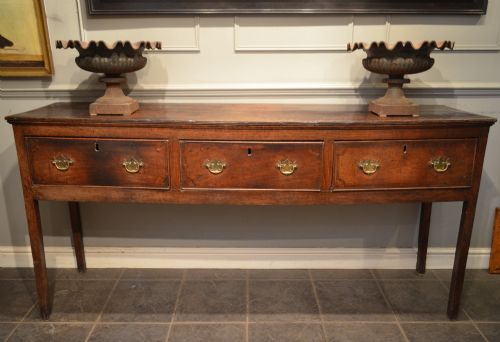
An 18th century dresser server is a robust timber serving table built for daily work, providing generous surface space and storage.
18th Century Dresser Server
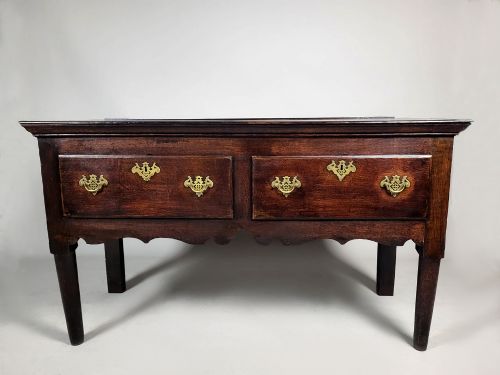
An 18th century dresser server is a domestic storage piece designed for food preparation and serving in dining spaces or kitchens. The inventory leans heavily towards English and Welsh vernacular forms, with George III period examples appearing frequently alongside earlier Queen Anne and George I designs.
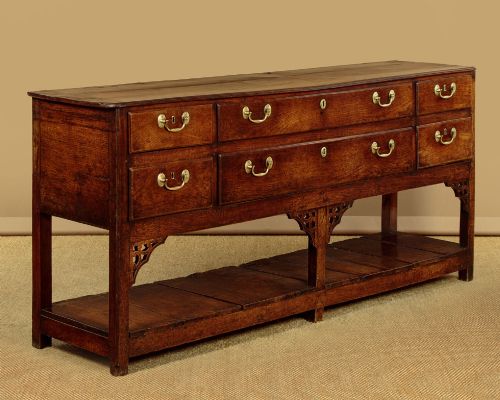
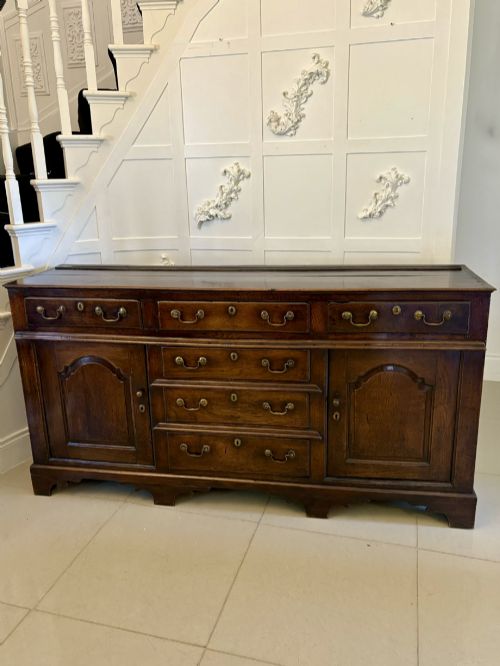
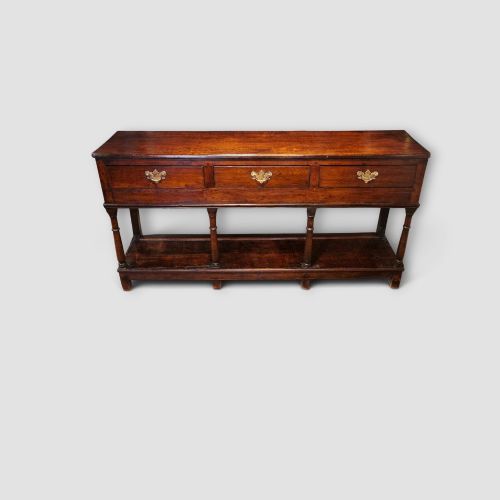
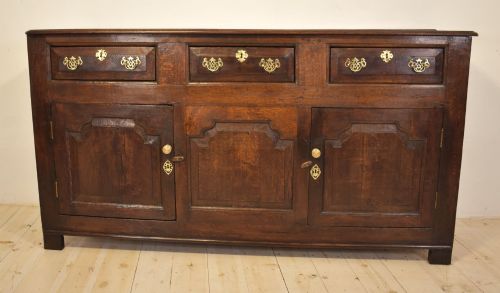
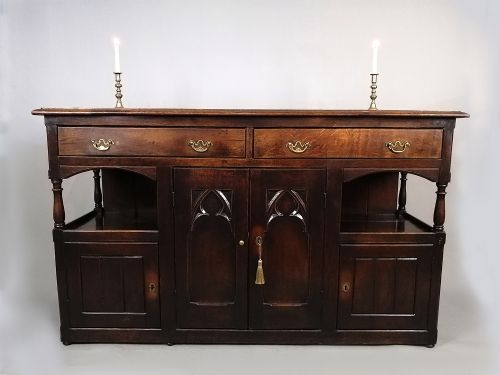
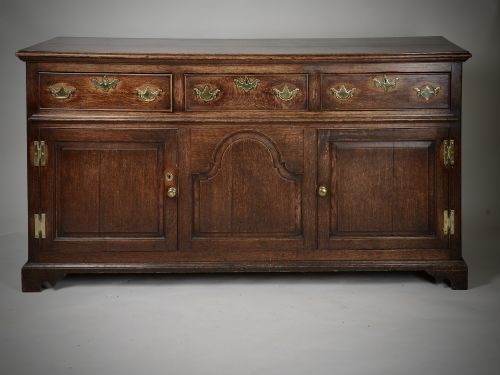
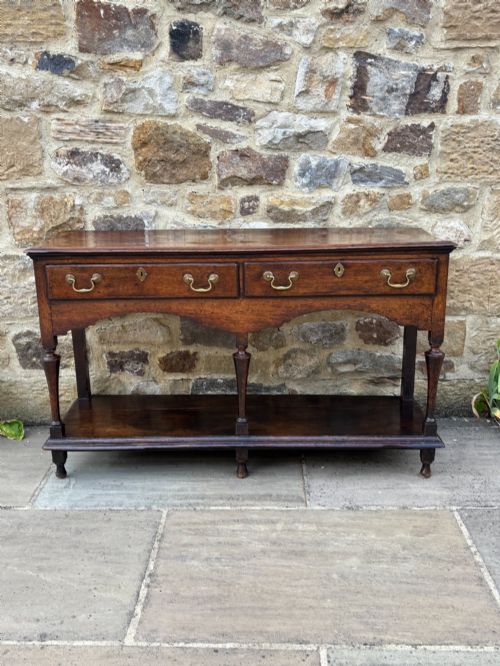
Buyers will encounter multiple regional variations, from Lancashire and mid Wales to Dutch examples. These pieces typically function as low bases with drawers and cupboards, often incorporating potboards beneath for open storage.
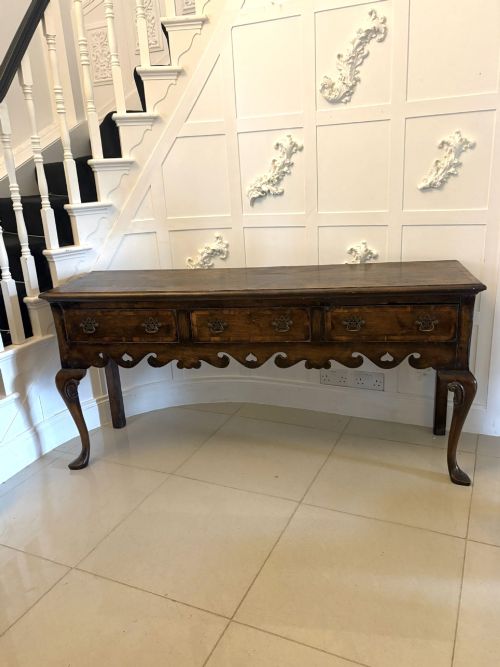
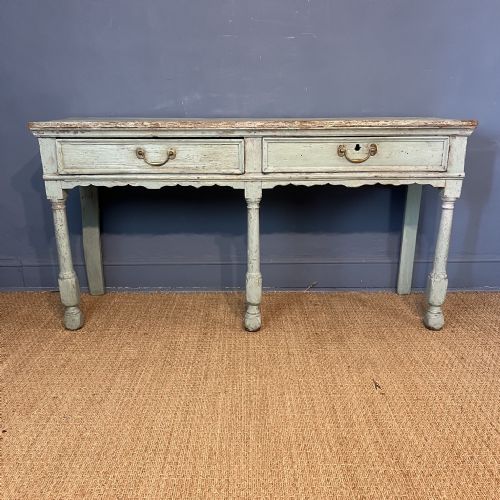
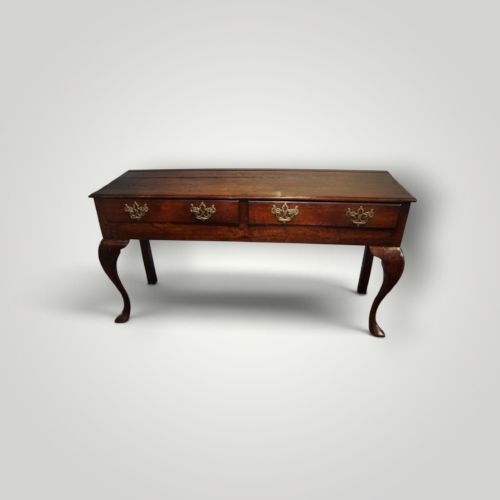
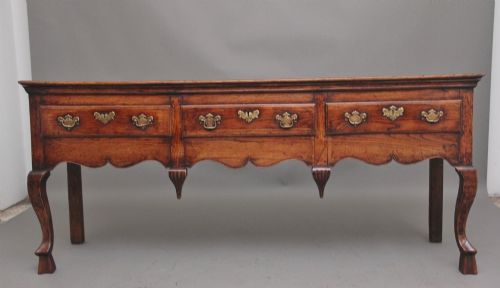
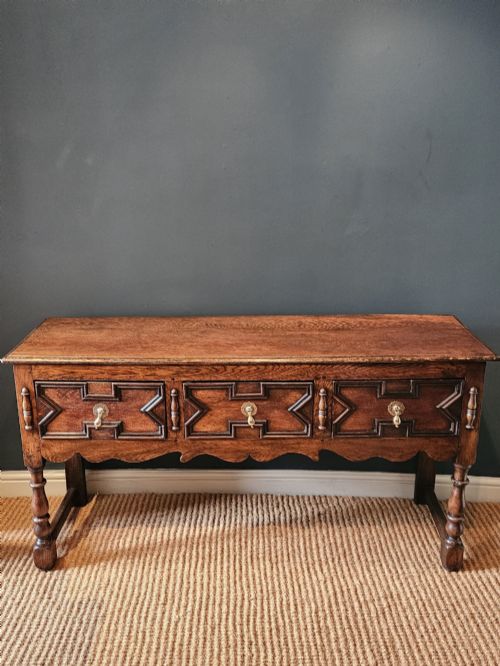
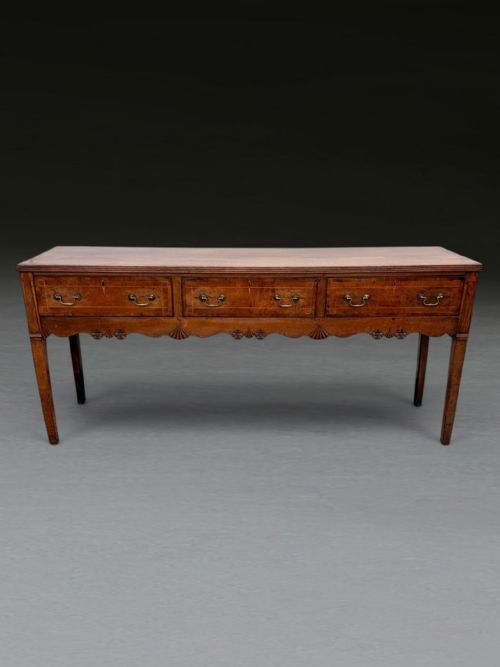
Forms range from simple side tables and serving tables to elaborate multi drawer configurations with geometric mouldings or cabriole legs. Oak predominates as the primary construction timber, supported by elm, fruitwood, and pine.
Materials and Construction
Joiners built these servers primarily using solid oak, supplemented by elm, fruitwood, and pine for secondary framing or panels. Timber selection often reflected regional availability in English and Welsh workshops.
Construction relied on traditional joinery techniques, visible in pegged mortise and tenon joints, hand cut dovetails on drawer boxes, and applied geometric mouldings. Brass hardware, including original drop handles and escutcheons, completed the functional design.
Listings feature oak predominantly, alongside regional timbers such as elm, fruitwood, and pine across English and Welsh origins.
Quality and Proportion
Quality in an 18th century dresser server rests upon the integrity of its timber and the preservation of its original surface patination. Untouched surfaces displaying honest wear distinguish superior pieces from heavily restored examples.
Proportion and structural balance dictate the desirability of each base, with crispness in carved details, intact potboards, and original brasses elevating the standing of a piece.
The 18th Century Dresser Server Glossary
- Potboard
- A low open lower shelf positioned between the legs of a dresser base, traditionally used for storing pots and pans. This platform is a defining feature of many vernacular English and Welsh servers.
- Cabriole leg
- A furniture leg that curves outward at the knee and tapers inward toward the foot, often ending in a pad or club shape. This style appears on select Georgian examples in the collection.
- Geometric moulding
- Raised wooden mouldings applied to drawer fronts or door panels in patterns such as mitred octagons or rectangles. This technique adds architectural depth to early pieces.
- Vernacular furniture
- Domestic pieces made by local regional craftsmen using native timbers rather than following high London fashion. These items prioritise utility and regional traditions.
18th Century Dresser Server: Frequently Asked Questions
What is an 18th century dresser server used for?
These servers functioned as heavy duty work surfaces for preparing meals and displaying serving dishes in the main household. Their deep drawers and lower potboards offered practical storage for kitchen utensils and heavy earthenware.
Today, buyers utilise them as sideboards in dining rooms or as console tables in living spaces, where their generous timber tops provide functional display area.
How do I distinguish regional styles?
Regional differences appear in timber choices, leg profiles, and drawer arrangements. Welsh and Lancashire examples often display distinct proportions and local wood combinations.
Examining the secondary timbers inside the drawer boxes and the construction of the potboard helps identify the likely workshop origin.
Are original brasses important?
Original brass handles and escutcheons contribute significantly to the historical integrity of a Georgian server. They show consistent wear patterns that match the age of the surrounding oak timber.
Replacements are common due to heavy daily use over centuries, though period appropriate hardware is viewed more favourably by collectors.
How do I care for an oak server?
Solid oak furniture requires stable indoor humidity levels away from direct heat sources to prevent timber shrinkage and splitting. Applying natural beeswax periodically helps nourish the dry grain and preserve the surface finish.
Cleaning should be done with a soft, dry cloth without harsh chemical polishes that can damage the historic patination.