



18th Century Court Painting
These pieces sold as 18th century court painting bring aristocratic portraiture and interior court scenes into a room through oil on canvas and decorative porcelain figures.
18th Century Court Painting
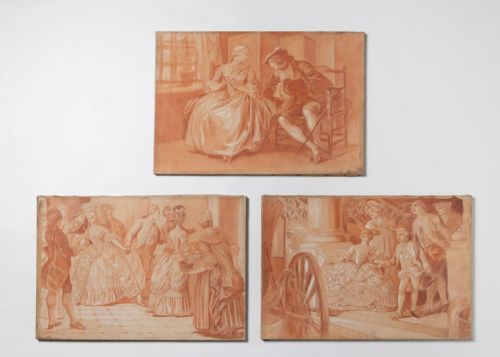
When you search for 18th century court painting, you encounter oil paintings on canvas alongside porcelain figures and works on paper depicting courtly life. The selection encompasses oil portraits, genre interior scenes of courtiers at Versailles, and Indian album pages from Deccan origins.
The periods represented span actual 18th century pieces to later revivals from the 19th and 20th centuries, including Rococo styles and French Baroque influences. You find portraits after artists like Pierre Gobert and Daniel Mytens alongside English school prospects.
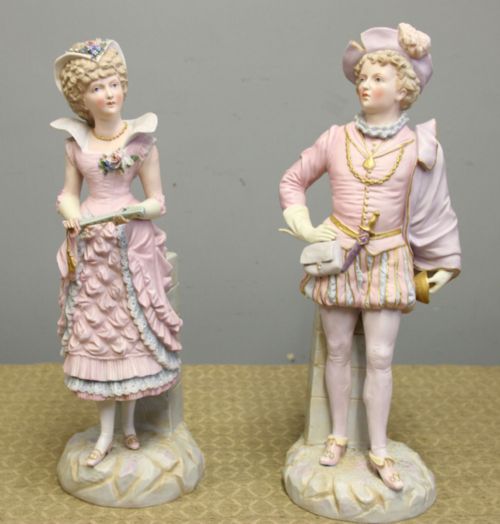
Porcelain figures from factories such as Ludwigsburg, Volkstedt, and La Coutille appear alongside canvas works to represent the broader aesthetic of courtly life. These items capture elite interiors, chess playing, and afternoon tea scenes in varied regional interpretations.
Materials and methods
Works on canvas utilise oil paint applied to stretched fabric, sometimes supported by wood panels in earlier examples. The application creates layered portraiture and detailed interior genre scenes with rich chromatic depth.
Porcelain figures and groups employ fired ceramic paste finished with enamel paints and gilding. Gold leaf often highlights frames, porcelain details, and decorative elements across the pieces.
Works on paper incorporate pigments and inks on traditional supports, seen in Indian album pages from the Deccan region. Giltwood frames frequently house the canvas paintings to complete the presentation.
18th Century Court Painting Retail Price Guide 2026
Typical asking prices for 18th century court painting among the pieces listed under this phrase on Sellingantiques today, from the lower quarter to the upper quarter. They describe what is for sale here now, not the wider market.
Listings combine oil on canvas, porcelain figures, and works on paper across periods ranging from the 17th century to the mid-20th century.
Variations in quality
The standard of execution in oil paintings depends on the finesse of brushwork in facial expressions and fabric folds. Superior pieces demonstrate confident handling of perspective in interior architectural settings and natural lighting.
Provenance and historical attribution influence the standing of a work, particularly when linked to specific schools or known portrait traditions. The cohesion of the frame with the painting also contributes to the overall integrity of the piece.
La Coutille Factory·Volkstedt Porcelain·Ludwigsburg
The 18th Century Court Painting Glossary
- Oil on Canvas
- Pigments bound in drying oil applied to a woven fabric support stretched over a wooden frame. This method allows for subtle blending and rich surface textures.
- Rococo
- An 18th-century style characterised by ornate curves, playful themes, and light pastel palettes. It frequently appears in French court scenes and decorative arts.
- Enamel
- A glassy substance fused to metal or porcelain surfaces through firing to provide durable colour and decoration. It creates glossy, vibrant surfaces on ceramic figures.
- Giltwood
- Wood carved and treated with a thin layer of gold leaf or gold paint. It frames many traditional oil paintings to enhance their visual weight.
- Deccan Art
- Artistic traditions originating from the Deccan plateau in India, known for miniature painting and distinctive palette choices. Pieces often feature intricate gold and pigment work on paper supports.
18th Century Court Painting: Frequently Asked Questions
What defines an 18th century court painting?
These works depict aristocratic subjects, formal portraits, and interior scenes associated with royal or noble households. They include oil paintings on canvas and porcelain figures capturing fashionable dress and leisure.
Many examples date directly to the 18th century, while others reflect later revivals in the Rococo and Baroque manners. The imagery often centres on French court life, English estates, or Deccan court traditions.
How were porcelain court figures made?
Craftspeople moulded ceramic paste into detailed figures of courtiers, groups, and salon scenes before firing them in kilns. Enamel paints and gold leaf were then applied by hand to accent garments and settings.
Factories such as Ludwigsburg, Volkstedt, and La Coutille produced these glazed porcelain groups during the 18th century and subsequent revival periods.
Where should I hang an oil painting?
Oil paintings on canvas work best on interior walls away from direct sunlight and damp conditions to protect the pigment and canvas. Pairing them with traditional giltwood frames enhances their presence in a principal room.
Consider eye-level placement in spaces with stable ambient temperatures to preserve the oil paint and underlying support material.
How do I distinguish periods in these pieces?
Original 18th-century works show period pigments, canvas ageing, and stylistic conventions tied to Georgian or French Baroque movements. Later revival pieces from the 19th and 20th centuries often employ different framing methods and manufacturing marks.
Porcelain figures carry factory stamps or stylistic indicators that help date their production between the 18th and early 20th centuries.