




18th Century Coaster
These Georgian 18th century coaster examples are practical table antiques designed to protect polished timber from decanter rings and cheese service wear.
18th Century Coaster
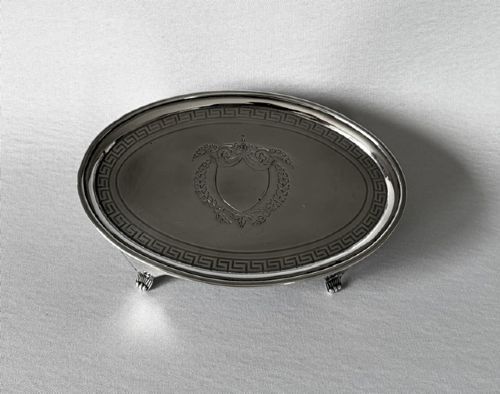
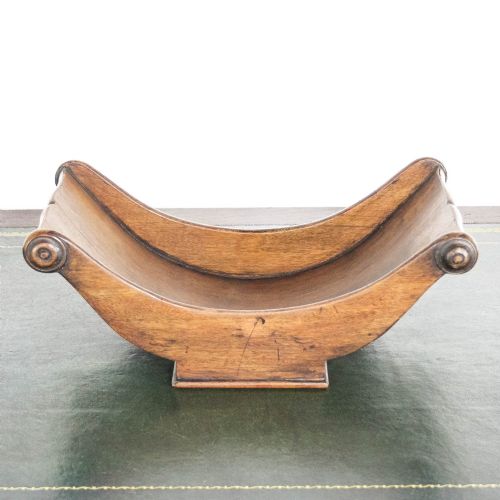
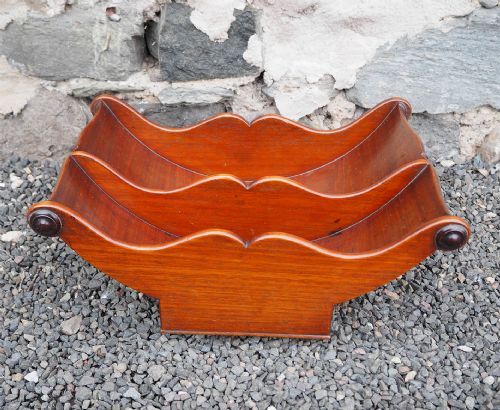
An 18th century coaster encompasses several forms of small table trays and stands used for wine bottles, decanters, teapots, and cheese truckles during Georgian dining. The examples appearing on this page span round wine coasters, crescent-shaped cheese stands, and square teapot trays.
Buyers meet variations ranging from simple turned wood fruitwood bowls to inlaid mahogany wine trays and silver wirework stands. Each piece fulfils a specific function on the dining table, whether holding a single bottle or carrying a wedge of Stilton cheese.
Materials and construction
Makers utilised solid timbers like mahogany and fruitwood, often turning them on a lathe to create circular profiles for wine coasters and cheese truckles. Inlaid decoration in boxwood and satinwood frequently enhances the timber surfaces.
Metal pieces rely on sterling silver or Old Sheffield Plate, sometimes incorporating brass fittings or wirework structures into the design. Rolled paper also appears as an alternative decorative medium in the archive of past pieces.
One past piece utilised rolled paper to form a bottle coaster, proving Georgian craftspeople improvised when metal and timber fell short.
Distinctions in quality
Quality in an 18th century coaster rests on the crispness of the timber turning, the precision of any inlay, and the weight of the silver or plated metal. Pieces that retain their original surfaces and proper proportions stand apart from heavily restored or altered examples.
The sophistication of the design, such as the inclusion of brass hardware or delicate wirework, elevates certain pieces above standard utilitarian tableware. Fine joinery and balanced proportions distinguish the superior workshop production from simpler domestic items.
Thomas Daniell
The 18th Century Coaster Glossary
- Cheese coaster
- A low tray or crescent-shaped stand, sometimes called a cheese truckle, designed to hold a portion of cheese on the dining table.
- Wine coaster
- A small circular tray or stand intended to hold a wine bottle or decanter, protecting the table surface from moisture.
- Old Sheffield plate
- A composite material formed by fusing a thin layer of sterling silver to a thicker copper base, common in Georgian metalwork.
- Fruitwood
- A generic term for timbers derived from fruit-bearing trees such as pear or apple, utilised by Georgian turners for domestic tableware.
- Teapot stand
- A small tray raised on feet, designed to hold a hot teapot and protect the polished wood of a Georgian table.
18th Century Coaster: Frequently Asked Questions
What is an 18th century coaster used for?
These pieces served practical functions during Georgian dining, primarily protecting polished wood tables from rings left by wet wine bottles and decanters. They were also utilised to move cheese wedges and teapots safely around the table.
The smaller circular versions held individual wine bottles, while larger crescent stands accommodated cheese service and rectangular trays supported tea wares.
How do I identify a Georgian coaster?
Georgian pieces display characteristic materials of the period, notably solid mahogany, fruitwood, sterling silver, and Old Sheffield Plate. Construction methods typically involve period turning techniques and hand-cut inlay.
Stylistic cues link them to the reigns of George III, featuring classic proportions and decorative motifs standard to late eighteenth-century English and European craftsmanship.
What is a cheese coaster?
A cheese coaster, also known as a cheese truckle or Stilton stand, is a low-profile tray shaped to hold a specific portion of cheese. They often feature crescent or circular forms suited to the dining table.
These items allowed diners to pass cheese smoothly across the surface without damaging the polished timber of the dining table.