


18th Century Chocolate Pot
An 18th century chocolate pot offers a tactile connection to early hot beverage customs, prized for distinctive side-handled forms in copper, brass or silver.
18th Century Chocolate Pot
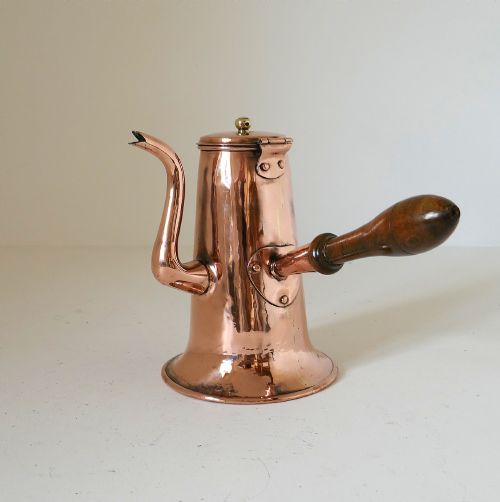
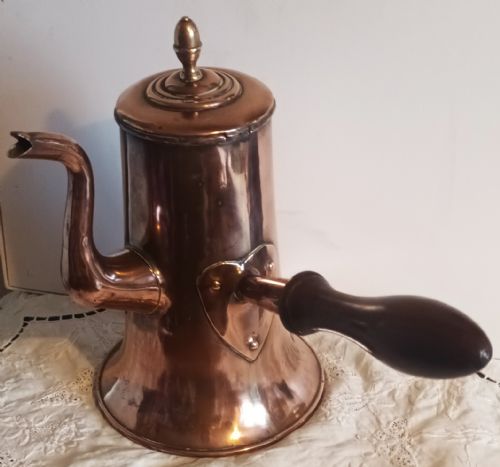
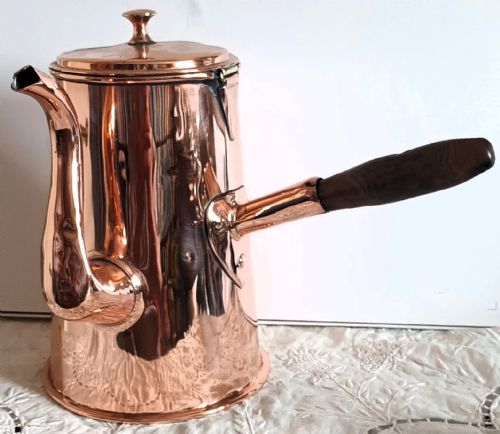
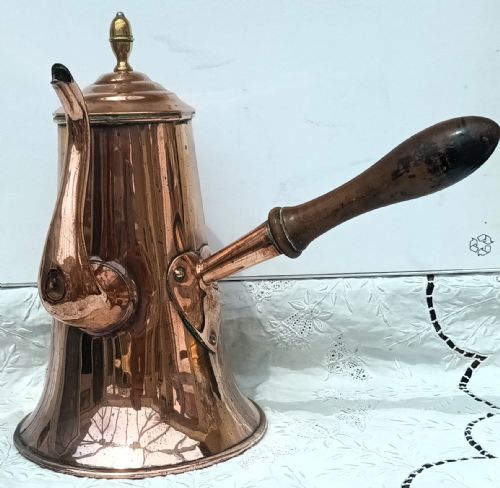
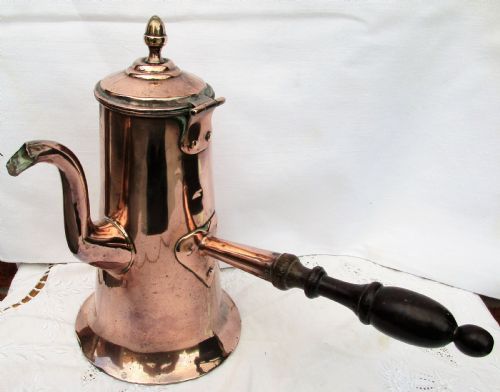
An 18th century chocolate pot is a vessel designed specifically for preparing and serving hot chocolate, often featuring a distinct side-handled arrangement rather than a rear handle to facilitate pouring while frothing. These items span the 18th century and later periods, including pieces from the 1700s alongside 19th-century interpretations reflecting Georgian, French Regency, and Rococo styles.
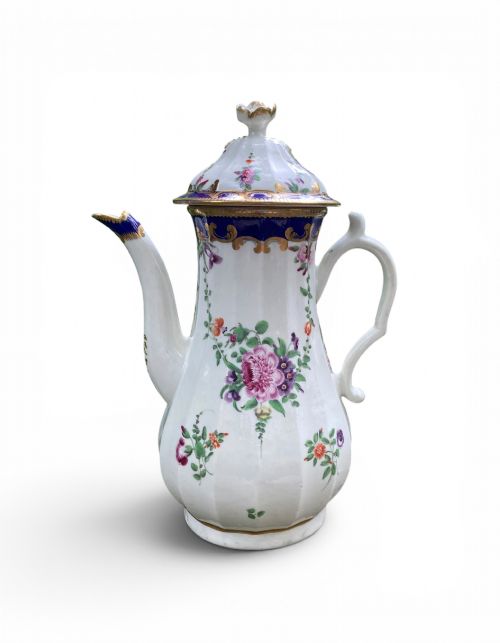
The material range on this page includes copper, brass, silver, porcelain, enamel, gold leaf, and hardwood, representing hollowware and tableware forms. While many surviving examples are rendered in copper or brass, pieces also appear in Worcester porcelain and KPM porcelain alongside silver constructions.
Makers and origins recorded in the evidence span English, Dutch, French, and German workshops, including William Soutter & Sons and Worcester. Buyers encounter both early metalware forms and fine porcelain iterations, each displaying the characteristics of their respective period and manufacture.
Materials and Construction
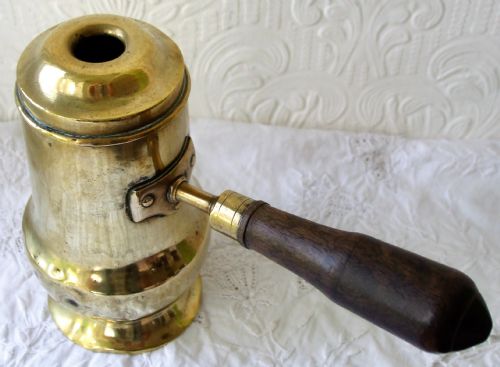
Metal vessels in copper and brass are fashioned through hammering and joining techniques, creating sturdy hollowware bodies often fitted with wooden side handles for thermal insulation. Silver versions demonstrate refined silversmithing skills typical of early Georgian production, utilising sheet metal and soldered joints.
Porcelain examples from factories such as Worcester and KPM employ ceramic casting, glazing, and hand-painting techniques, fired in kilns to achieve durable porcelain bodies with fitted covers. Enamel and gold leaf applications occasionally enhance the decorative surface of these ceramic and metal pieces.
Listings feature copper, brass, porcelain, and silver across 18th and 19th-century periods, including work by William Soutter & Sons and Worcester.
Assessing Quality and Execution
Quality in an 18th century chocolate pot rests upon the crispness of form and the integrity of the materials employed, whether hand-hammered copper, heavy gauge brass, or delicate porcelain. Superior examples retain their original side handles, fitted covers, and surface patination without excessive intervention.
The refinement of decorative details, such as Rococo chasing on silver or the fineness of hand-painting on porcelain, distinguishes workshop output. Structural balance and the harmonious integration of handle materials to metal or ceramic bodies indicate the maker's proficiency.
The 18th Century Chocolate Pot Glossary
- Side-Handled
- A configuration where the handle is positioned at a ninety-degree angle to the spout rather than directly opposite it. This layout allows the user to stir or mill the hot chocolate while pouring.
- Hollowware
- A classification for tableware items that are vessels with a hollow interior, such as pots, jugs, and kettles. This category encompasses the metal and ceramic pots found within these listings.
- Georgian
- The architectural, decorative arts, and design style spanning the reigns of the first four British monarchs named George. Pieces from this period frequently exhibit classical restraint combined with developing Rococo exuberance.
- Rococo
- An ornate style of decoration originating in France characterised by asymmetrical scrollwork, C-curves, and naturalistic plant motifs. It heavily influences the decorative detailing on mid-century metal and porcelain items.
- Hardwood
- Dense timber utilised for the insulated handles fitted to metal pots. This material prevents heat transfer to the user's hand during use.
18th Century Chocolate Pot: Frequently Asked Questions
How do you use a chocolate pot?
These pots were historically used to heat chocolate flakes or blocks mixed with water or milk over a heat source.
A wooden stirrer or molinet would be spun between the palms through a hole in the lid to froth the beverage before pouring.
How do I distinguish a chocolate pot from a coffee pot?
Chocolate pots frequently feature side handles placed at right angles to the spout to accommodate frothing mechanisms.
Coffee pots typically place the handle directly opposite the spout for standard end-on pouring.
What materials are these pots made from?
The listings show vessels constructed from copper, brass, silver, and porcelain.
Hardwood components appear as insulating handles, while decorative examples incorporate enamel and gold leaf.
Are these pots still functional today?
Many metal and ceramic examples retain their structural integrity for decorative display or careful domestic use.
Evaluating interior linings and handle security is essential for anyone intending to prepare beverages in antique metalware.