
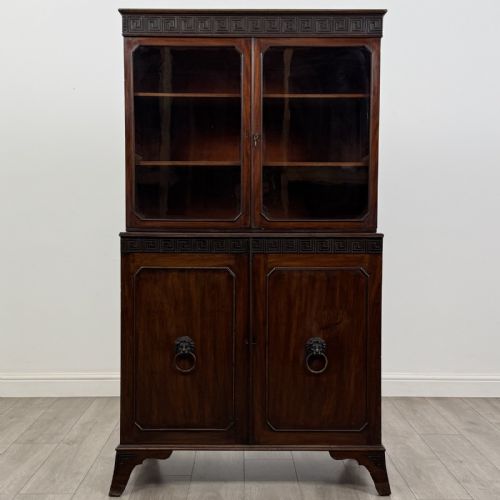
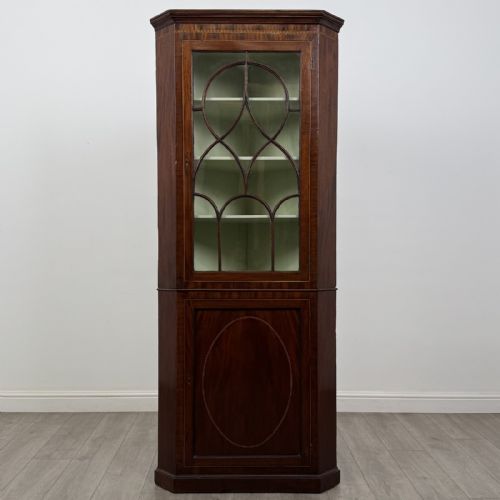
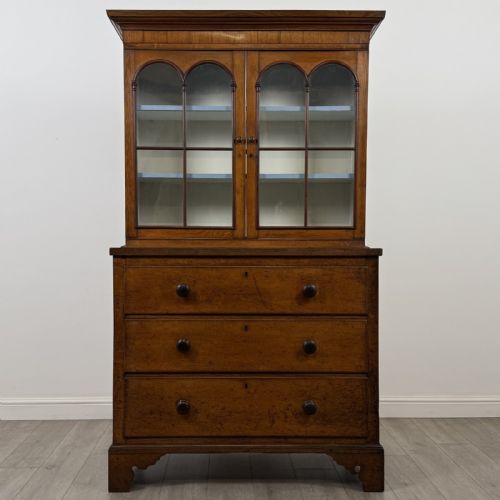
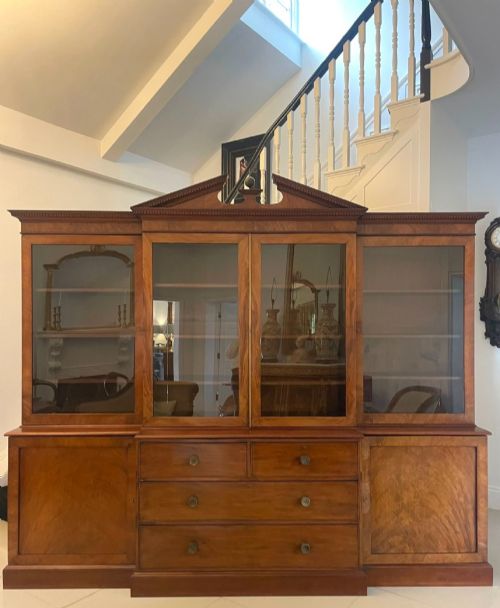
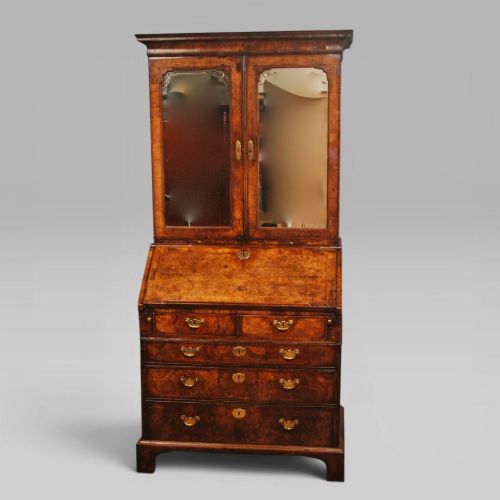
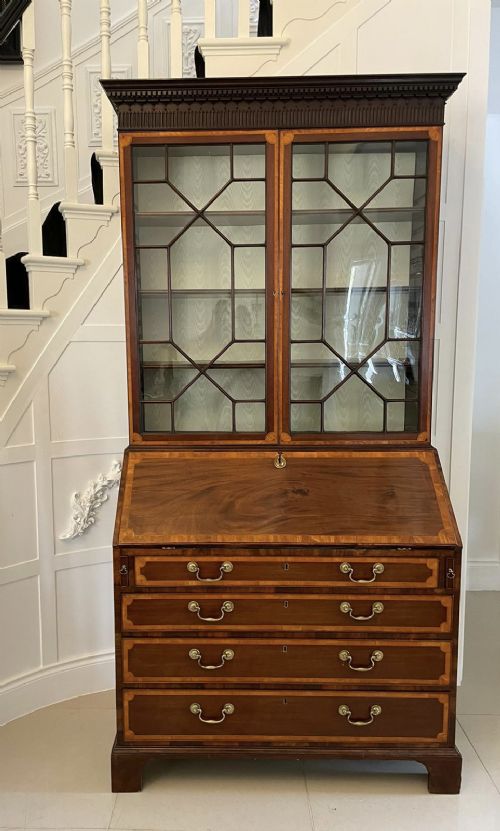
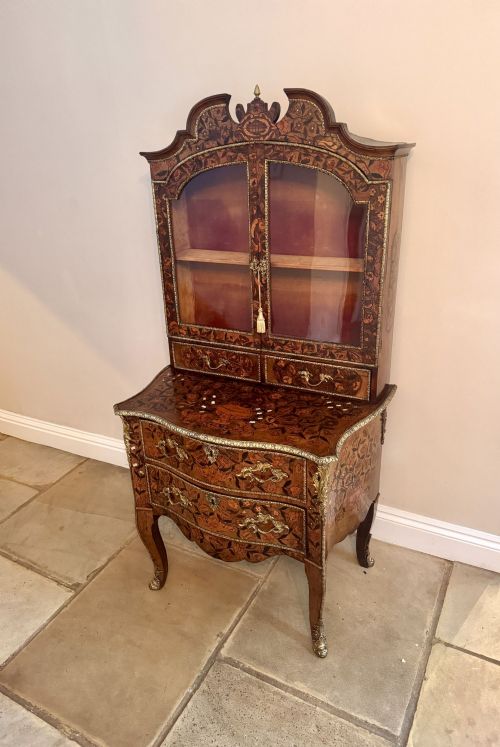
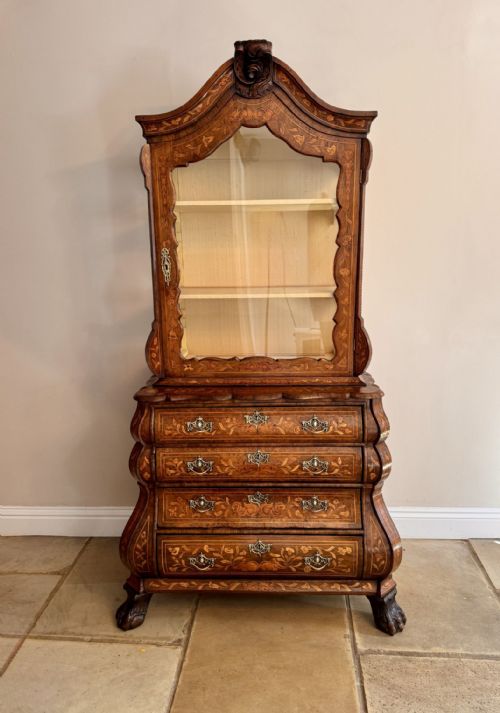
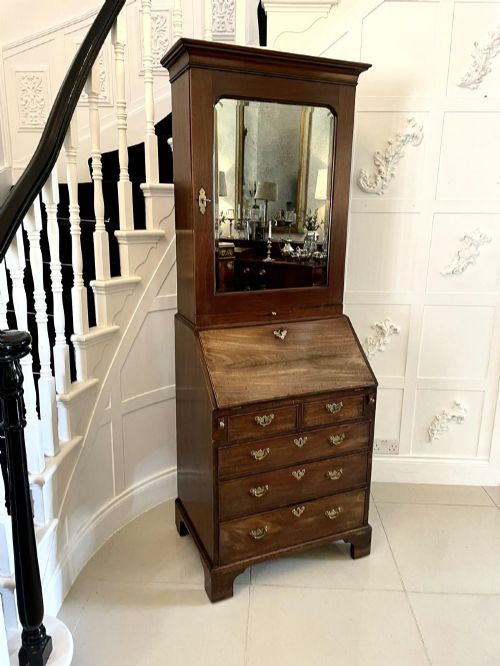


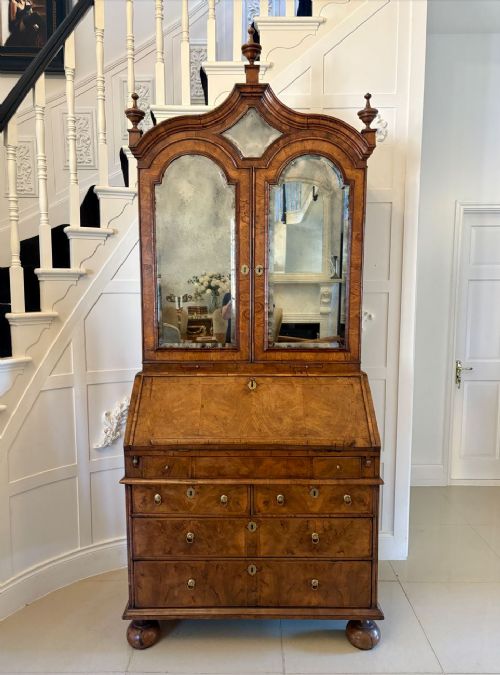
18th Century Bookcase Cabinet
An 18th century bookcase cabinet combines a reading library and a writing desk into a single imposing piece of furniture.
18th Century Bookcase Cabinet
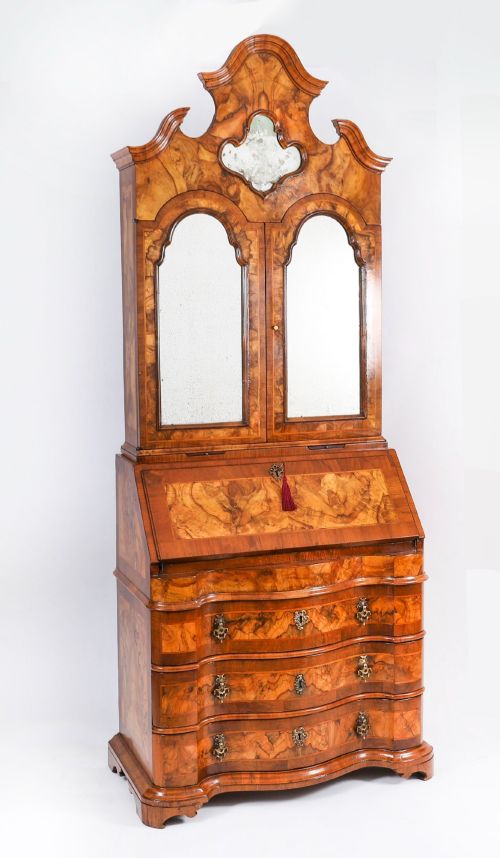
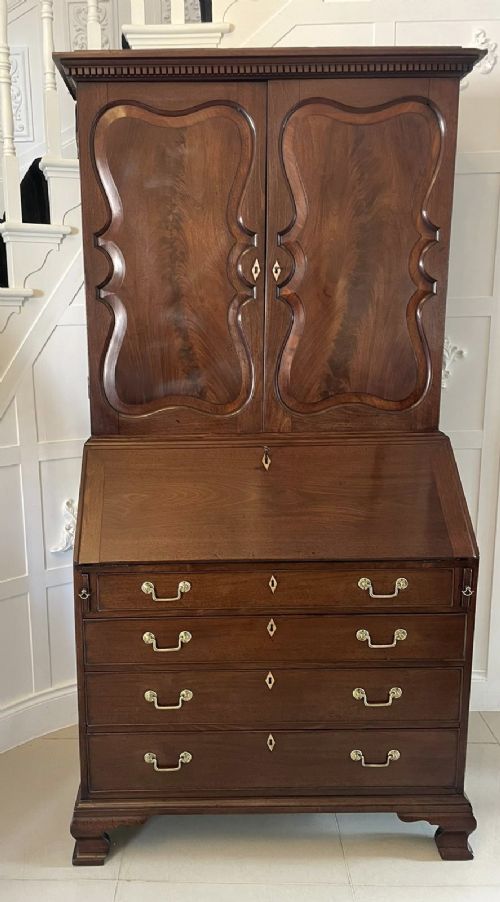
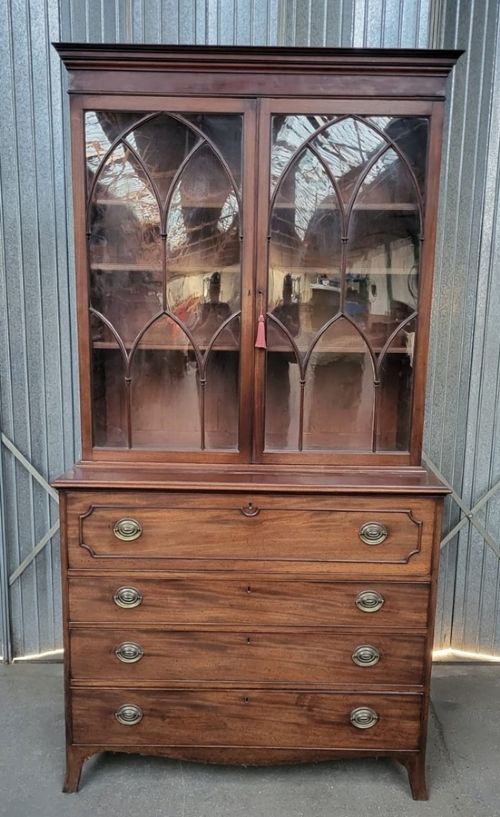
The 18th century bookcase cabinet stands as a commanding architectural presence designed to store books and house correspondence behind tall glazed or panelled doors. Buyers seeking an 18th century bookcase cabinet typically encounter two-part sectioned forms ranging from bureau bookcases with sloping fall-front desks to tall display cabinets and secretaire bookcases.
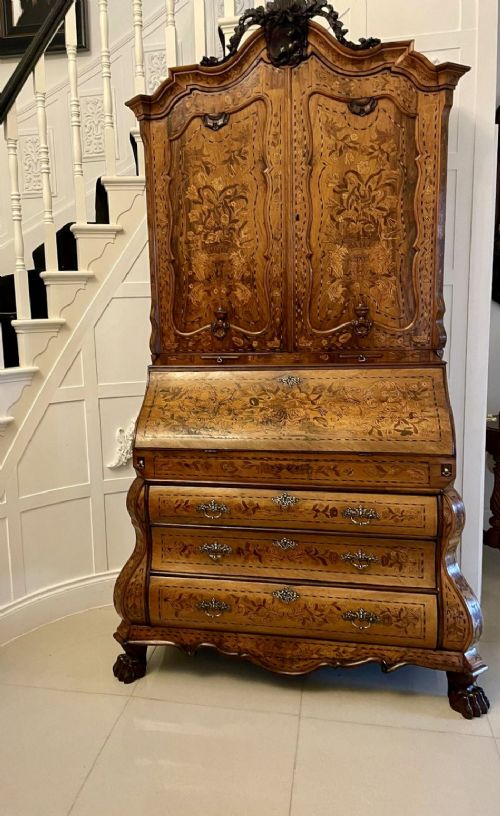
The pieces appearing here span the 1700s through the Georgian era, with styles extending from Queen Anne and George I to George II, George III, and Dutch Baroque. Oak and mahogany dominate the offerings, alongside burr walnut, satinwood, cherry wood, and marquetry-inlaid surfaces.
Formats vary from fitted stepped interiors with candle slides to tall slim proportions and painted waterfall bookcase variations. Examples originate from English workshops as well as Dutch, Italian Venetian, and South German centres.
How they were made
Cabinet makers constructed these large two-part carcases using solid timbers and decorative veneers applied to secondary woods. Mahogany, oak, and walnut form the primary structural foundations, often enriched with burr walnut, satinwood, tulipwood, and fruitwood.
Glazed upper doors required slender wooden framing to support individual panes of glass, while interior compartments featured intricate pigeonholes, small drawers, and stepped writing sections. Brass hardware, including drop handles and escutcheons, completed the assembly alongside inlaid marquetry decoration.
Early oak examples occasionally reappear adapted for television, quietly transitioning from housing heavy ledgers to supporting modern screens.
What varies in quality
Quality in an 18th century bookcase cabinet rests upon the selection and matching of timber figures, such as highly figured mahogany or burr walnut. The precision of internal joinery, including stepped drawers and fitted secretaire compartments, separates standard utility pieces from finer commissions.
Proportion and scale dictate the visual success of the piece, with narrower or taller examples demonstrating superior cabinet-making ambition. Intricacy of external decoration, from marquetry inlay and featherbanding to original painted finishes, marks the distinction between ordinary and exceptional work.
Thomas Chippendale
The 18th Century Bookcase Cabinet Glossary
- Bureau bookcase
- A dual-purpose form featuring a sloping desk flap that drops down for writing above lower drawers or cupboards, topped by a glazed or panelled bookcase section. This format provides both enclosed storage and a functional workspace.
- Secretaire bookcase
- A cabinet incorporating a drawer that pulls out and drops forward to reveal a writing surface and small internal compartments. It conceals the desk mechanism behind a drawer front that mimics standard cabinetry.
- Burr walnut
- A highly prized wood veneer harvested from the gnarled growths of walnut trees, creating swirling patterns. Cabinet makers used this material on principal display surfaces during the early 18th century.
- Featherbanding
- A decorative inlay technique using small strips of veneer laid in a herringbone pattern around the borders of drawer fronts and panels. This detail frames the grain of primary timbers.
- Candle slide
- A pull-out wooden board mounted beneath the upper bookcase doors to hold lighting for the writing surface. These surviving elements support evening work before the invention of electric lighting.
- Marquetry
- The art of applying decorative pieces of coloured wood veneer to form geometric or pictorial designs. Dutch and Italian makers utilised this technique extensively on cabinet surfaces.
18th Century Bookcase Cabinet: Frequently Asked Questions
How do I date an 18th century bookcase cabinet?
Dating relies on examining the timber species, construction methods, and prevailing architectural styles of the period. Early pieces often utilise solid oak or walnut, while later decades favour figured mahogany and satinwood with more refined glazing bars.
Hardware styles, foot designs such as bracket feet versus bun feet, and internal drawer construction also offer chronological clues. Comparing the proportions to documented pieces from reigns like George II or George III helps narrow the date of manufacture.
Were these cabinets made in sections?
Most large examples were constructed as two distinct modular sections to facilitate transport and placement within historic homes. The upper bookcase sits securely upon the lower bureau or cabinet base.
This two-part division allows tall and heavy pieces to be moved between rooms more easily. Collectors look for original matching top and bottom carcases that have remained together.
Where were these cabinets placed in a home?
These pieces typically stood in libraries, withdrawing rooms, or private studies where books and correspondence required secure storage. The upper glazed section displayed prized volumes while locking doors protected valuable texts.
The drop-front desk provided a private space for writing letters and managing household or estate accounts. Candle slides offered direct illumination for evening tasks before modern lighting.