



18th Century Animal Painting
These 18th century animal painting works capture livestock, wildlife, and domestic pets in oil and porcelain, bringing period character directly into your interior.
18th Century Animal Painting
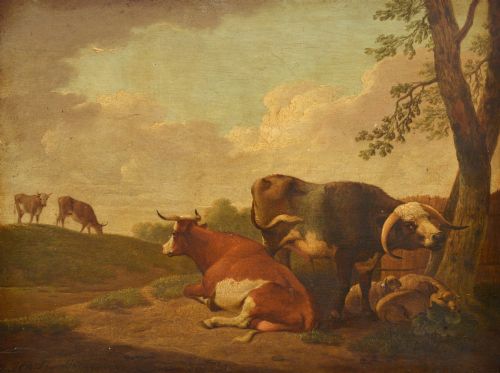
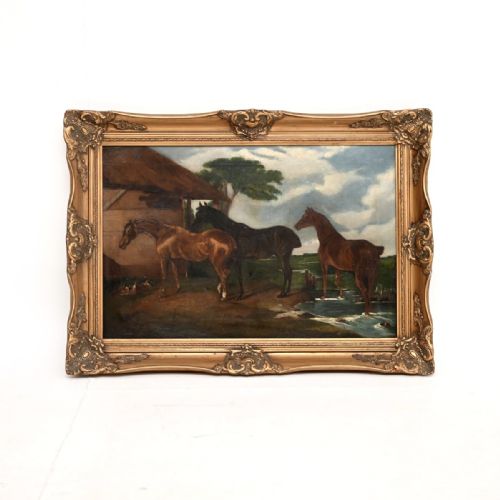
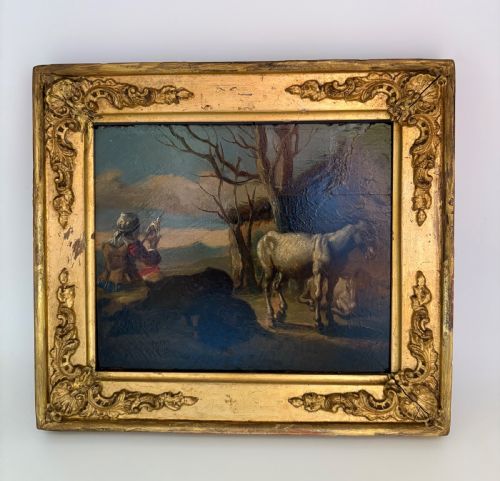
An 18th century animal painting encompasses oil on canvas or oak panel, alongside porcelain figurines and tureens depicting cattle, sheep, horses, dogs, and exotic birds. These pieces span Georgian, Baroque, Rococo, and Chinese Export styles, reflecting both British and continental European traditions.
The selections on this page range from large oil paintings of wildlife and ducks to portrait studies of spaniels and porcelain porcelain recumbent stags with bocage. Buyers encounter works attributed to followers of established masters as well as delicate Chinese export animal statues from the Qianlong period.
Materials and construction
Works are executed in oil paint on canvas, oak panels, and soft-paste porcelain, often housed in period gilt wood frames. Enamel and porcelain techniques shape three-dimensional figures like dogs, stags, and tureens.
Pigments are applied to capture natural textures of fur and feathers, whilst porcelain pieces undergo high-temperature firing and hand-painting with intricate details such as floral bocage foliage.
Stylistic influences represented include Georgian, Baroque, Rococo, and Chinese Export designs from the eighteenth century.
Judging quality and execution
Quality rests in the anatomical accuracy of the animals, the expressiveness of the brushwork, and the preservation of the original paint surface or porcelain glaze. Finer oil paintings display confident handling of light and landscape backgrounds, whereas superior porcelain figures exhibit crisp modelling and vibrant hand-painted enamel colours.
The integration of framing in oil works and the survival of delicate porcelain elements like bocage significantly influence the overall integrity and visual impact of each piece.
Hendrik Willem Schweickhardt·Philipp Peter Roos·Philipp Ferdinand de Hamilton·Marmaduke Cradock·Jacob Bogdani·George Stubbs
The 18th Century Animal Painting Glossary
- Bocage
- Decorative scrolled foliage and leafwork applied around porcelain figures. This ceramic element mimics natural shrubbery and creates a lush background for animal models.
- Soft-paste porcelain
- An early ceramic composition fired at lower temperatures than hard-paste porcelain. It yields a warm, creamy body common in eighteenth-century figures.
- Oak panel
- A rigid wooden support used for early paintings before canvas became dominant. These panels provide a stable ground for detailed oil pigments.
- Chinese Export
- Porcelain and decorative objects manufactured in China specifically for European markets. These pieces combine Eastern ceramic techniques with Western subject matter.
- Gilt wood
- Carved wooden frames or decorative elements coated in gold leaf. This finish enhances oil paintings through reflective metallic lustre.
18th Century Animal Painting: Frequently Asked Questions
How do I care for an oil painting?
Keep canvases and wood panels away from direct sunlight and stable humidity environments to prevent paint cracking or warping.
Dust gently with a soft, dry brush and avoid chemical cleaning agents on the historic pigment surface.
Where were porcelain figurines made?
Factories like Derby produced soft-paste porcelain figures in Britain, drawing inspiration from natural history and contemporary sculpture.
Export kilns in China also manufactured porcelain animal statues tailored to European taste during the Qianlong period.
What subjects appear in these paintings?
Artists painted livestock in pastoral landscapes, sporting dogs in portrait settings, and exotic birds influenced by Dutch and Flemish traditions.
Wildlife scenes frequently incorporate multiple species, including ducks, frogs, and stags within natural or wooded settings.
How do I distinguish periods?
Examine the substrate materials, framing styles, and painting techniques alongside any recorded signatures or historical attribution records.
Porcelain dating relies on paste composition, glaze characteristics, and specific model numbers recorded by the factory.