


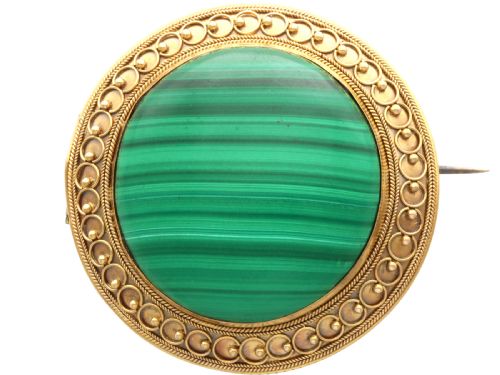


18k Gold Brooch
An 18k gold brooch brings together precious metal and gemstones in wearable designs spanning the Victorian era through the mid-century.
18k Gold Brooch
An 18k gold brooch serves as a fastening pin or decorative pendant, taking forms that range from naturalistic flowers and animal motifs to geometric ribbon bows and clustered gemstones. The items gathered under this phrase cross multiple eras, with Victorian pieces sitting alongside Edwardian work, Art Deco designs, and mid-century modern interpretations.
Buyers will most frequently encounter Victorian interpretations featuring carved cameos, garnets, rubies, and pearls, as well as mid-century creations utilising textured gold and abstract forms. Many examples double as pendants, offering versatility in how the jewellery can be worn on clothing or chains.
How they were made
Craftsmen shaped 18-carat yellow, white, and rose gold into elaborate settings, frequently combining the precious metal with silver to enhance the brilliance of mounted diamonds. Gemstones including emeralds, amethysts, opals, and turquoise were hand-set into chased, engraved, or cast metal frameworks.
Enamel work and detailed filigree often complemented the stone settings, particularly in nineteenth-century and Belle Epoque pieces. Later twentieth-century items introduced textured casting and abstract wirework, reflecting shifts in goldsmithing techniques.
Listings feature pieces spanning the Victorian, Edwardian, and mid-century periods, utilising materials from diamonds and rubies to malachite and enamel.
What varies in quality
The standard of an 18k gold brooch depends upon the precision of the stone-setting and the depth of the metalwork, where hand-engraved details and substantial gold weight distinguish finer examples. Maker attribution and French control marks also elevate a piece, indicating superior workshop standards.
The choice and matching of gemstones dictate the upper tier of the range, particularly where old-cut diamonds, natural pearls, or large carved cameos are employed. Superior balance in design, whether in a symmetrical bow or an organic spray, separates workshop masterworks from standard production.
Charles de Temple·Alan Martin Gard·Paillette
The 18k Gold Brooch Glossary
- Carat
- A unit measuring the purity of gold, with 18-carat denoting seventy-five percent pure gold content. This alloy provides durability alongside a rich colour suitable for fine jewellery.
- Old-cut
- A diamond cutting style prevalent in Victorian and Edwardian periods, characterised by a high crown and small table. These stones were shaped by hand to catch candlelight.
- Cameo
- A relief carving produced on materials such as shell, agate, or onyx, frequently depicting classical figures or portraits. The technique exploits colour layers in the natural material to create contrast.
- Belle Epoque
- A design period spanning the late nineteenth and early twentieth centuries, known for garland-style jewellery using platinum settings, diamonds, and pearls. The style favours light, airy motifs such as ribbons and wreaths.
- Bar brooch
- A slender horizontal pin design popular across the Victorian and Edwardian eras, often centred on a gemstone cluster or insect motif. These pieces fasten securely across lapels and fabrics.
18k Gold Brooch: Frequently Asked Questions
How do I date an 18k gold brooch?
Dating relies on stylistic clues, gemstone cuts, and hallmarks stamped onto the metal. Victorian pieces often feature closed-back settings and natural motifs, whereas mid-century items display abstract textures.
Maker's marks and French control stamps help pinpoint the workshop and decade of creation. Comparing the fastening mechanism also offers clues to the period of manufacture.
Can a brooch be worn as a pendant?
Many period pieces incorporate hidden loops or fold-down bails specifically designed for chains. This dual functionality was common in Victorian and Edwardian examples.
Converting a brooch allows it to be worn interchangeably on lapels or suspended from necklaces. Secure clasps ensure the piece remains safely attached regardless of the configuration chosen.
What is the difference between yellow and white gold settings?
Yellow gold utilises copper and silver alloys to maintain a warm hue, which dominated Victorian and retro jewellery designs. White gold achieves a silvery appearance through metal combinations and often platinum plating.
Earlier makers frequently mounted diamonds in silver over gold to brighten the stones. The choice of metal colour generally reflects the prevailing fashion of the maker's era.
How should I care for gemstone brooches?
Cleaning requires gentle wiping with a soft cloth to remove dust from delicate stone settings and filigree work. Harsh chemical dips risk damaging softer organic gems like pearls, opals, and turquoise.
Storage in a padded box prevents scratches and protects protruding pins from bending. Periodic checks by a jeweller ensure the claw settings remain secure.