


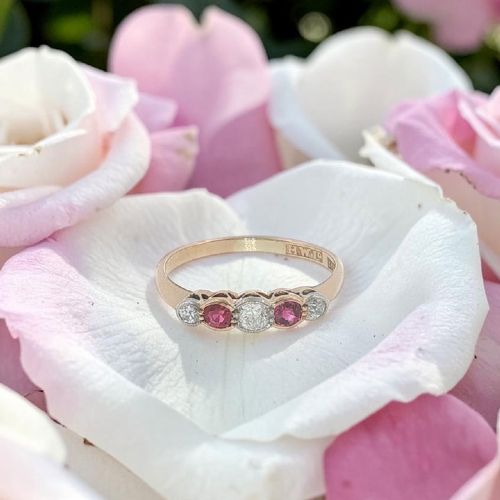
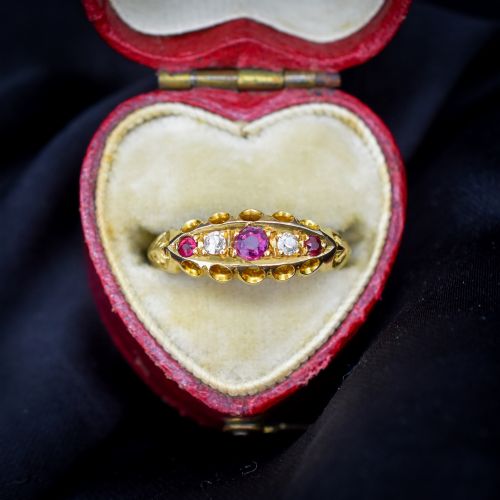
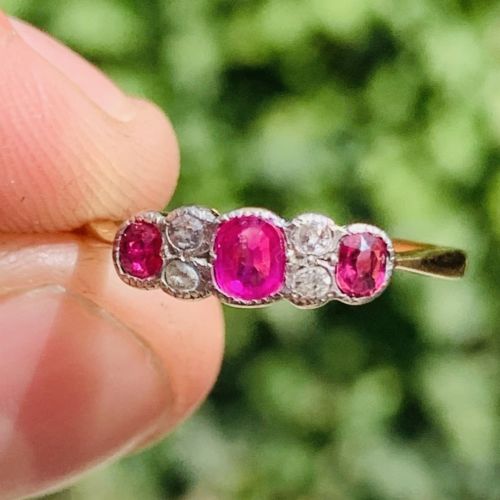
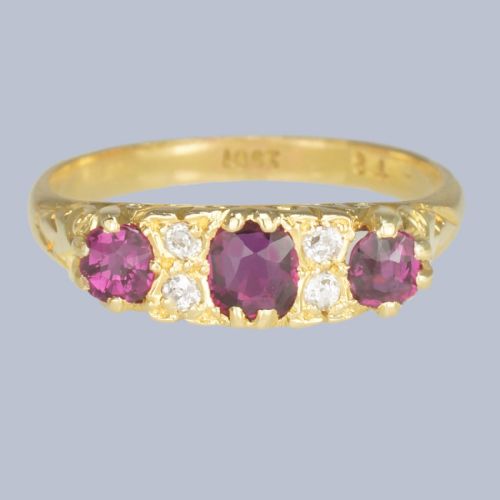
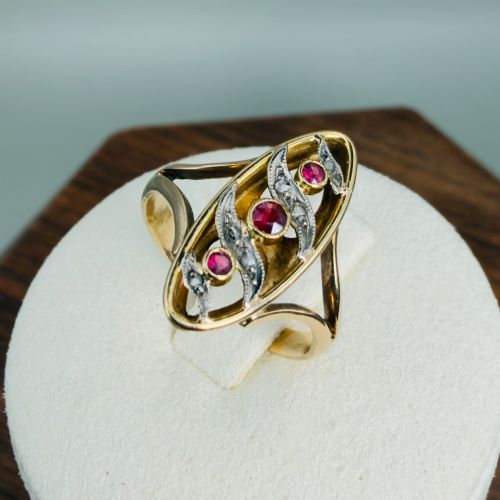
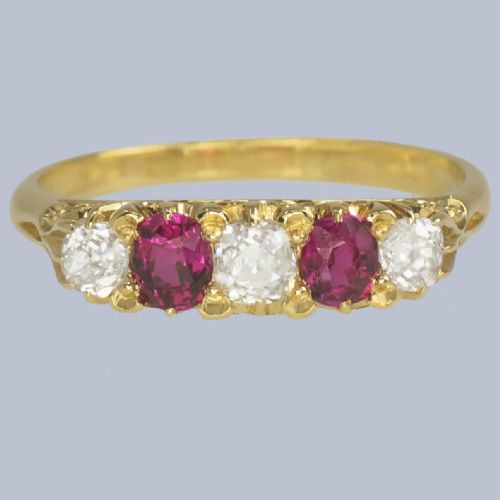
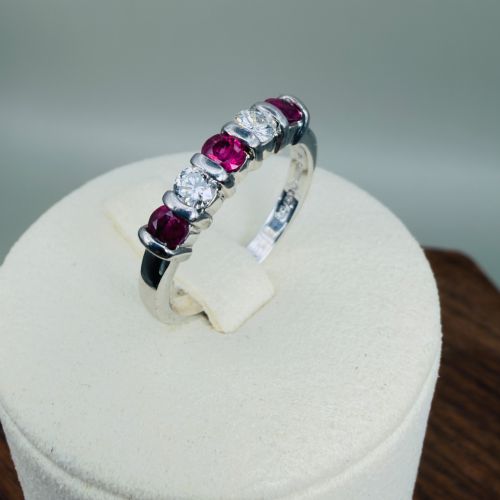
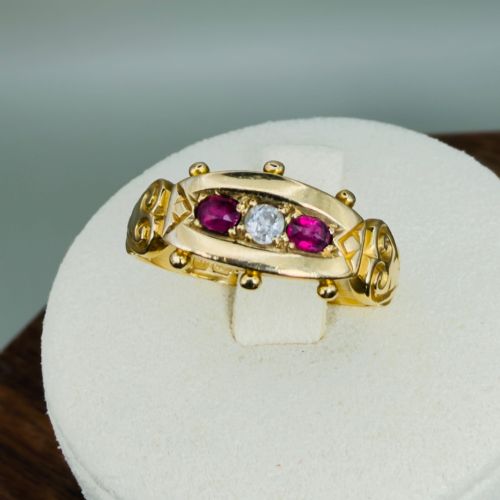

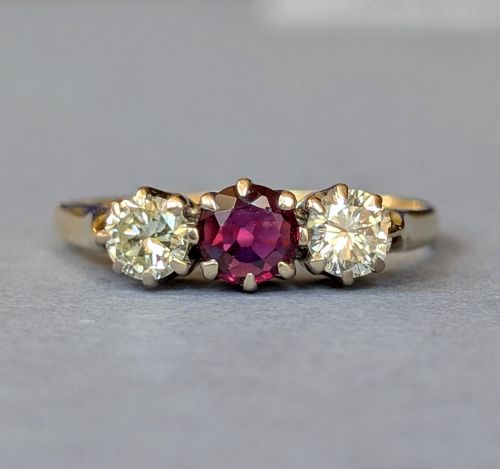
18ct Ruby Diamond Ring
An 18ct ruby diamond ring brings together the deep red of corundum and the brilliance of cut stones within high-purity gold.

18ct Ruby Diamond Ring
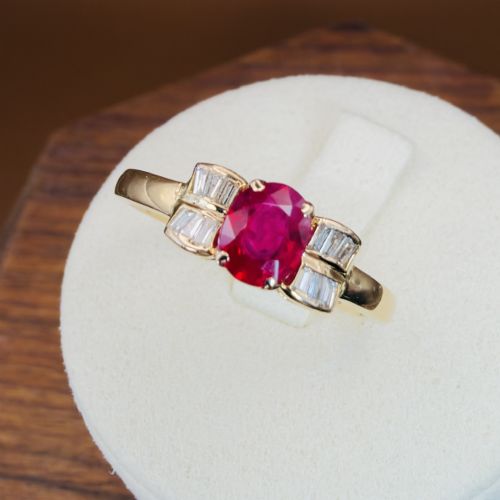
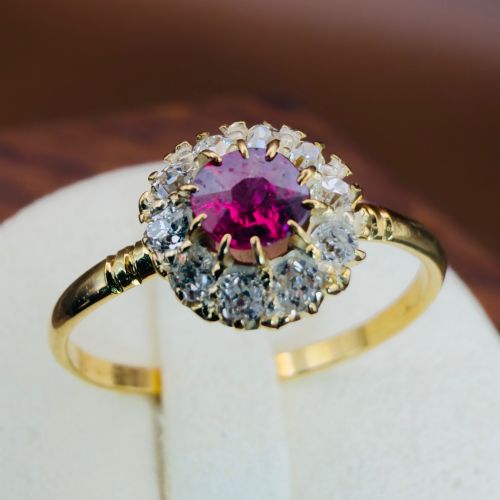
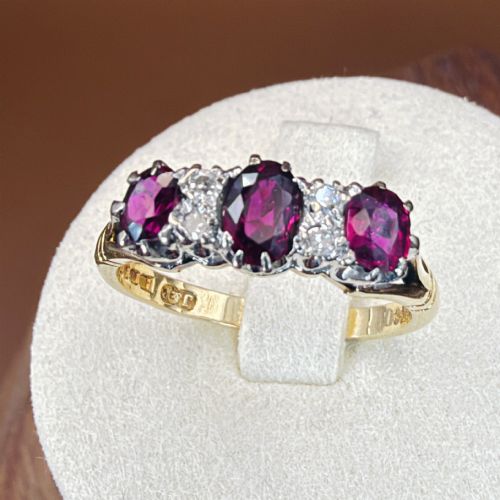
An 18ct ruby diamond ring encompasses multiple eras, ranging from nineteenth-century Victorian designs through Edwardian and Art Deco periods to mid-century modern examples. Buyers encounter various configurations, with cluster and multi-stone arrangements appearing most frequently in the inventory.
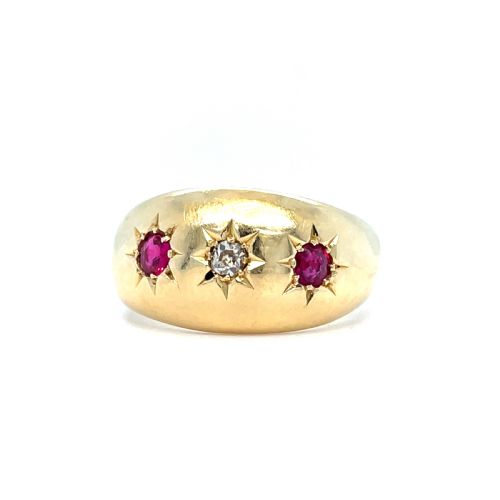
The physical formats span traditional boat shapes, starbursts, navette styles, and three-stone settings. Yellow gold dominates the earlier Victorian pieces, while white gold and platinum combinations emerge strongly in the Edwardian and Art Deco selections.
Materials and Construction
Metals employed rely heavily on 18ct yellow and white gold, occasionally paired with platinum for secure claw or bezel settings during the Edwardian and Art Deco periods. Artisans shaped these precious metals into cast or hand-wrought bands, incorporating gallery wire and pierced baskets to support the gems.
Gemstone selection pairs rubies with old-cut, old mine, or modern brilliant-cut diamonds. Stones receive secure mounting through techniques such as gypsy setting in flush bands, prong work in clusters, and channel settings in band configurations.
Listings feature 18ct yellow gold, 18ct white gold, and platinum combinations spanning Victorian to mid-century periods.
Quality Differentiation
Distinction across the range stems from the natural saturation and clarity of the ruby alongside the cut proportion of the accompanying diamonds. Heavier metal weight in the shank and minimal wear to the prongs or engraved shoulders indicate superior preservation.
The precision of the stone arrangement, whether in a geometric Art Deco cluster or a balanced Victorian three-stone layout, separates standard production from finer examples. Presence of original hallmarks and gemmological reports adds documented provenance to the evaluation.
The 18ct Ruby Diamond Ring Glossary
- Cluster ring
- A design featuring a central gemstone surrounded by a ring of smaller stones. This format maximises visual presence by grouping contrasting colours together.
- Old cut diamond
- A hand-faceted diamond shape popular before modern brilliant standards were established. These stones typically exhibit smaller tables and open culets.
- Navette
- A boat-shaped or marquise silhouette tapering to points at either end. The profile stretches along the finger for an elongated appearance.
- Gypsy ring
- A style where stones are flush-set directly into a thick, tapered metal band. The smooth surface sits level with the surrounding gold.
- Trilogy ring
- A three-stone setting often symbolizing past, present, and future. The central gem is typically flanked by two matching side stones.
18ct Ruby Diamond Ring: Frequently Asked Questions
How do I care for my ring?
Clean the piece gently using warm soapy water and a soft brush to remove daily residue from beneath the settings. Avoid harsh chemical dips, particularly when pearls or treated stones are absent but rubies and diamonds share the mount.
Store the ring separately in a lined box to prevent the harder diamond facets from scratching adjacent gold or softer gemstones. Routine inspection by a jeweller ensures the claws remain secure.
What periods do these pieces span?
The available selection stretches from the late nineteenth century, including Victorian and Edwardian periods, through the geometric designs of the Art Deco era. Mid-century examples also feature prominently.
Earlier pieces often utilise yellow gold and old-cut diamonds, whereas later twentieth-century creations frequently introduce white gold and platinum settings with calibrated cuts.
How can I identify the gold purity?
Look inside the inner band for British hallmarking stamps indicating eighteen-carat gold purity. These small impressions often include crown symbols or specific numerical stamps.
Assay office marks and maker's stamps can additionally verify the geographic origin and approximate decade of manufacture alongside the gold standard.
Can these rings be resized?
Most solid 18ct gold bands permit adjustment by a skilled jeweller who can add or remove metal from the shank. Complex gallery work or continuous channel-set stones require careful evaluation before alteration.
Consulting a professional prevents damage to delicate shoulders, engravings, or flush-set stones near the rear of the band.