
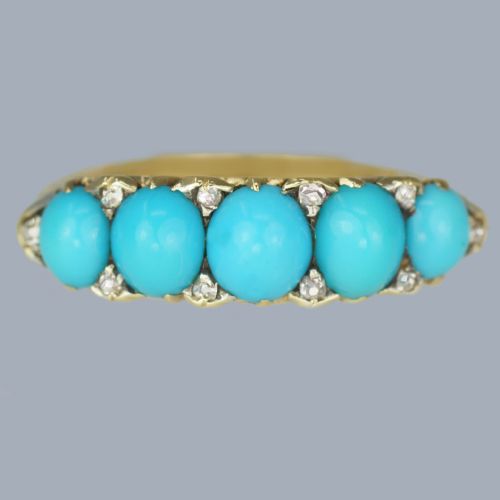


18ct Gold Turquoise Band
An 18ct gold turquoise band brings together rich metalwork and bright blue stones, offering a distinctive piece of historic jewellery to wear every day.
18ct Gold Turquoise Band
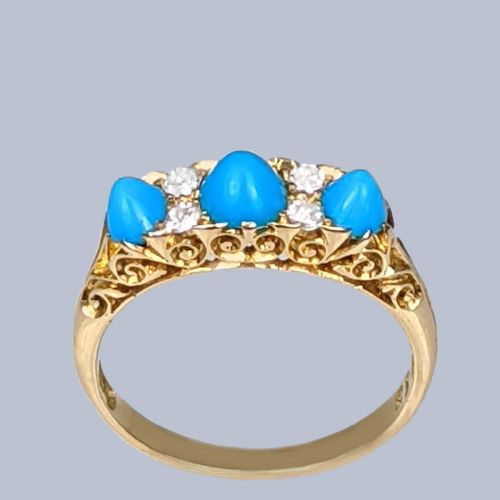
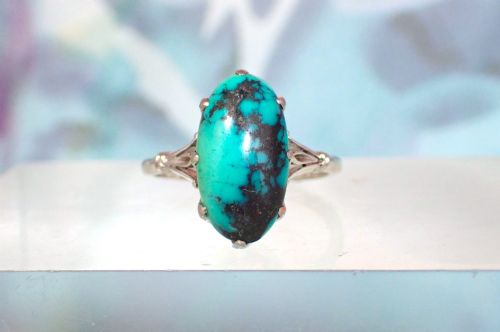
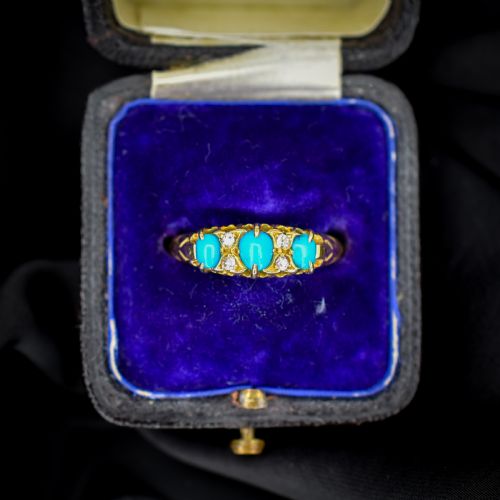
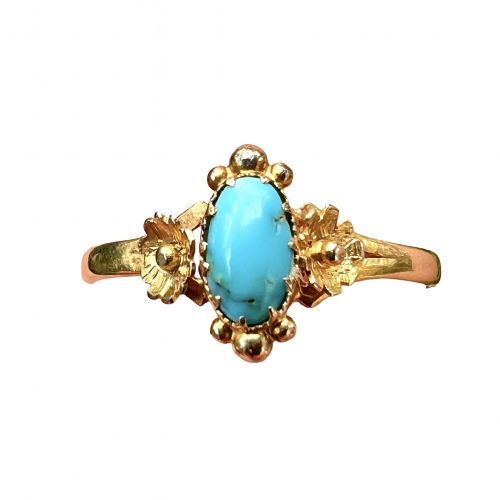
The most common examples on this page are Victorian rings featuring turquoise paired with old cut diamonds in traditional settings such as boats, scrolls, and flower motifs. Alongside these traditional designs appear later twentieth-century iterations, including bold yellow gold statement rings and white gold line bracelets.
Materials and construction
Makers fashioned these pieces predominantly using 18ct gold in various colour variations, pairing the metal with natural turquoise cabochons and occasional old cut diamonds or pearls. Goldsmiths utilised traditional casting and hand-setting techniques to secure the stones into intricate multi-stone rings, buckle bands, and articulated line bracelets.
Structural variety comes through different gold hues and mounting styles, ranging from robust rose and yellow gold Victorian bands to sleek white gold Art Deco and modernist geometry. The integration of supporting gems like diamonds demonstrates careful stone grading and meticulous claw or flush setting by period jewellers.
Listings feature 18ct gold variants in yellow, white, and rose tones, paired with turquoise alongside diamonds, pearls, and platinum highlights.
Assessing quality and craftsmanship
The quality of an 18ct gold turquoise band rests on the uniformity and natural colour saturation of the turquoise stones, alongside the crispness of the surrounding gold work. Superior examples display securely matched gems with minimal matrix interruption and robust, well-preserved metal settings that withstand the test of time.
Artisanal execution distinguishes finer pieces through balanced proportions, detailed engraving, and the careful integration of supplementary diamonds or pearls. Wear and tear on the softer turquoise cabochons also marks the difference between a pristine survival and a heavily weathered piece.
The 18ct Gold Turquoise Band Glossary
- Cabochon
- A gemstone shaped and polished with a smooth, convex domed surface rather than faceted. This cut suits opaque stones like turquoise by highlighting their natural colour and texture.
- Old cut diamond
- A precursor to the modern brilliant cut, typically featuring a smaller table, higher crown, and open culet. These stones exhibit a distinctive chunky facet pattern under candlelight.
- Trilogy ring
- A ring set with three principal gemstones, often symbolising the past, present, and future. In these listings, they commonly pair turquoise with flanking diamonds.
- Harem ring
- A multi-row stacking band designed to sit together as a wide unit on the finger. The example here uses a buckle design uniting five parallel rows in rose gold.
18ct Gold Turquoise Band: Frequently Asked Questions
Can I wear an antique turquoise band daily?
Wearing an antique 18ct gold turquoise band every day is possible if you take proper precautions. Because turquoise rates lower on the Mohs hardness scale than diamonds, remove the piece before washing hands, gardening, or heavy lifting.
Storing the ring in a padded jewellery box away from harder gems prevents scratching and protects the delicate gold claws from unnecessary impact.
How do I tell Victorian turquoise from later periods?
Victorian turquoise pieces frequently utilise yellow or rose 18ct gold combined with sentimental motifs like flowers, stars, scroll boats, and multi-stone configurations. These often feature hand-engraved details and old cut diamond accents.
Later Edwardian, Art Deco, and Mid-Century pieces shift towards white gold settings, geometric lines, and minimalist modernist styling or symmetrical line bracelet arrangements.
What does an 18ct gold hallmark tell me?
An 18ct gold hallmark indicates that the metal contains seventy-five percent pure gold by mass. British pieces often carry assay office marks and date letters that pinpoint the exact year of manufacture.
Checking these stamps helps verify the period of the jewellery, confirming whether a piece originates from the Victorian era, the Edwardian period, or later decades.