

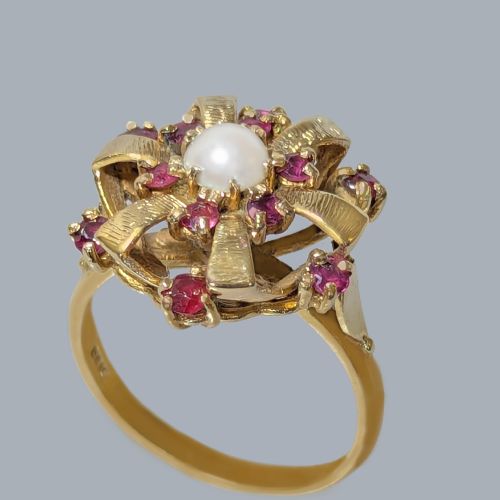


Textured Gold Dress Ring
A textured gold dress ring brings weight, surface work, and colour together on the hand, offering a distinct departure from plain bands.
Textured Gold Dress Ring
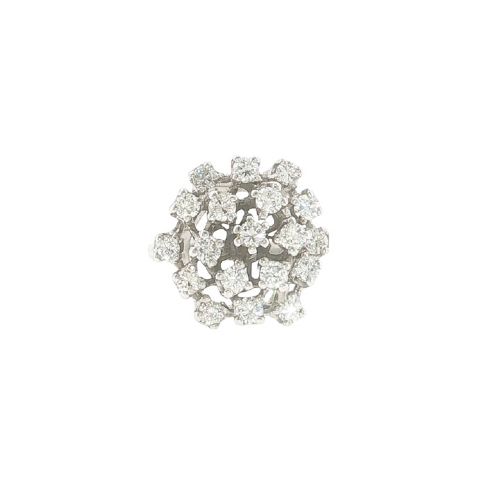
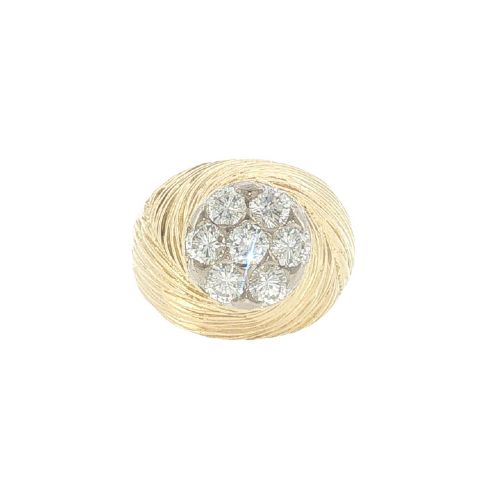
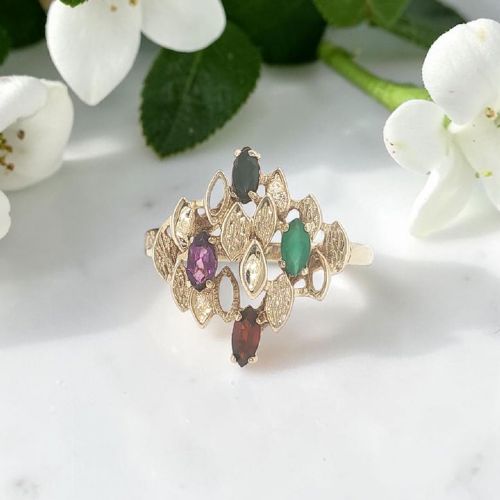
A textured gold dress ring sits primarily within mid-century and later modernist design, drawing the eye through worked metal surfaces and varied gemstone pairings. These pieces range from substantial 1970s cocktail creations to earlier mid-century openwork clusters and simpler Edwardian examples.
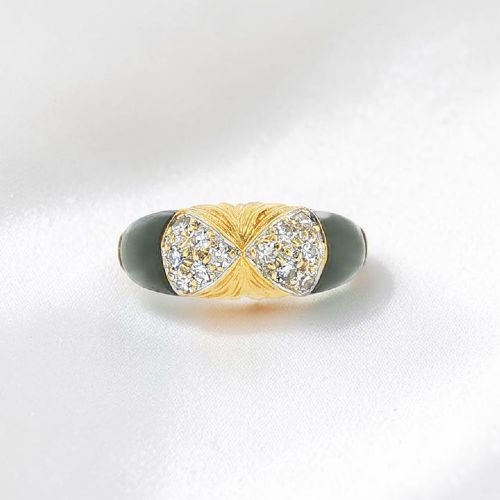
The materials span standard yellow gold alongside 18ct white gold and 14ct yellow gold, often set with diamonds, rubies, emeralds, sapphires, amethyst, coral, turquoise, and black onyx. Buyers encounter both geometric modernist lattice work and softer organic bombé forms.
How they were made
Goldsmiths utilised casting and fabrication techniques in yellow and white gold to build openwork scrolled structures, cluster settings, and bombé profiles. Surfaces received deliberate texturing to contrast against polished bezels and claw settings.
Gemstones including diamonds, rubies, emeralds, sapphires, and amethysts were integrated into structured clusters and pavé arrangements. Hallmarks frequently anchor these items to specific years and assay offices such as London.
Listings feature yellow gold, white gold, and 14ct or 18ct compositions alongside diverse stones including coral, turquoise, and onyx.
What varies in quality
Quality rests in the handling of the gold work, where crisp openwork, deep surface texturing, and secure stone setting distinguish finer ateliers from standard production. The integration of substantial central gemstones, such as large amethysts or multi-carat diamonds, elevates the piece.
The presence of maker attribution, distinct mid-century modernist styling, and clear hallmarks add weight to an individual ring. Balance in the cluster composition and the proportional distribution of accent stones determine visual success.
Kutchinsky
The Textured Gold Dress Ring Glossary
- Bombé
- A domed or swollen ring profile popular in mid-century design. This rounded shape creates a bold silhouette on the hand.
- Cluster ring
- A central stone surrounded by smaller accent stones. This arrangement maximises visual impact and light return.
- Openwork
- Metalwork featuring pierced or pierced-out patterns rather than solid planes. It lightens heavy gold structures.
- Modernist
- A design style prioritising abstract forms, texture, and asymmetry over traditional revival motifs. It dominates many mid-century pieces.
- Hallmark
- Official stamps indicating metal purity and origin. These marks provide reliable dating evidence for British pieces.
Textured Gold Dress Ring: Frequently Asked Questions
How do I style a textured gold dress ring?
These pieces carry significant visual presence, so wearing them alone on the hand allows the worked metal and stones to take centre stage.
They pair well with simple evening wear or tailored daytime attire where the ring can function as the primary accessory.
What periods do these rings come from?
The selection spans from Edwardian examples through 1950s designs and mid-century modernist pieces up to the 1970s.
Each period brings distinct textural treatments and stone combinations, from delicate clusters to heavy gold work.
Are these rings suitable for daily wear?
Many of these pieces were created as cocktail or dress rings, meaning their substantial settings and stones require some care during everyday tasks.
Checking the security of the claws and settings periodically helps protect the gemstones.
What gemstones are commonly used?
Diamonds, rubies, emeralds, sapphires, and amethysts appear frequently alongside materials like coral, turquoise, and black onyx.
These stones are chosen to contrast with the warm tones of yellow and white gold.