
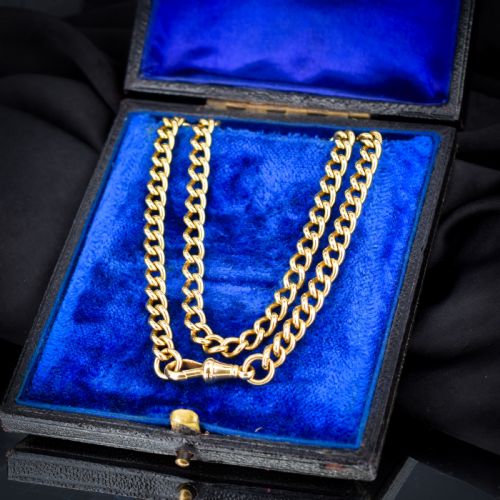
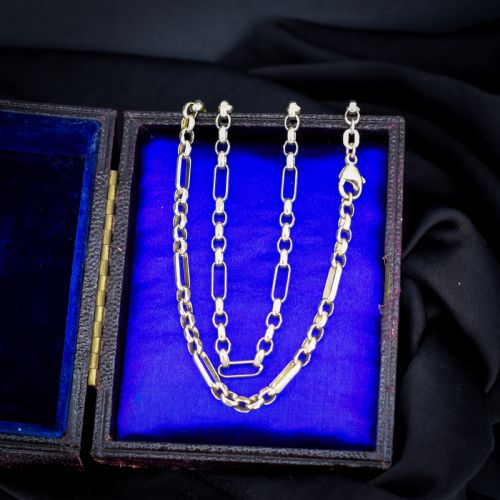


18 Carat Gold Necklace
An 18 carat gold necklace brings together enduring precious metal and fine craftsmanship, offering a wearable piece of history that suits everyday wear and special occasions alike.
18 Carat Gold Necklace
When you search for an 18 carat gold necklace, you encounter a variety of forms ranging from substantial link chains and modular chain and bracelet sets to dedicated pendant necklaces. The pieces span multiple eras including the nineteenth century, the Edwardian period, and the mid-twentieth century.
You are most likely to meet yellow gold curb link dog clip chains, diamond and opal cluster pendants, and French religious medals rendered in yellow and rose gold. These objects show both classical jewellery traditions and distinct regional styles from France and Italy.
What varies in quality
The distinction between standard and exceptional pieces rests upon the crispness of the metalwork, the structural integrity of clasps like dog clips, and the weight of the gold used in the construction. Heavier chains and well-preserved maker marks indicate superior original production.
Gemstone selection and setting precision also define the hierarchy, where well-matched diamonds or vibrant natural stones like black opal and citrine elevate a pendant. The finesse of hand-engraved monograms and religious motifs on French medals separates ordinary work from master craftsmanship.
The 18 Carat Gold Necklace Glossary
- Dog clip
- A spring-loaded clasp commonly found on nineteenth-century chains, designed to secure a pendant or pocket watch securely.
- Pietra dura
- An artistic technique using inlayed cut and fitted highly-polished coloured stones to create images.
- Witch's heart
- A pendant shape featuring a twisted tail, historically associated with romantic love and affection in French jewellery.
- Belle Epoque
- A period of refined French design spanning the late nineteenth and early twentieth centuries, known for delicate garlands and platinum-topped gold work.
- Suffragette design
- Jewellery incorporating green, white, and violet gemstones to subtly signal support for the women's suffrage movement.
18 Carat Gold Necklace: Frequently Asked Questions
How do I care for my gold necklace?
Store your gold necklace flat in a lined box or separate pouch to prevent the links and chains from tangling or scratching against other items. Clean the piece gently using warm water, mild soap, and a soft cloth, avoiding harsh chemical dips that can damage softer stones like pearls or opal.
Inspect the clasps and settings periodically to ensure that spring mechanisms remain firm and gemstone claws hold their stones securely. Taking off the necklace before swimming, sleeping, or strenuous physical work preserves the integrity of both the metal and any mounted gems.
Can I wear an antique chain every day?
Many antique chains are robust enough for daily wear, particularly heavy 18ct gold curb link chains and solid structural designs. However, lighter antique pieces and those with delicate hollow links or mounted coral require a gentler approach to avoid accidental bending or surface wear.
Assessing the thickness of the links and the strength of the original clasp helps determine whether a specific chain suits routine daily use. Rotating your pieces and reserving more ornate gemstone pendants for special occasions reduces cumulative wear over time.
What is the difference between yellow and white gold?
Yellow gold achieves its warm hue through a traditional alloy mixture containing gold combined with copper and silver. White gold is created by alloying gold with white metals such as palladium or silver, often finished with a bright polish to enhance its silvery appearance.
Both variations maintain the same gold purity content when marked as 18ct, meaning the difference is purely aesthetic rather than structural. Personal style and the colour of accompanying gemstones typically guide the choice between yellow and white gold settings.
How do I identify French antique pendants?
French antique pendants often feature distinct regional motifs such as religious medals, monograms, or peace symbols executed in warm yellow or rose gold. Examining the piece for small official French hallmarking stamps, such as the eagle head for 18k gold, provides definitive confirmation of origin.
The character of the engraving, the distinct colour tone of French rose gold, and specific maker signatures or stampings further distinguish these pieces from British or Italian equivalents of the same era.