




17th Century Wooden Casket
These sturdy 17th century wooden caskets offer genuine period character and dependable storage, making them a practical choice for any room.
17th Century Wooden Casket
A 17th century wooden casket encompasses various historic forms designed for safekeeping documents, valuables and precious textiles. Buyers searching this phrase encounter everything from plain domestic document boxes to iron-reinforced strongboxes and inlaid table cabinets.
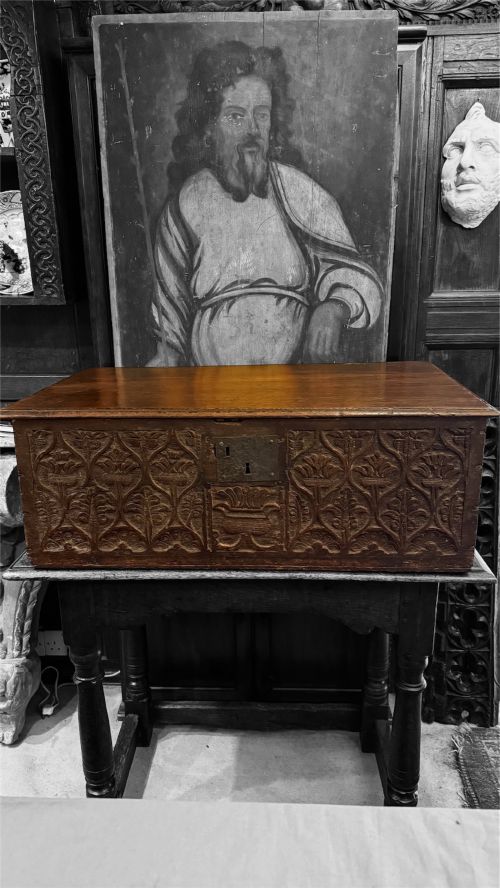
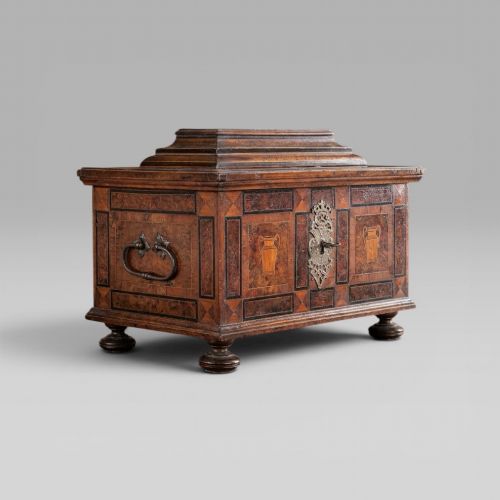
The English oak document and Bible boxes represent the simpler domestic items likely to be met on this page, alongside chip-carved Welsh examples. Continental pieces introduce richer veneers and intricate marquetry.
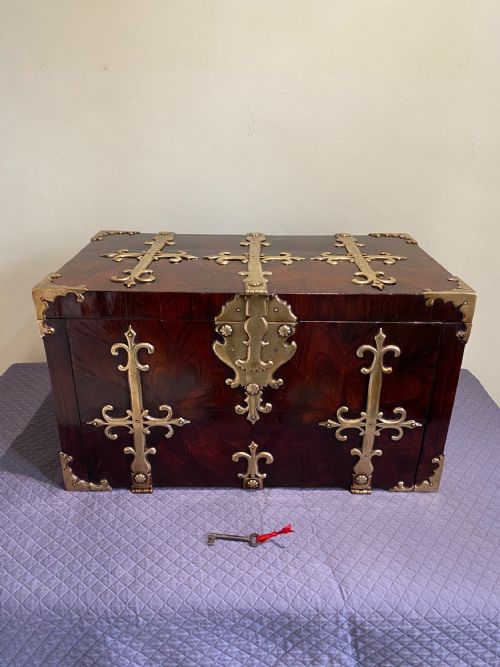
Forms extend from small lace boxes to substantial coffre forts fitted with complex mechanisms. Each object reflects the specific storage needs and workshop traditions of its origin, spanning English, Italian, German, French and Flemish provenance.
Materials and construction methods
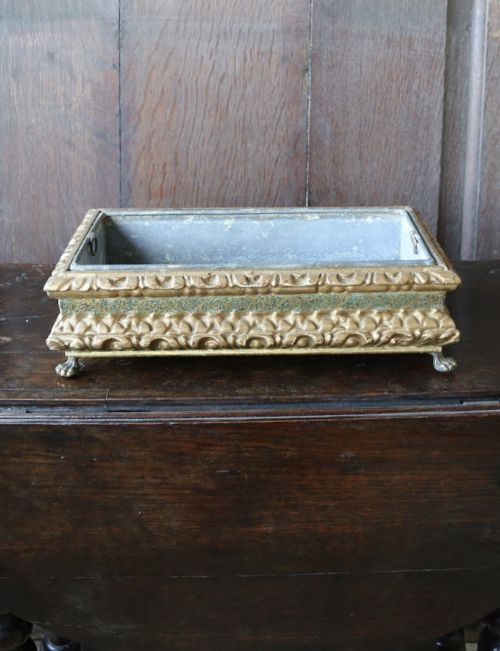
Makers utilised native and exotic timbers such as oak, walnut, fruitwood, chestnut, kingwood and burr walnut, often applying oyster veneers or floral marquetry to show off the grain. Chip carving and gilt wood decoration added surface texture on both English and continental pieces.
Iron and steel hardware played a vital structural and protective role, providing hinges, straps and complex internal locking mechanisms for strongboxes and safe boxes. Brass details further enhanced the finish of select table cabinets and caskets.
17th Century Wooden Casket Retail Price Guide 2026
Typical asking prices for 17th century wooden casket among the pieces listed under this phrase on Sellingantiques today, from the lower quarter to the upper quarter. They describe what is for sale here now, not the wider market.
Markers of quality
The standard of a 17th century wooden casket rests on the integrity of its timber selection, the crispness of its carving or marquetry, and the survival of original hardware. Rich veneers like kingwood and burr walnut distinguish the more decorative continental tables and coffre forts.
Originality in locks, keys and hinges elevates a piece, as does the retention of uncompromised interior surfaces. Superior execution shows in the precision of the joinery and the depth of the decorative surface work.
The 17th Century Wooden Casket Glossary
- Coffre fort
- A strongbox or chest designed for securing valuables, typically reinforced with iron strapwork and complex locking mechanisms.
- Chip carved
- A method of removing small chips from a wooden surface with gouges and knives to create geometric patterns.
- Oyster veneer
- Slices cut across small branches to produce circular or oval patterns resembling oyster shells, popular in seventeenth-century cabinetwork.
- Marquetry
- The art of applying pieces of veneer to a structure to form decorative patterns and pictures.
- Table cabinet
- A small, highly finished cabinet designed to sit on a table or desk for storing letters and small treasures.
17th Century Wooden Casket: Frequently Asked Questions
What were these boxes used for?
These boxes served domestic and administrative purposes, holding important documents, Bibles, lace and currency.
Strongboxes and coffre forts specifically protected valuables against theft, while table cabinets kept personal letters and small treasures organised.
How do I tell English pieces apart from continental ones?
English examples often rely on sturdy local timbers like oak and feature functional chip carving or simple mouldings.
Continental pieces frequently employ exotic woods, complex marquetry, oyster veneers and gilt wood decoration influenced by Baroque styles.
How should I care for a wooden casket?
Keep these items away from direct heat sources and sudden humidity changes to protect the old timber and delicate veneers.
Regular dusting with a dry, soft cloth preserves the surface without the need for heavy polishes or chemical treatments.