


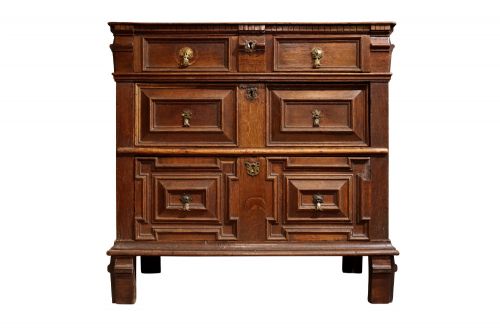


17th Century Style Drawers
These 17th century style drawers bring heavy oak timber, geometric moulding and deep historical character straight into a modern room.
17th Century Style Drawers
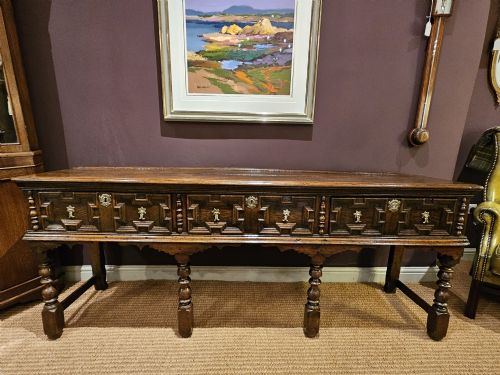
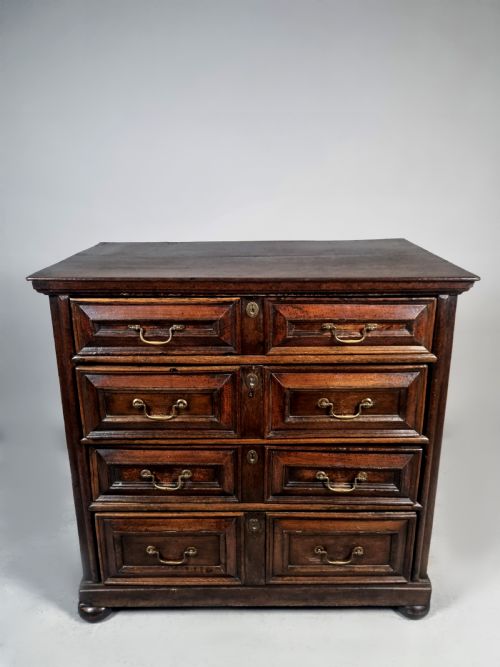
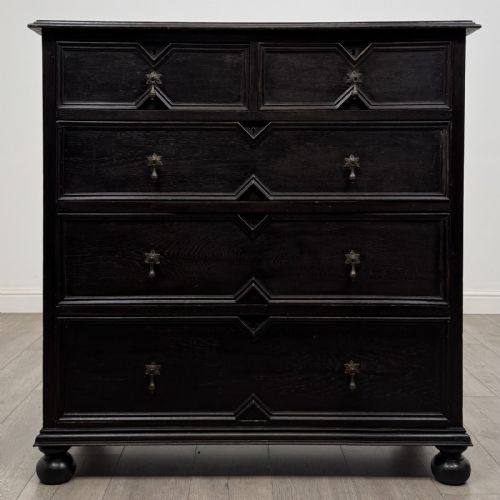
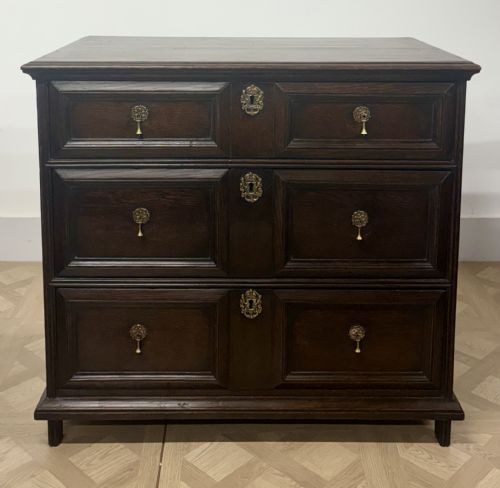
When you search for 17th century style drawers, you encounter sturdy case pieces built to anchor a room through heavy timber and formal symmetry. The selection on this page ranges from authentic period works to later revivals produced across the Edwardian era and the early twentieth century.
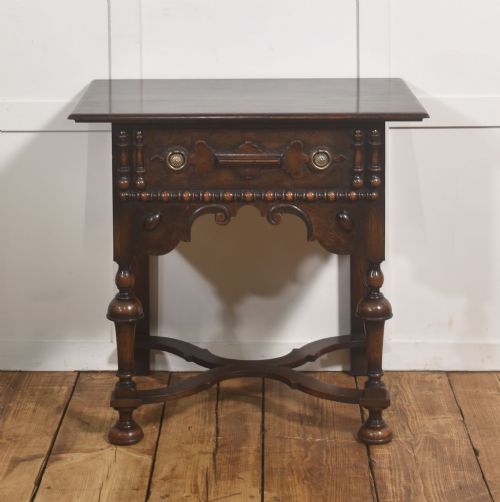
Chests of drawers, sideboards and dresser bases dominate the forms, frequently displaying panelled construction and compartmentalised drawer arrangements. Buyers most often meet solid oak examples alongside pieces finished in walnut, fruitwood and painted oak.
Stylistic influences span Charles II, Jacobean, and William and Mary aesthetics, carrying signatures such as geometric block fronts and raised mouldings. These items serve primarily as functional storage while establishing a distinct period atmosphere in an interior.
What varies in quality
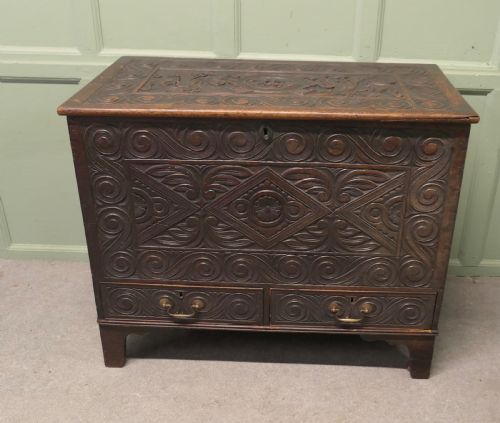
The degree of hand-carving and the crispness of the geometric mouldings separate standard production from superior examples. Depth in the relief work and precision in the mitred mouldings indicate a higher level of workshop execution.
Timber selection dictates the overall presence of the piece, with richly figured walnut and dense quartersawn oak commanding greater visual weight. The survival of original brass drop handles, escutcheons and underlying structural framing elevates the integrity of the piece.
17th Century Style Drawers Retail Price Guide 2026
Typical asking prices for 17th century style drawers among the pieces listed under this phrase on Sellingantiques today, from the lower quarter to the upper quarter. They describe what is for sale here now, not the wider market.
The listings combine seventeenth-century originals with revival interpretations from the Edwardian period and the nineteen-twenties and thirties.
The 17th Century Style Drawers Glossary
- Geometric moulded
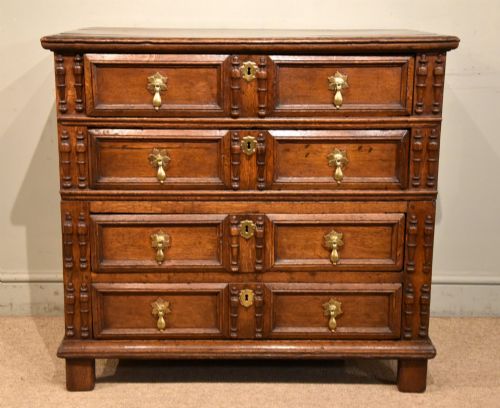
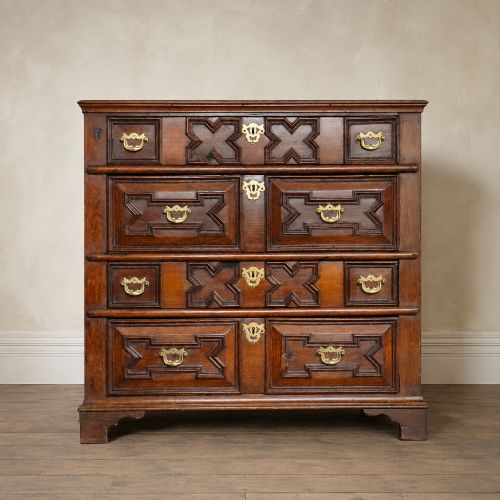
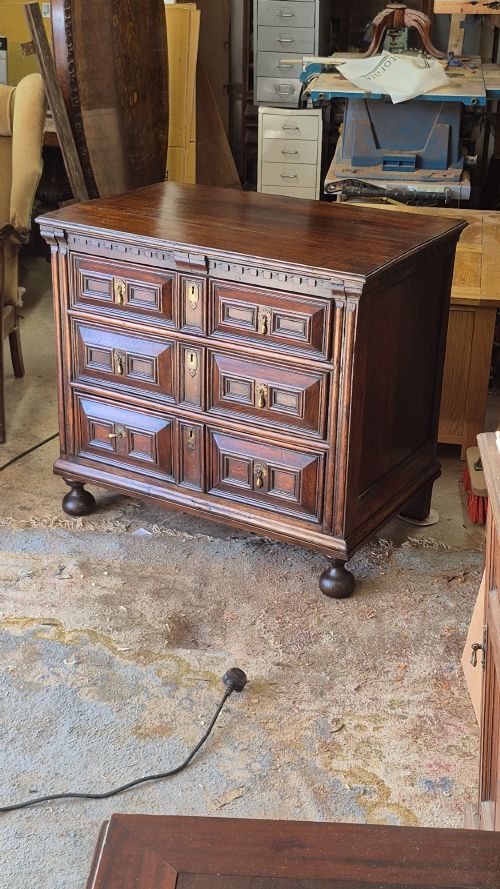
- A decorative treatment featuring raised geometrical shapes applied to drawer fronts, creating strong shadow lines. This technique defines much of the ornamentation on seventeenth-century case furniture.
- Jacobean revival
- A nineteenth and early twentieth-century design movement that copied the dark woods and heavy proportions of the early seventeenth century. Pieces from this era often utilise earlier construction methods adapted to contemporary room sizes.
- Bobbin turned
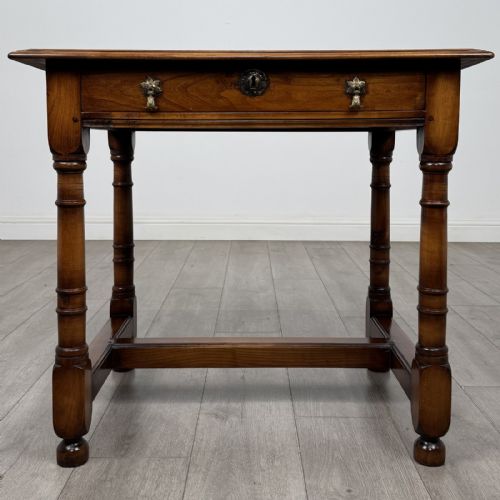
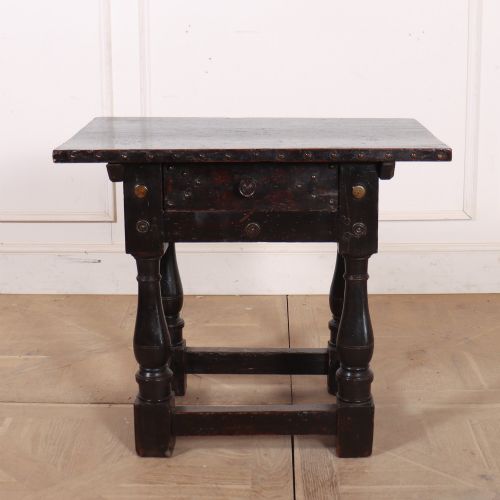
- A form of leg or stretcher lathe-cut into a series of rounded spheres resembling spools of thread. This distinctive profile appears frequently on seventeenth-century style side tables.
- Dresser base
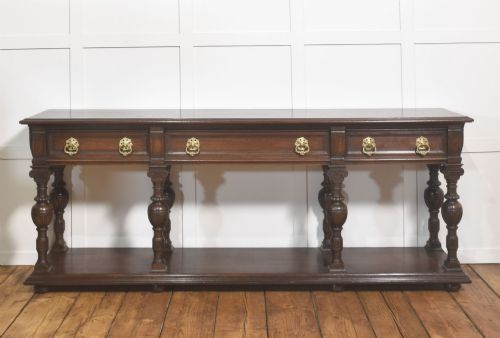
- A long, low storage unit featuring drawers above cupboard doors or open pot boards. These pieces originated in domestic kitchens and dining spaces for serving and utensil storage.
- Carolean
- Pertaining to the reign of King Charles II, characterised by exuberant carving, applied mouldings and rich walnut timbers. Furniture from this period moves away from rigid austerity toward baroque influences.
17th Century Style Drawers: Frequently Asked Questions
How do I spot a true period piece?
Examine the construction methods, tool marks on the interior timbers, and the nature of the wood ageing. Period pieces show hand-riven boards and structural wear consistent with centuries of use.
Revival pieces from the Edwardian era or the nineteen-thirties often employ standardised machine cutting while successfully imitating earlier styles and proportions.
Where should I place these chests?
These substantial pieces anchor a hallway, dining room, or living space effectively when given enough wall clearance. Their dark timbers contrast well against neutral walls.
Keep them away from direct heat sources and strong sunlight to prevent the timber and applied mouldings from drying out or splitting.
Are walnut pieces harder to maintain?
Walnut requires consistent humidity levels to prevent the fine veneers and solid timber from lifting or cracking. Regular application of quality wax preserves the rich colour and grain.
Oak tends to prove more forgiving due to its density, whereas walnut demands careful placement away from radiators and fireplaces.