





17th Century Style Carving
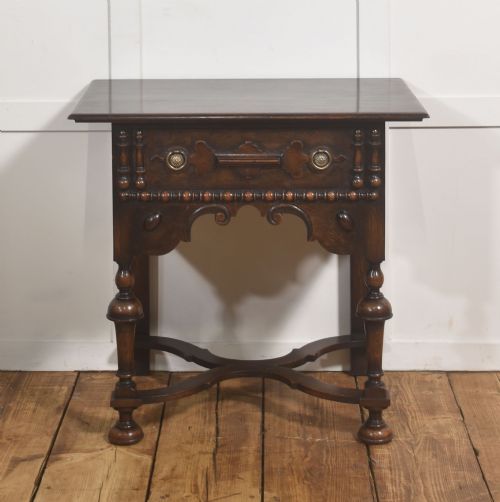
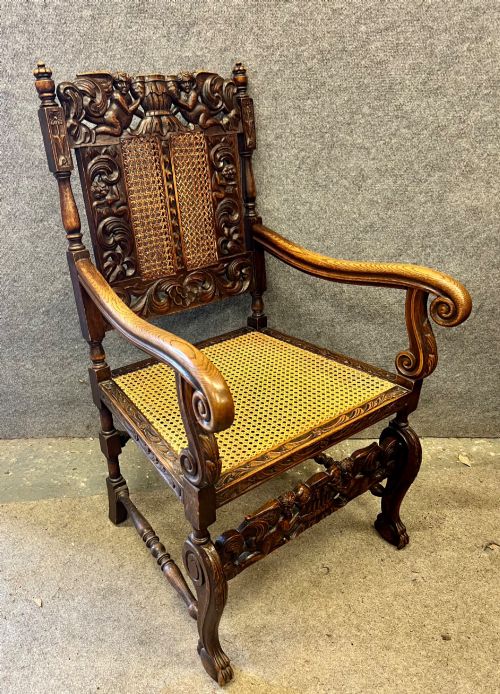
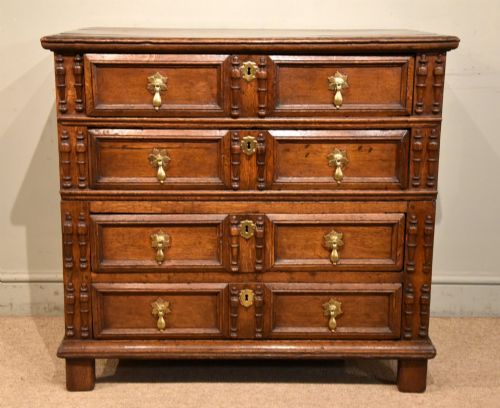
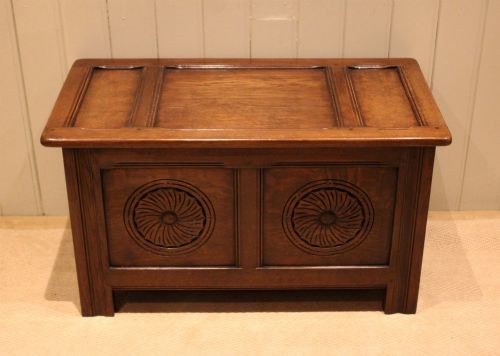
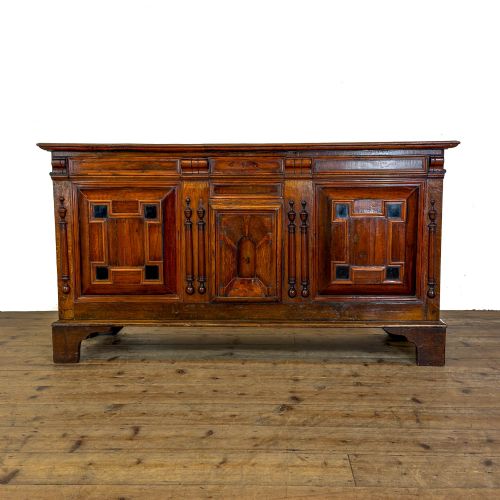
These pieces of 17th century style carving bring heavy timber, deep relief panels and dark patination into a room.
Materials and construction
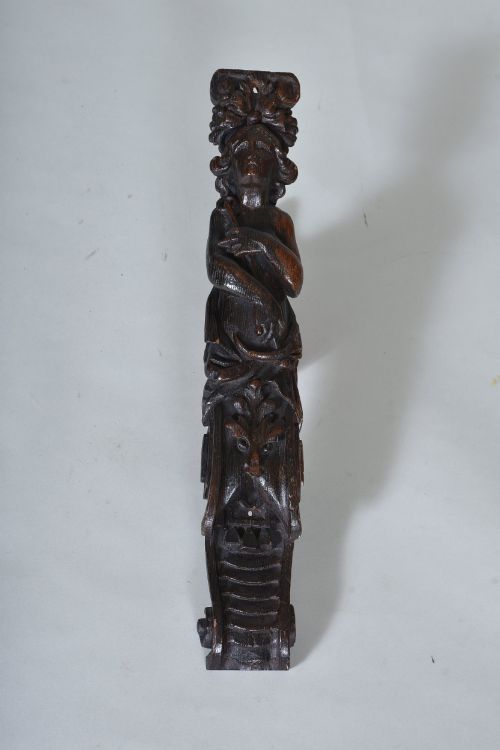
Cabinet makers relied primarily on solid oak and walnut, shaping boards with hand saws and joining them using traditional mortise and tenon joints secured by wooden pegs. Surfaces were heavily worked with chisels and gouges to produce low relief geometric patterns, scrolling foliage and figural motifs.
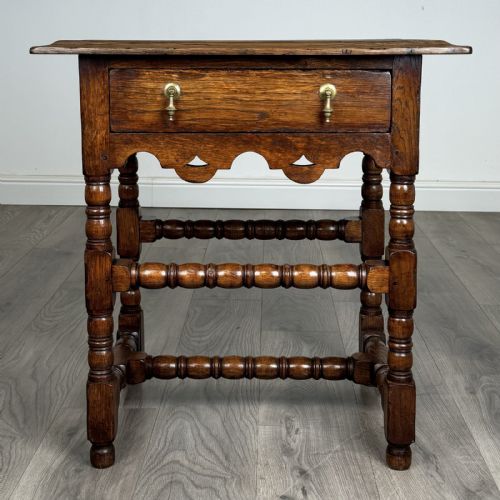
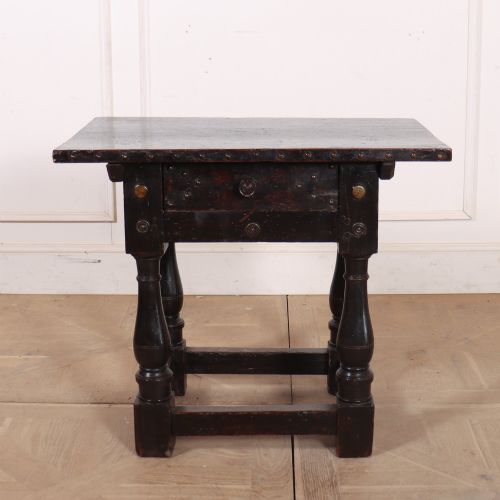
Turned components like bobbin legs, barley-sugar supports and stretchers were shaped on lathes, while chests utilised sturdy iron hinges and brass hardware. Secondary timbers such as fruitwood appear in smaller elements like cradles, whilst upholstery utilises velvet and fabric attached with nails.
Assessing the craftsmanship
Quality rests in the depth and crispness of the chisel work, where sharply defined carving stands apart from shallow, mechanical impressions. The choice of timber also dictates standard, with dense, figured oak and richly grained walnut displaying better ageing and stable construction.
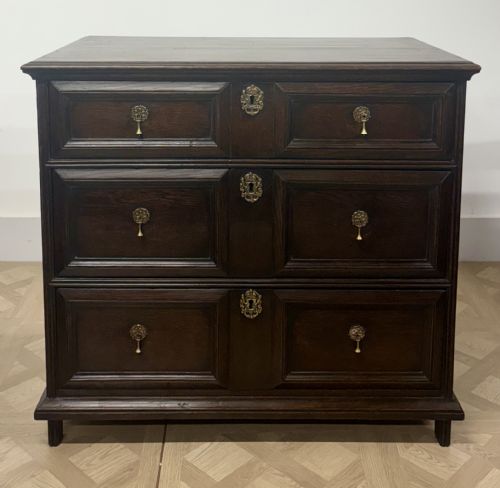
Original joinery without excessive modern replacement parts separates superior examples from heavily altered items. Weight, timber thickness and the natural patina developed over decades of polishing indicate how closely a piece mirrors genuine period standards.
A green man carved into a mule chest peers out from the woodwork, bringing centuries of mythical folklore directly into the hallway.
The 17th Century Style Carving Glossary
- Coffer
- A large wooden storage chest with a hinged lid, frequently decorated with carved panels on the front facade.
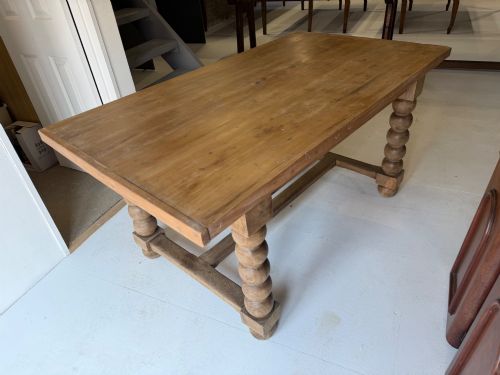
- Refectory table
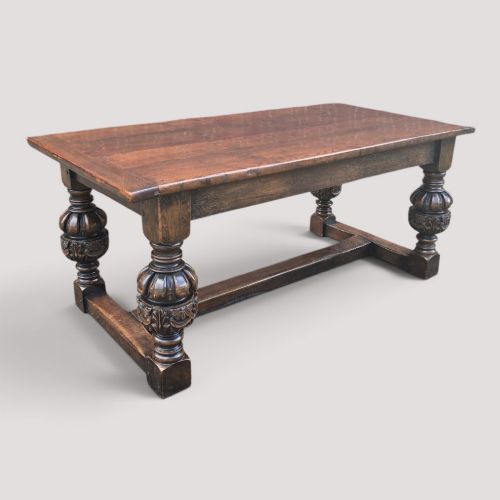
- A long, narrow dining table supported by thick legs and connected by low wooden stretchers, built for communal dining.
- Wainscot chair
- A heavy wooden armchair constructed with panelled backs and solid wooden seats, typical of sixteenth and seventeenth century domestic interiors.
- Bobbin leg
- A furniture leg turned on a lathe to resemble a series of wooden bobbins or reels stacked end to end.
- Strapwork
- A decorative carving style featuring flat, interlaced bands resembling leather straps folded and scrolled into geometric shapes.
17th Century Style Carving: Frequently Asked Questions
How do I spot a revival piece?
Revival pieces mimic earlier seventeenth century motifs but often utilise machine-sawn timber, standardised fixings or lighter secondary woods behind the carved facade.
Examine the tool marks and the inner construction, as nineteenth and twentieth century workshops employed different assembly methods than seventeenth century joiners.
Are these items suitable for daily use?
Most of these tables, chairs and storage chests were built from solid oak or walnut for heavy domestic service and remain robust today.
Regular waxing protects the dry timber from splitting while maintaining the deep dark patination accumulated over generations.
What is a refectory table used for?
Refectory tables were originally designed for communal dining halls in monasteries and grand houses, providing a long surface for large gatherings.
Today they function well as large family dining tables or spacious workspace desks within period or modern interiors.
How should I care for carved oak?
Carved oak benefits from applications of traditional beeswax, which nourishes the dry grain and highlights the deep recesses of the chisel work.
Keep these pieces away from direct heat sources and sudden temperature shifts to prevent the heavy timbers from warping or cracking.