




17th Century Panel Chair
A 17th century panel chair brings heavy timber framing and solid domestic history into a room.
17th Century Panel Chair
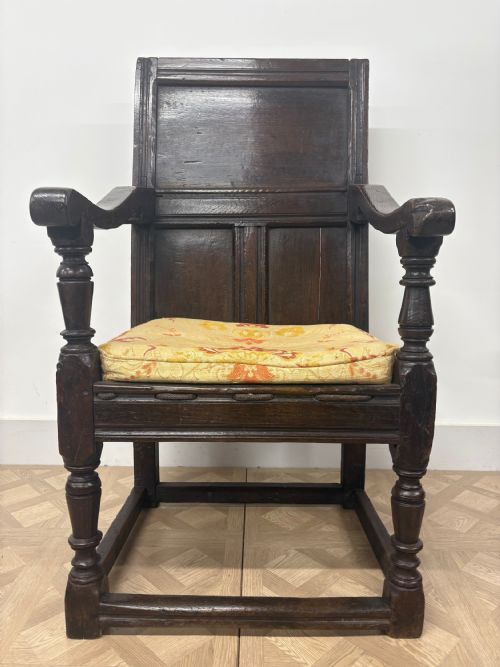
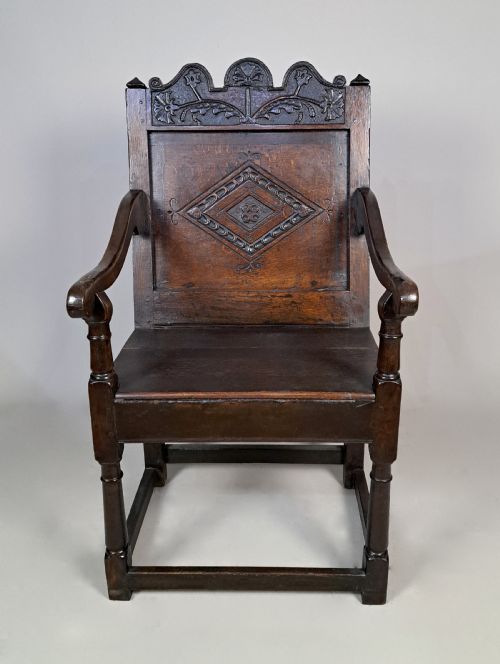
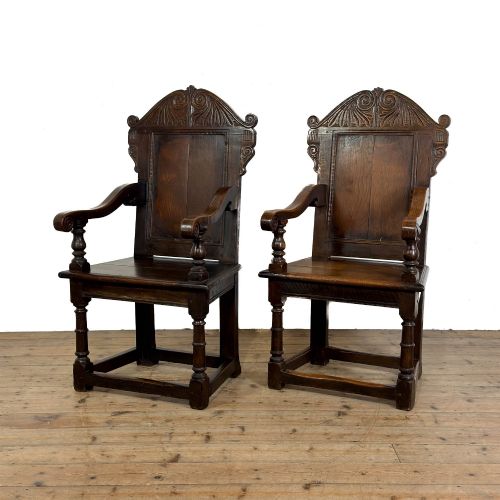
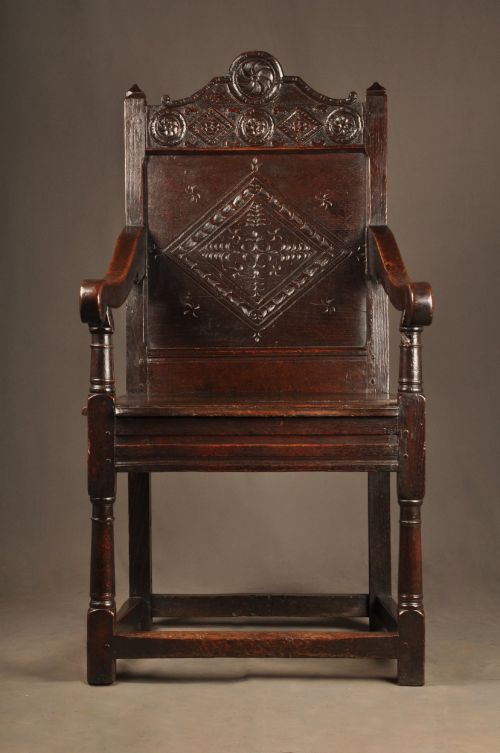
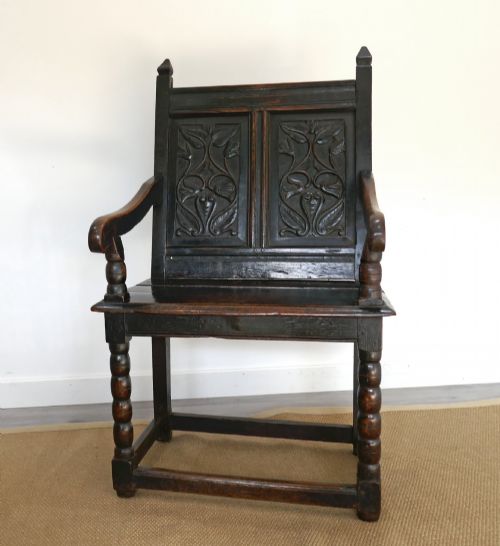
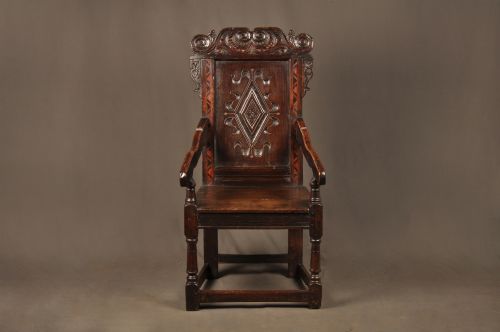
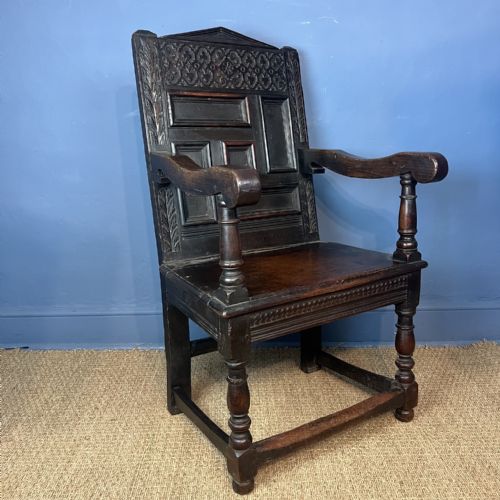
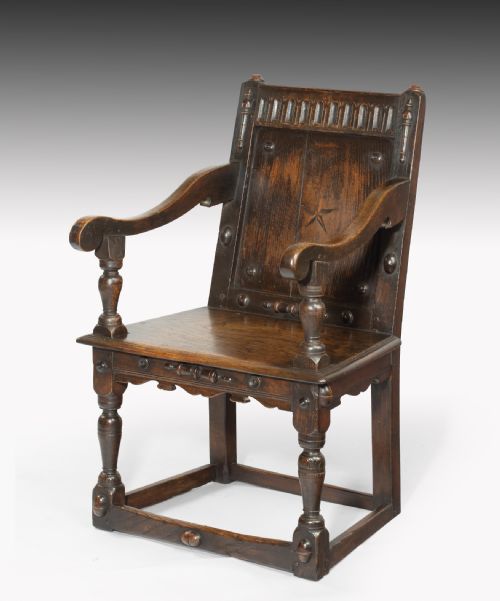
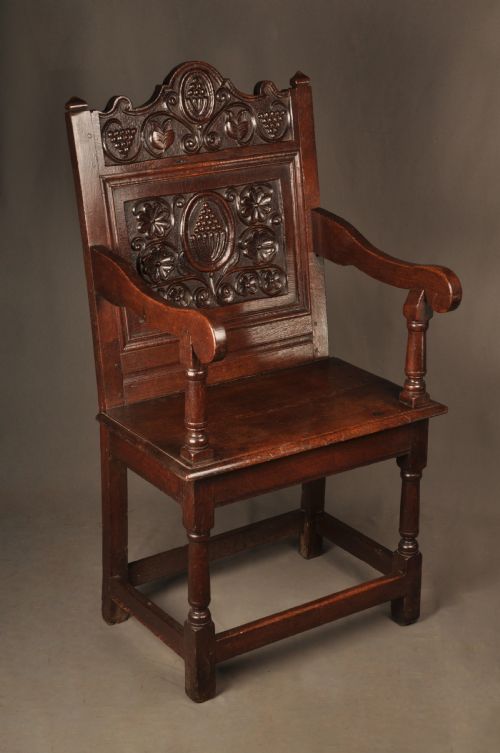
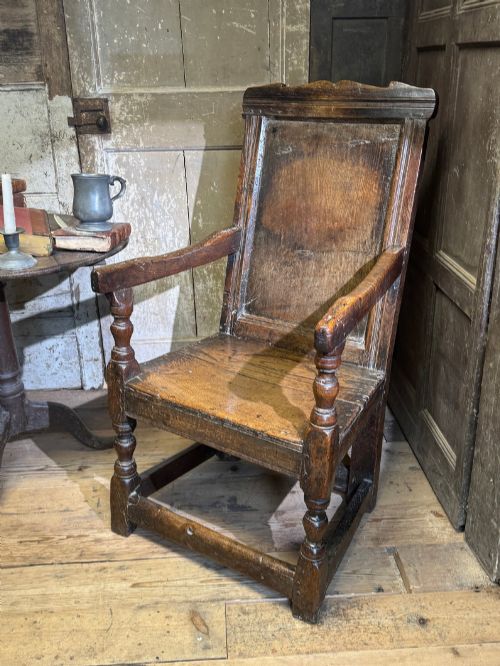
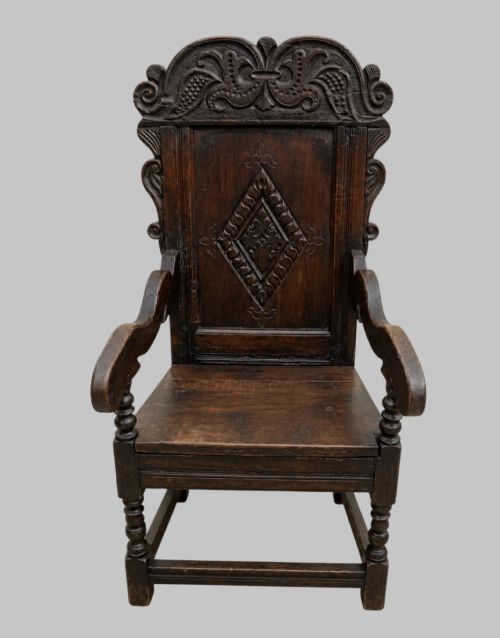
A 17th century panel chair typically manifests as a wainscot armchair constructed from rigid timber, designed for high-status domestic use. These heavy seating pieces appear in regional English, Welsh, and Scottish variations.
Regional designations such as Yorkshire, Lancashire, and the West Country recur frequently in the listings, alongside later 19th century revival pieces produced in the same historic manner.
Assessing Quality and Proportion
Quality rests in the crispness of the original carving and the integrity of the timber panels. Better examples maintain their original proportions and uncompromised structural height.
The degree of regional detail and the survival of an attractive natural surface distinguish superior survivals from heavily altered or later revival interpretations.
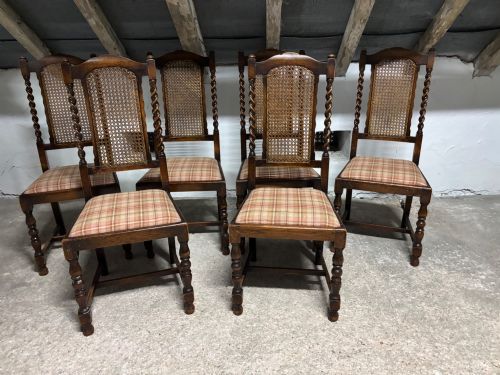
Materials across these listings include solid oak, walnut, cane, fabric, textile, and polychrome paint.
The 17th Century Panel Chair Glossary
- Wainscot chair
- A heavy wooden armchair constructed with panelled backs, traditionally associated with the 17th century. This form provided status and shelter from draughts in early interiors.
- Joint stool
- A sturdy wooden stool built with mortise and tenon joints, sharing construction methods with panel chairs. These pieces formed the basis of early domestic seating.
- Backstool
- An early form of upholstered or panelled single chair without arms. It functions essentially as a wainscot chair minus the armrests.
- Jacobean
- The style prevailing during the reign of James I, characterised by sturdy proportions and geometric carving. It forms a primary stylistic category for these chairs.
17th Century Panel Chair: Frequently Asked Questions
Where were these chairs used?
These heavy wooden seats sat near the hearth or at the head of the dining table in prosperous 17th century households.
Only the head of the house or honoured guests used the armchairs, while others sat on joint stools or benches.
How do I spot a later copy?
Nineteenth-century revival pieces often display softer carving and machine-sawn timber marks hidden beneath the frame.
Genuine 17th century examples show appropriate tool marks, pegged joinery wear, and deep patination accumulated over centuries.
Did they have cushions?
Hard wooden seats were rarely left bare for long periods of daily domestic use.
Loose wool or textile cushions provided comfort on the solid timber bases.
Why are they called wainscot chairs?
The term originates from wainscot oak, a fine grade of imported timber used for wall panelling.
Chair makers utilised offcuts from wall panelling to construct the solid back panels of these armchairs.