



17th Century Jug
These early vessels, catalogued here as a 17th century jug, offer tangible connections to domestic life and trade across Europe and Asia centuries ago.
17th Century Jug
When buyers search for a 17th century jug, they encounter a diverse array of utilitarian and decorative containers spanning multiple continents and cultures. The selections available encompass robust European tavern vessels alongside refined imports from Qing Dynasty China and Safavid Persia.
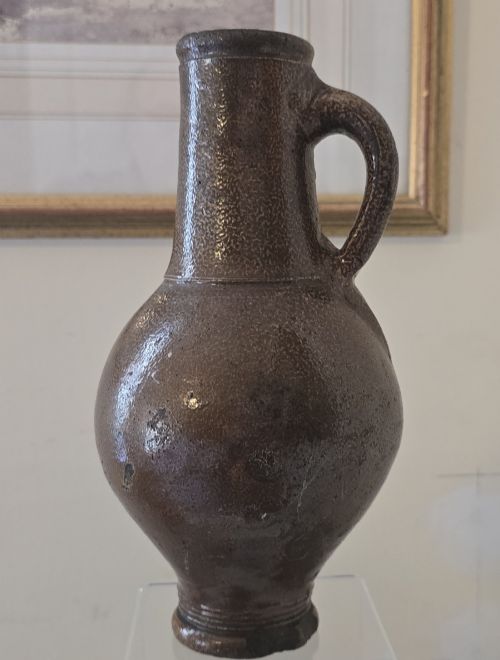
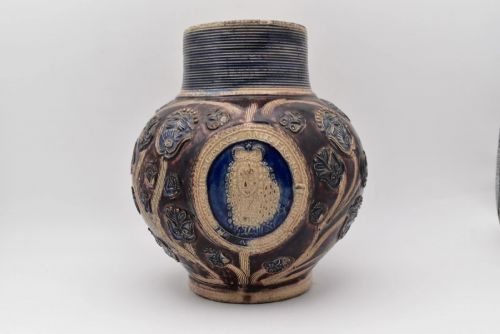
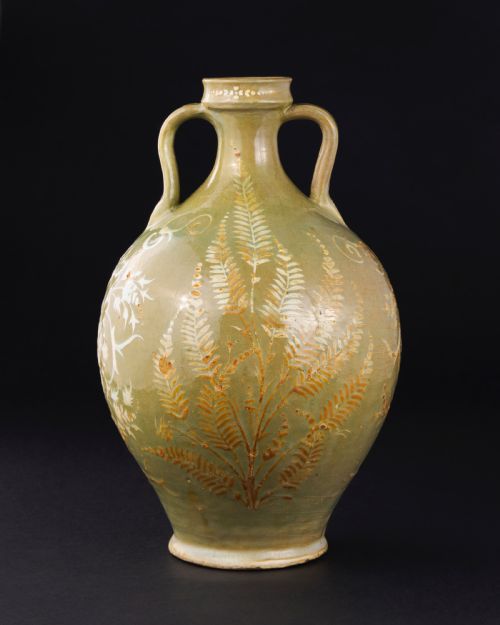
The most frequent items met on this page are earthenware and ceramic forms, particularly Dutch slipware and Delftware pitchers. Buyers also find stoneware vessels and porcelain wine ewers originating from overseas trade networks of the period.
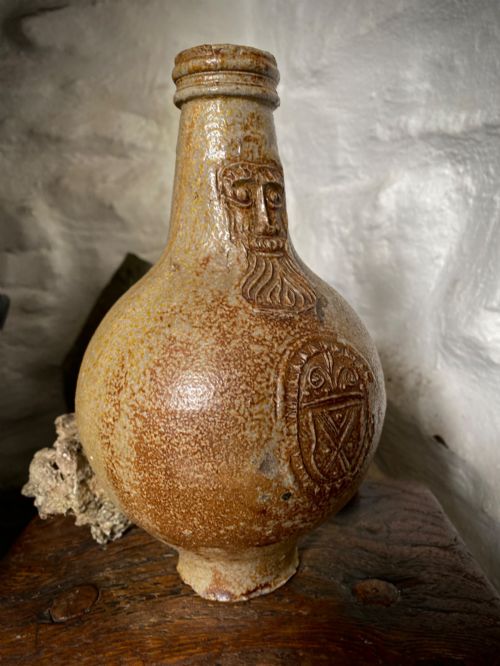
Object types stretch beyond simple pouring vessels to include tavern jugs, kendis, strawberry jars, and mask-decorated flagons. Occasional oil paintings depicting similar subjects also appear within the listings, reflecting the era's material culture.
Assessing quality and execution
Quality reveals itself in the precision of the potter's hand, the stability of the form, and the crispness of applied decorations like moulded masks or painted chinoiserie motifs. Superior examples maintain structural integrity despite centuries of handling and use.
Glaze application differs significantly between rustic slipware and refined Delftware or porcelain. Consistency in the glaze layer, depth of colour, and control during the firing process distinguish standard utility wares from pieces intended for display.
17th Century Jug Retail Price Guide 2026
Typical asking prices for 17th century jug among the pieces listed under this phrase on Sellingantiques today, from the lower quarter to the upper quarter. They describe what is for sale here now, not the wider market.
Some stoneware flagons bear grumpy bearded faces moulded into the clay to stare disapprovingly at your table.
The 17th Century Jug Glossary
- Slipware
- Pottery decorated with a liquid clay mixture applied before firing to create surface patterns. This technique appears frequently on tavern vessels and strawberry jars from the period.
- Delftware
- Tin-glazed earthenware produced in the Netherlands, often featuring blue and white decoration inspired by imported Asian ceramics. Pieces range from pitchers to decorative jugs.
- Stoneware
- A dense, hard ceramic fired at high temperatures until vitrified, making it naturally waterproof. Salt glaze variants often display textured, pebbled surfaces.
- Kendi
- A spouted drinking vessel originating from Asia, produced in ceramic or porcelain during the period. These items reached European markets through extensive trade networks.
- Facon de Venise
- Glassware produced in Northern Europe in the Venetian style. Surviving vessels demonstrate delicate manipulation of hot material.
17th Century Jug: Frequently Asked Questions
How do I clean a 17th century jug?
Dust gently with a soft, dry cloth to preserve aged surfaces and fragile glazes. Avoid chemical cleaners and do not submerge porous earthenware in water.
Display the vessel away from direct sunlight and sudden temperature shifts to protect the historic body and glaze from further deterioration.
Can I use these jugs for serving liquids?
Most historic pieces are intended for display and study rather than daily service. Historic ceramics and glazes may contain unstable materials or sustained damage over centuries.
Display them safely on stable surfaces where accidental knocks can be avoided, keeping them away from heavy foot traffic areas.
How do I distinguish Dutch slipware from English examples?
Regional attribution relies on examining the clay body, slip colours, and characteristic potting profiles documented by scholars. Dutch workshops often utilised distinct palette choices and specific decorative line work.
Comparing pieces against documented examples in museum collections helps clarify geographic origins when stylistic overlaps occur.
What is the difference between earthenware and stoneware?
Earthenware is fired at lower temperatures, leaving the ceramic body porous unless sealed with a lead or tin glaze. Stoneware fires much hotter, vitrifying the clay into a dense, impermeable material.
Stoneware jugs generally resist moisture naturally, whereas damaged glazes on earthenware can expose the underlying clay to absorption.