




17th Century Inlaid Chest
These heavy timber surfaces carry the deep tone of walnut and oak alongside complex floral patterns, offering a sturdy place to store belongings while anchoring a room with seventeenth-century character.
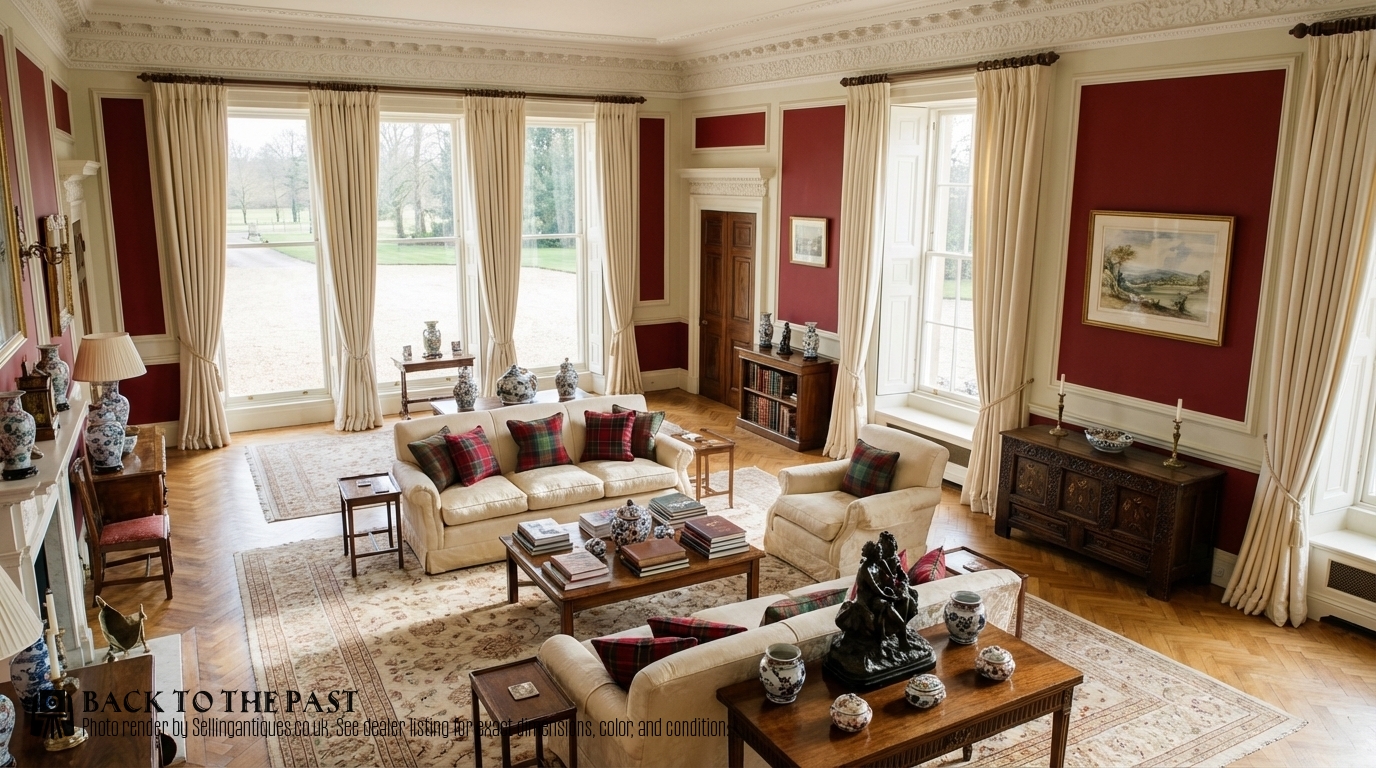
17th Century Inlaid Chest
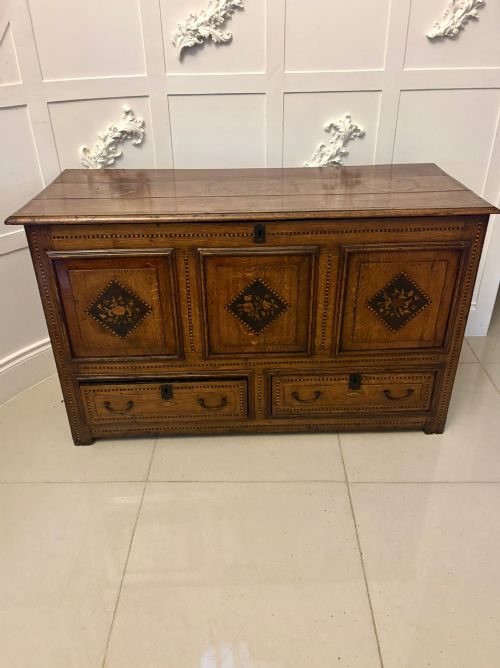
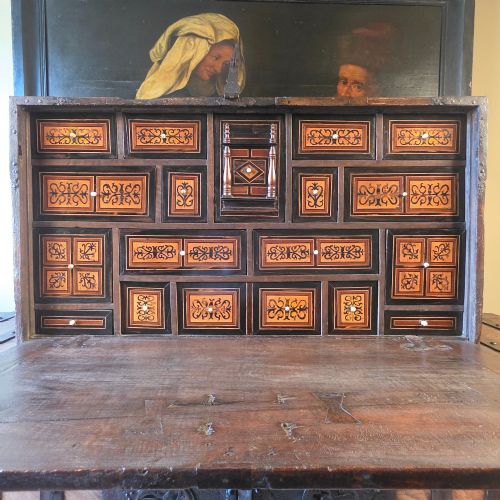
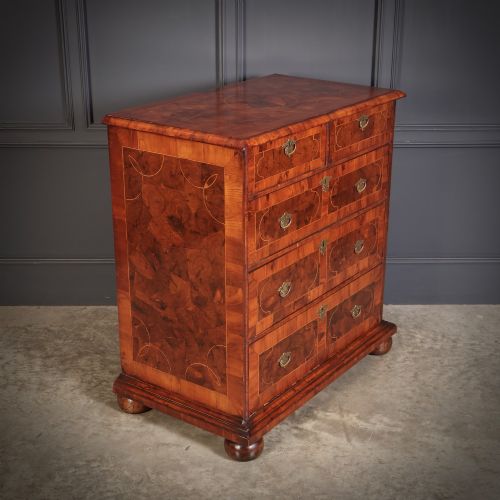
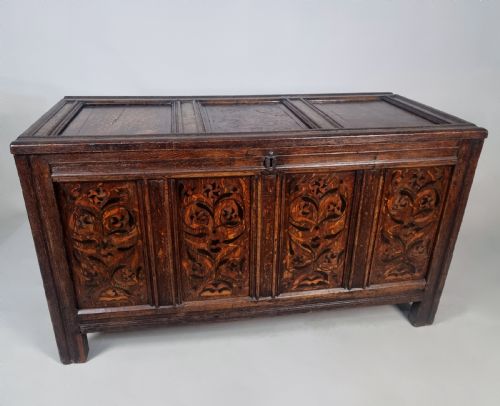
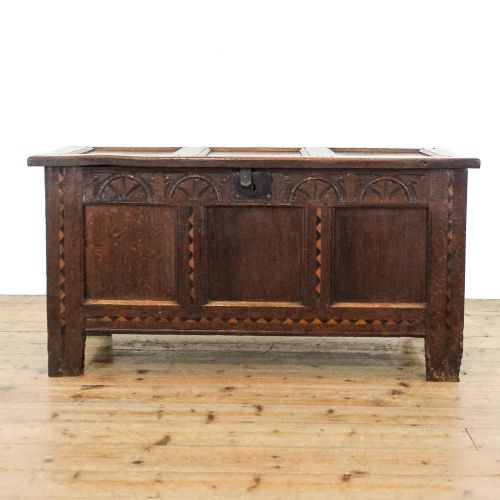
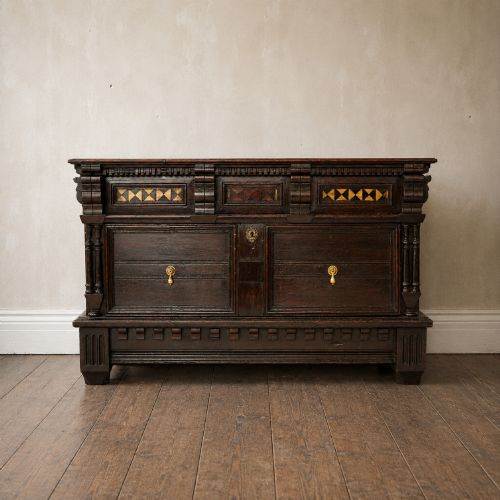
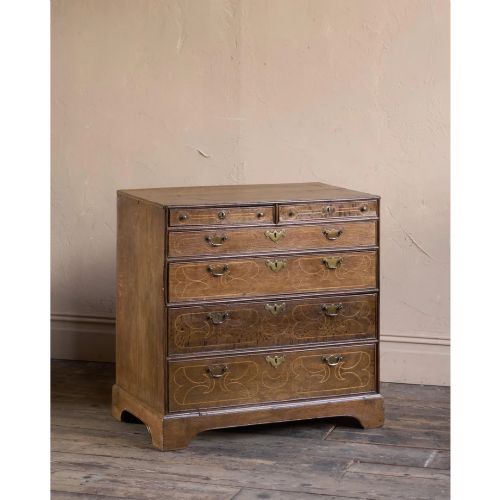
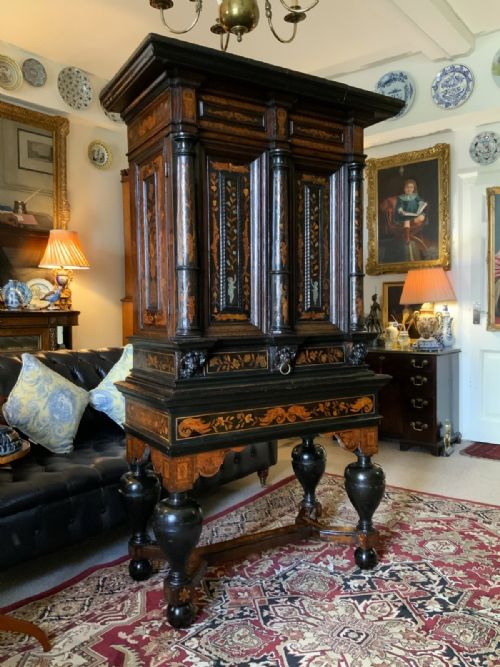
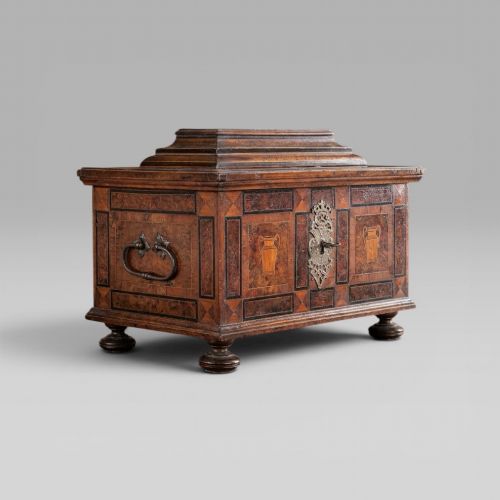
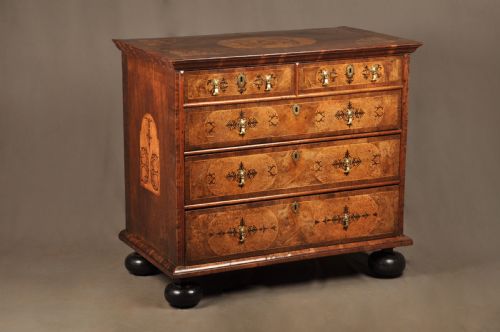
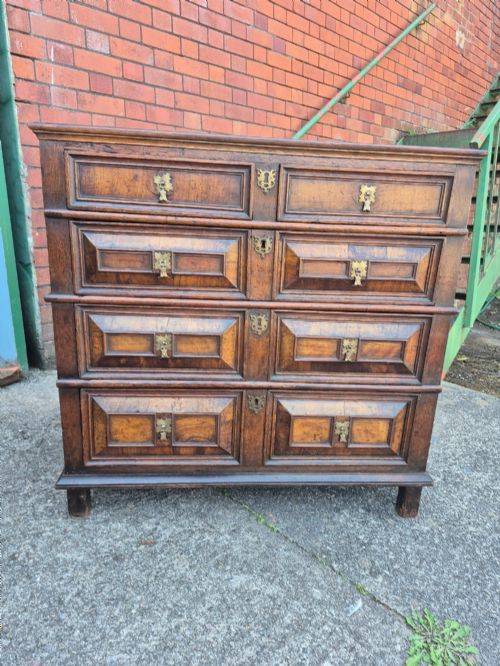
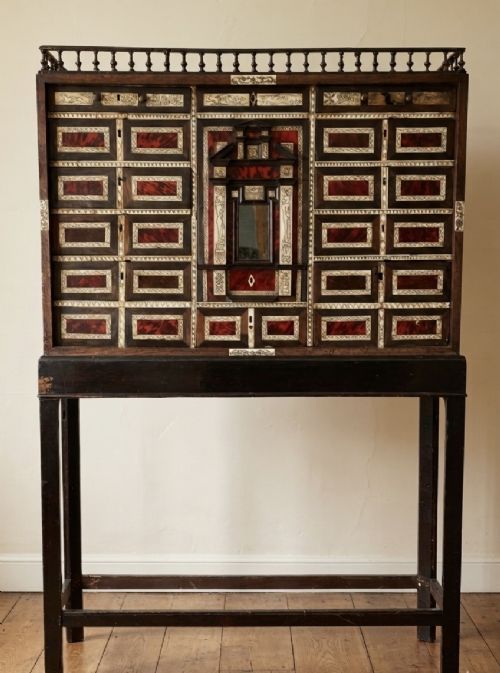
A 17th century inlaid chest encompasses various forms such as robust oak coffers, multithemed mule chests, and highly figured walnut chests of drawers built during the Jacobean, Charles II, and William and Mary periods. The examples on this page range from plain panelled trunks with surface enrichment to elaborate cabinets on stands decorated with marquetry.
Buyers seeking this phrase frequently encounter oak and walnut carcases featuring contrasting wood insertions, geometric panelling, and lid mechanisms suited for secure storage. Continental pieces bring contrasting woods and exotic veneers into the domestic interior, reflecting the international trade of the baroque era.
Materials and construction methods
Cabinetmakers relied on native timbers like oak and fruitwood for structural stability, applying delicate veneers of walnut, olive, and kingwood to principal display surfaces. Marquetry patterns utilised boxwood, bone, and pewter inserted into carved recesses to create sharp botanical and geometric contrasts.
Joinery methods combined traditional pegged mortise and tenon frames for heavy coffers with fine dovetailing and cross-grain mouldings for later drawer carcases. Surface decoration often involved oyster cutting, where small branch sections were sliced to reveal concentric rings across the entire drawer front.
Mule chests earned their curious name because they were hybrids - part chest, part drawer - just as a mule combines two different animals.
Judging the standard of execution
Quality rests upon the precision of the timber matching and the complexity of the inlay work, where crisp floral marquetry or tightly aligned seaweed patterns denote skilled workshop production. Simpler oak coffers depend on deep relief carving and structural integrity rather than decorative veneer work.
The integration of secondary timbers inside drawers and the survival of original brass drop handles and escutcheons separate standard vernacular furniture from pieces commissioned for high-status residences.
The 17th Century Inlaid Chest Glossary
- Marquetry inlay
- A decorative technique where thin veneers of various woods are arranged in pictorial patterns before being glued to a carcase. It often depicts floral sprays or elaborate arabesques.
- Oyster veneering
- The practice of slicing small branches crosswise to produce circular or oval wooden discs that display concentric growth rings. These discs were laid tightly together across drawer fronts during the seventeenth century.
- Mule chest
- A storage trunk fitted with one or two drawers at the base, bridging the gap between a standard coffer and a full chest of drawers. They frequently include inlaid panels on the front frieze.
- Cabinet on stand
- A raised storage unit featuring doors that open to reveal internal compartments, supported by an independent timber framework. These pieces often exhibit dense parquetry and fine metal mounts.
- Coffer
- A heavy wooden storage box with a hinged lid, constructed primarily from solid oak. Many examples feature carved arcading and linear inlay along the front panels.
17th Century Inlaid Chest: Frequently Asked Questions
What is a mule chest?
A mule chest is a storage trunk that incorporates one or more drawers beneath the main internal compartment. This design evolved from the traditional coffer to provide easier access to smaller garments.
Craftsmen built these pieces from sturdy oak or walnut, frequently adding surface inlay and panel carvings to the exterior facade.
How do I care for oyster veneer?
Oyster veneer requires stable indoor humidity and protection from direct sunlight to prevent the small circular wood sections from lifting. Regular dusting with a dry cloth keeps the polished surface preserved without moisture damage.
Avoid placing these delicate timber items near heating vents or damp exterior walls.
What defines William and Mary style?
The William and Mary style spans the late seventeenth century, bringing Dutch influences, intricate marquetry, and elevated stands to British cabinet making. Furniture from this period emphasises figured walnut veneers and geometric stringing.
Pieces often feature elaborate seaweed marquetry and turned supports rather than heavy solid oak panels.
Where were these chests used?
These pieces served practical storage functions in bedchambers, hallways, and formal reception rooms of substantial seventeenth-century homes. They held textiles, valuables, and household documents securely under lock and key.
The robust construction allowed them to withstand daily domestic use while displaying the owner's status.