



Marquetry Inlaid Blanket Box
These marquetry inlaid blanket box examples are sturdy storage chests embellished with intricate wood patterns that anchor a room with centuries of craft.
Marquetry Inlaid Blanket Box
A marquetry inlaid blanket box is a capacious wooden chest designed for household storage, appearing across multiple eras from the sixteenth century through the Victorian period. These pieces function primarily as practical receptacles for textiles and valuables while serving as decorative focal points within domestic interiors.
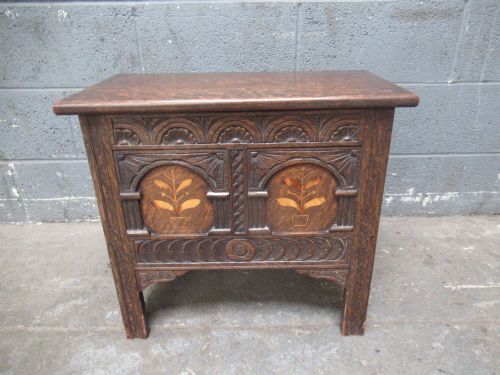
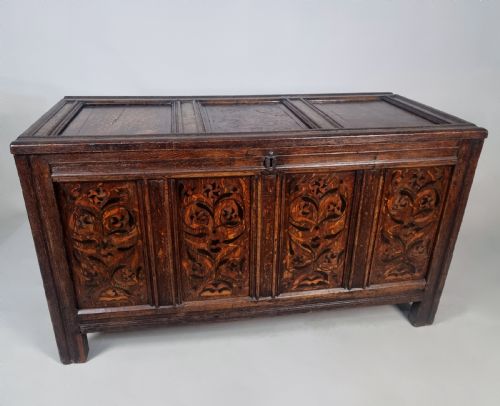
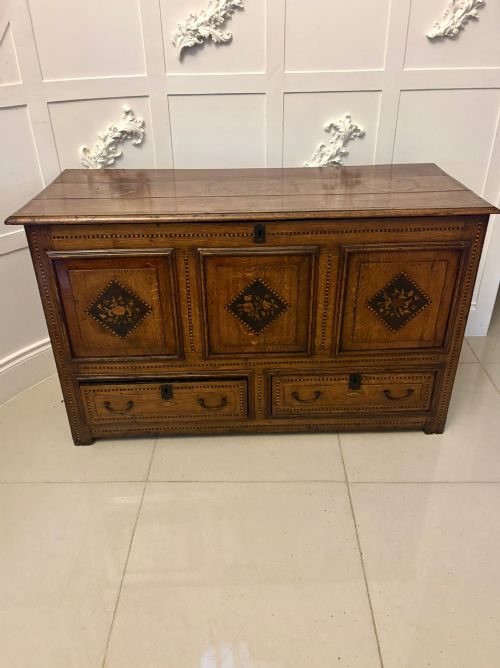
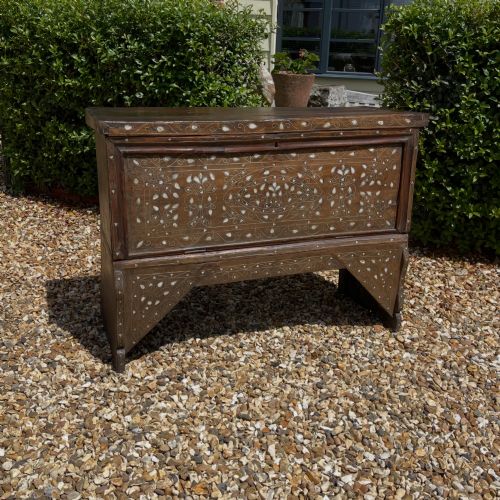
The selection here encompasses robust oak mule chests, arcaded coffers, and continental walnut dome trunks, alongside regional Welsh pieces and Syrian trunks. Buyers frequently encounter seventeenth-century oak examples alongside eighteenth-century Georgian items and nineteenth-century interpretations.
Forms range from large storage trunks and fitted cabinet makers' boxes to miniature Welsh boxes, demonstrating the broad utility of these vessels. Each object reflects the prevailing styles of its origin, spanning Jacobean, Tudor, Elizabethan Revival, and English country house aesthetics.
Materials and construction
These chests rely primarily on sturdy timbers such as oak, walnut, and fruitwood, providing a durable structural shell for domestic use. Iron and brass hardware, including hinges, locks, and handles, secure the lids and compartments while adding functional contrast to the timber.
Surface decoration utilises marquetry inlay, wood inlay, and bone details, creating contrasting pictorial or geometric patterns across the exterior. Artisans built these boxes using traditional joinery, often incorporating fitted interiors within specific tool trunks and mule chests.
Marquetry Inlaid Blanket Box Retail Price Guide 2026
Typical asking prices for marquetry inlaid blanket box among the pieces listed under this phrase on Sellingantiques today, from the lower quarter to the upper quarter. They describe what is for sale here now, not the wider market.
The listings span from the 16th century to the Victorian era, utilising oak, walnut, fruitwood, brass, and bone inlay across various regional styles.
Judging quality in marquetry chests
The sophistication of the marquetry inlay and wood inlay dictates the visual impact of the piece, distinguishing simple geometric arrangements from intricate pictorial compositions. Finer execution involves precise fitting of contrasting woods and bone, maintaining tight joints across the surfaces.
The choice of primary timber, whether figured walnut, dense oak, or select fruitwood, establishes the foundational weight and character of the trunk. Preservation of original brass and iron hardware, along with intact fitted interiors, elevates the integrity of the piece.
The Marquetry Inlaid Blanket Box Glossary
- Marquetry inlay
- A decorative technique applying pieces of veneer to a structural panel to form elaborate patterns or pictures. This method creates detailed pictorial surfaces on the exterior of the chest.
- Cofer
- An archaic spelling for coffer, denoting a strongbox or chest used for storing valuables and household goods. These heavy wooden boxes often feature hinged lids and sturdy iron fastenings.
- Mule chest
- A traditional storage chest featuring one or more drawers at the base beneath a primary compartment. This form bridges the evolution between simple blanket boxes and modern drawer chests.
- Arcaded coffer
- A chest adorned with carved or inlaid arches along the front panel, reflecting architectural motifs. This design is frequently observed on seventeenth-century oak pieces.
- Welsh vernacular
- A regional style of furniture making characterised by local materials and traditional construction methods without high court influence. These pieces often exhibit straightforward utility paired with characteristic local decorative touches.
Marquetry Inlaid Blanket Box: Frequently Asked Questions
What is a marquetry inlaid blanket box?
A marquetry inlaid blanket box is a traditional wooden storage chest decorated with intricate patterns of contrasting wood veneers.
These pieces were historically used to store household textiles, clothing, and valuables, combining practical utility with decorative craftsmanship.
How do I date a wooden coffer?
Dating relies on observing the primary timber used, the style of the joinery, and the specific decorative motifs applied to the surface.
Earlier pieces from the sixteenth and seventeenth centuries typically feature solid oak with arcaded panels, while later Victorian and Georgian examples incorporate walnut, fruitwood, and distinct regional characteristics.
Where should I place a trunk at home?
These chests function effectively as functional storage at the foot of a bed or as a coffee table in a living space.
Their robust construction allows them to support items on top while safely concealing blankets or household items within the main compartment.
What is the difference between a coffer and a mule chest?
A coffer is a deep storage chest accessed exclusively through a hinged lid at the top.
A mule chest incorporates one or more drawers beneath the primary storage compartment, offering easier access to smaller items without disturbing the top surface.