



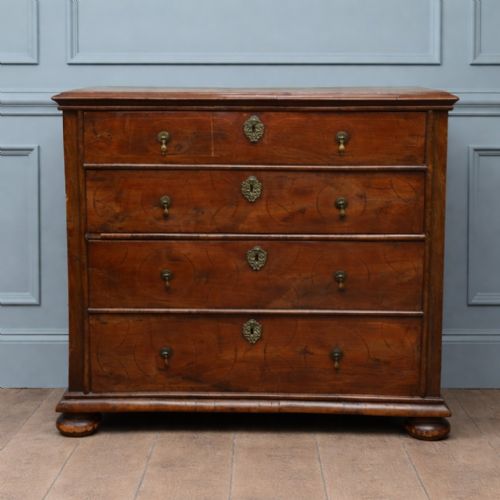


17th Century Inlaid Cabinet
A 17th century inlaid cabinet offers intricate marquetry and rich timber surfaces that anchor a room with historic presence.
17th Century Inlaid Cabinet
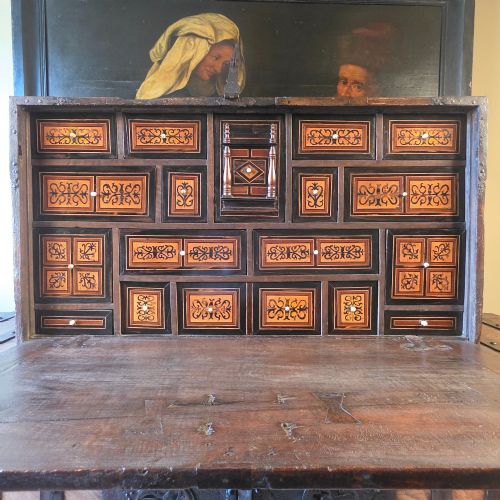
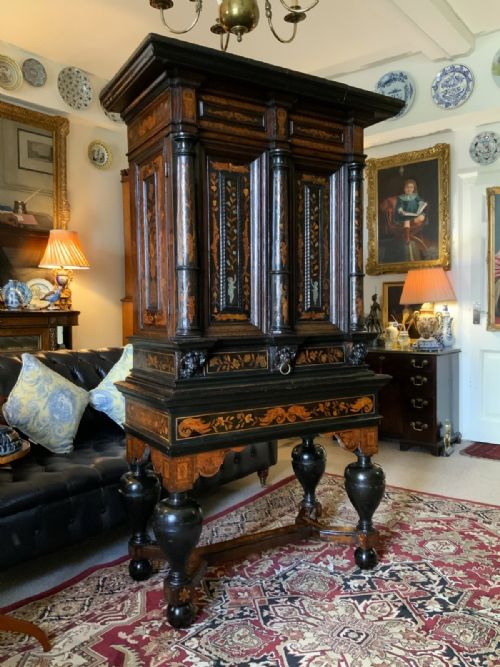
A 17th century inlaid cabinet brings together architectural forms and complex surface decoration executed in contrasting timbers. These pieces range from substantial cabinets on stands to compact table cabinets and chests of drawers designed to hold precious objects and documents.
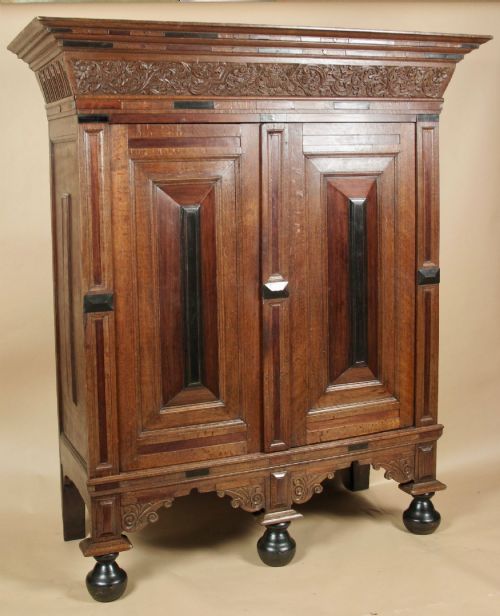
The versions most frequently met on this page include walnut and oak carcases embellished with floral marquetry, seaweed patterns, or geometric oyster veneers. Regional variations span English William and Mary pieces, Dutch baroque designs, and Flemish or German works.
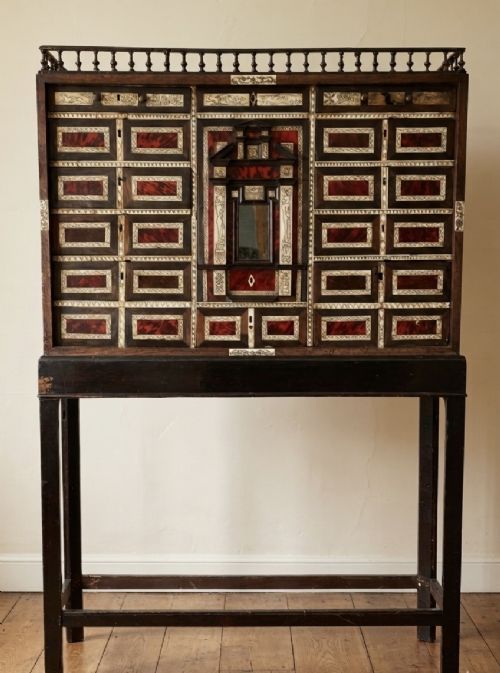
Stands form an integral part of many larger examples, lifting the main compartment on turned legs linked by stretchers. Smaller table cabinets provide portable storage with numerous internal drawers hidden behind a central fall-front or doors.
Materials and Construction
Carcase construction relies on solid oak and walnut, providing a sturdy framework for delicate surface treatments. Cabinetmakers sliced choice timbers into thin veneers to create geometric patterns and intricate floral designs across the exterior.
Inlay work incorporates fruitwood, boxwood, ebony, and kingwood, alongside bone, ivory, tortoiseshell, and pewter. These contrasting materials are meticulously fitted into recessed channels within the primary wood to form elaborate pictorial or abstract motifs.
The inventory records cabinet forms spanning table units, chests of drawers, and large cabinets raised on stands.
Distinctions in Quality
The architectural integrity of the stand and the proportion of the mouldings dictate the visual success of the piece. Finer examples retain their original brass hardware, internal drawer configurations, and harmonious patination across all surfaces.
The 17th Century Inlaid Cabinet Glossary
- Marquetry
- Decorative veneer work arranged in pictorial or floral patterns across a wooden surface. Craftsmen cut various coloured woods and organic materials together to form seamless images.
- Oyster veneer
- Circular cross-sections of branch wood sliced to reveal concentric growth rings resembling oyster shells. This technique gained popularity during the late seventeenth century.
- Cabinet on stand
- A primary storage chest raised upon an integrated supporting frame with legs and stretchers. This form elevates the decorative carcase to a comfortable viewing height.
- Parquetry
- Geometric mosaic woodwork formed by fitting small wood blocks together in repeating patterns. It creates a durable and visually striking surface for tabletops and drawer fronts.
- Table cabinet
- A portable storage box designed to sit on a desk or table, often containing multiple small internal drawers. These pieces served to secure letters, currency, and valuables.
17th Century Inlaid Cabinet: Frequently Asked Questions
How do I care for a seventeenth century cabinet?
Keep these pieces away from direct sunlight and heat sources to prevent the delicate veneers and bone inlay from drying out and lifting. Regular dusting with a dry, soft cloth preserves the historic wax polish.
Avoid using modern liquid polishes or silicone sprays, as they penetrate open grain and soften old adhesives. Gentle application of traditional beeswax maintains the lustre of the walnut and oak timbers.
Where were these cabinets originally made?
Production spanned workshops across England, the Netherlands, Flanders, Germany, Italy, and Spain. Each region developed distinct stylistic preferences, such as floral marquetry in England and tortoiseshell embellishment in Antwerp.
Trade routes and the movement of skilled artisans allowed decorative techniques to spread across European centres. Flemish and Dutch makers heavily influenced the architectural styles seen in British furniture of the period.
What is the difference between a cabinet on stand and a table cabinet?
A cabinet on stand is a large, heavy piece of furniture that stands directly on the floor via its own supporting base. These units often feature extensive cupboard space or banks of drawers elevated on turned legs.
Table cabinets are much smaller and were built to rest upon tables, chests, or desks. Despite their modest scale, they frequently house complex arrangements of hidden compartments behind a primary door or fall-front.
What woods were commonly used?
Oak and walnut formed the structural carcases and primary visible surfaces for the majority of these pieces. Cabinetmakers selected these native hardwoods for their strength and stability.
Exotic and contrasting woods such as ebony, kingwood, fruitwood, and boxwood were reserved for fine inlay work. Bone, ivory, and tortoiseshell further accented the decorative panels.