




A 2026 Guide by Sellingantiques

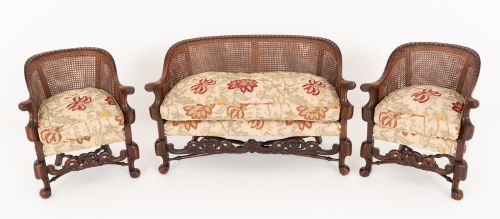
Moroccan 3 Piece Sofa & Armchairs Suite, 1920
Priced at £2,950 from LTANTIQUES.CO.UK
Originating as an extension of the upholstered armchair in the late seventeenth century.
Georgian households kept these large seats pushed against the walls until guests arrived.
Look at the explosion of shapes during the mid-nineteenth century, when coiled springs changed how seating was made.
The antique sofa eventually moved toward the centre of the room to encourage conversation.
Thomas Chippendale supplied large upholstered suites to aristocratic houses during the mid-eighteenth century.
Howard and Sons dominated the later nineteenth-century market with deep-seated designs and patented spring construction.
The Lancaster firm of Gillows produced mahogany frames of a high standard throughout the Georgian and Regency periods.
The 2026 retail price guide for Antique Sofas is drawn from a proprietary archive of over 1.1 million retail prices indexed by Sellingantiques since 2003. This guide relies exclusively on their own internal data; no external sources or auction records are used.
Analysing nearly 25 years of UK antique market history alongside current retail values, the data indicates that typical UK retail prices for Antique Sofas range between £800 and £3,900. Entry-level prices generally fall under £800 and premium examples upwards of £3,900.
Turned or carved front legs usually terminate in brass castors to help staff move the heavy frames across carpets.
Notice the distinct humpback or camelback lines on eighteenth-century frames.
Scroll arms frequently feature exposed wooden facings carved with classical motifs.
Early makers relied on heavy mortise and tenon joints pegged with wooden dowels to secure the deep frames.
The introduction of heavy-gauge steel coil springs allowed seats to become much deeper and softer.
Check the buttoning technique which kept loose fillings securely in place across broad backrests.
"Some regional designs feature a removable drop-in seat pad that made changing the fabric much faster."
"Strip an antique sofa down to the bare wood and you'll find complex geometry built into the hidden framework."
"Many early Victorian examples came with matching bolsters meant to double up as daybeds for afternoon rests."
Based on almost 25 years of Sellingantiques UK antique market data, Antique Sofas appeared 14821 times (out of 1,100,000 antiques) which gives it a rarity score of 5/100.
This score measures scarcity within the Sellingantiques archive only and is not a survey of the entire antiques market, so these statistics may not be indicative of the general availability of Antique Sofas elsewhere.
You should gently vacuum the fabric using a soft brush attachment to remove surface dust. Keep the suction low to avoid pulling at the weave or lifting loose threads.
For stubborn marks on an antique sofa, contact a specialist rather than using chemical spot cleaners. Modern sprays often leave a water ring or bleach out old vegetable dyes.
A skilled upholsterer can strip the current fabric and recover the frame to suit your taste. The traditional foundations of horsehair and webbing can normally be saved or rebuilt.
Make sure they don't use foam inserts if the original internal structure survives. Modern synthetic materials will alter the profile and ruin the historic lines of the piece.
It describes a specific profile where the top rail rises into a distinct curve in the centre of the backrest.
You'll often see this hump shape on late eighteenth-century frames.
Most early frames feature fixed legs turned directly from the same single block of timber as the main uprights. You can't remove them without sawing through the frame.
Later Victorian pieces sometimes have screw-in legs or large castors that unscrew. Always measure your doorframes and turning circles before committing to a large seat.
Please note: This Antique Sofas guide and its associated pricing data are provided for general informational purposes only. It does not constitute formal financial, investment, or appraisal advice and should not be relied upon as the sole basis for any commercial activity, purchasing, or sales decisions. Sellingantiques.co.uk accepts no liability for any actions taken in reliance on this information. Always consult with a qualified professional or independent appraiser.
