

A 2026 Guide by Sellingantiques
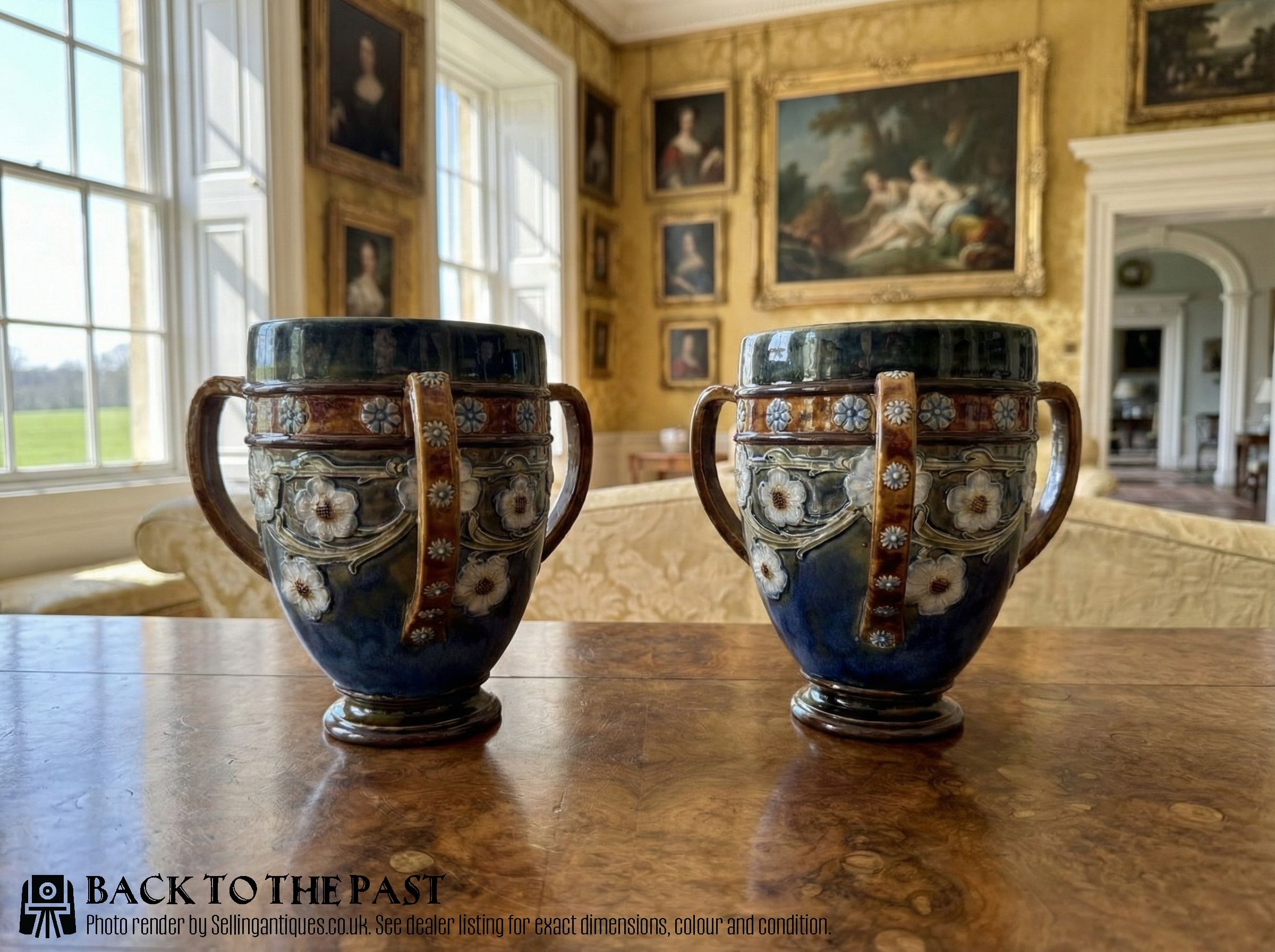
Fantastic Quality Pair of Antique Royal Doulton Loving Cups, 1900
Priced at £895 from Unique Antiques by Emma Jade
Production of Antique Doulton Cups shifted as the factory expanded from industrial pipes to domestic wares.
Heavy stoneware drinking mugs dominated the early output at Lambeth.
Finer porcelain tea wares emerging later from the Burslem works to compete with Staffordshire potteries.
Check the backstamp to track the timeline from early Doulton to Royal Doulton.
Some early examples bear marks from the art pottery studio spanning the late nineteenth century.
Hannah Barlow incised animal designs directly into the wet clay.
Raised beads and scrolling rosettes often denote early work by George Tinworth.
Trace the influence of Charles Noke, who directed the Burslem studio and developed experimental glazes for exhibition pieces.
The 2026 retail price guide for Antique Doulton Cups is drawn from a proprietary archive of over 1.1 million retail prices indexed by Sellingantiques since 2003. This guide relies exclusively on their own internal data; no external sources or auction records are used.
Analysing nearly 25 years of UK antique market history alongside current retail values, the data indicates that typical UK retail prices for Antique Doulton Cups range between £200 and £700. Entry-level prices generally fall under £200 and premium examples upwards of £700.
Applied sprigs feature heavily on Lambeth stoneware Antique Doulton Cups.
Hand-painted botanical or pastoral scenes decorating the finer Burslem pieces often cover the entire outer surface.
Observe the detailed transfer-printed borders outlining the rims and framing the central patterns.
Wheel throwing shaped the early Lambeth stoneware mugs by hand.
Plaster moulds allowing the mass production of thin bone china forms with consistent shapes.
Count the enamel colours, as each distinct hue required a separate trip to the muffle kiln to set.
"The factory often employed local art students to decorate early studio pieces."
"Many base marks include small painters' initials identifying the specific decorator who finished the piece."
"Search for special commission cups fired with custom crests for specific steamship lines and luxury hotels."
Based on almost 25 years of Sellingantiques UK antique market data, Antique Doulton Cups appeared 54 times (out of 1,100,000 antiques) which gives it a rarity score of 99/100.
This score measures scarcity within the Sellingantiques archive only and is not a survey of the entire antiques market, so these statistics may not be indicative of the general availability of Antique Doulton Cups elsewhere.
Hand wash them in warm soapy water using a soft cloth. Never put antique bone china or stoneware in a dishwasher. Harsh detergents and high heat degrade the glaze and strip the gilding.
Avoid soaking pieces that have unglazed foot rims or existing glaze crazing. Water seeps into the porous ceramic body and causes staining from the inside out.
Factory marks often include painted or impressed pattern numbers. These correspond to pattern books kept by the studio to ensure consistency across different batches.
Sometimes you'll find a registration number. This relates to the year the Patent Office registered the specific shape or pattern.
A hairline crack compromises the structural integrity of a ceramic cup. Sudden temperature changes cause the material to expand. This often forces existing cracks to spread further down the body.
It is safer to keep damaged pieces for display rather than active use. Warming the cup gradually with warm tap water before adding boiling liquid reduces the thermal shock.
That rough texture is known as a leather finish or a stippled ground. Decorators pressed tools or stiff brushes into the damp clay to create a contrasting background for smooth applied decorations.
The smooth upper section provided a comfortable surface for drinking. Glaze pools differently in the textured areas, adding variation to the fired finish.
Please note: This Antique Doulton Cups guide and its associated pricing data are provided for general informational purposes only. It does not constitute formal financial, investment, or appraisal advice and should not be relied upon as the sole basis for any commercial activity, purchasing, or sales decisions. Sellingantiques.co.uk accepts no liability for any actions taken in reliance on this information. Always consult with a qualified professional or independent appraiser.
