







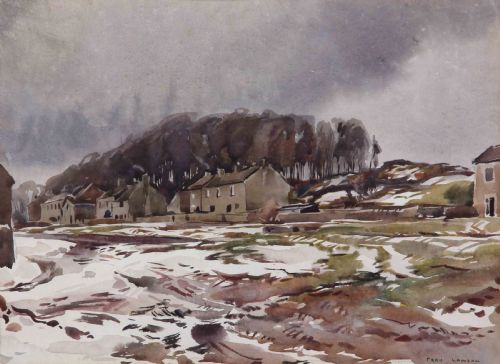
Yorkshire Winter Landscape Art
Yorkshire winter landscape art captures cold northern dales in oil and watercolour, bringing atmospheric frost and historic snow scenes directly onto your wall.
Yorkshire Winter Landscape Art
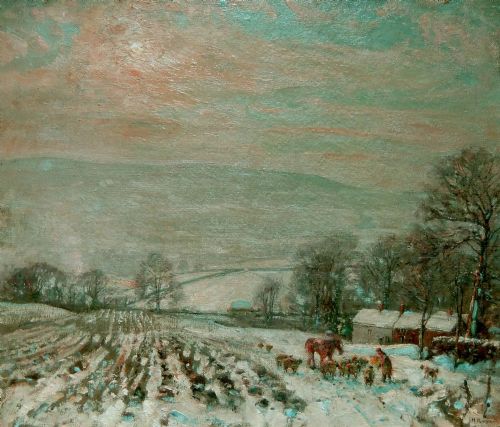
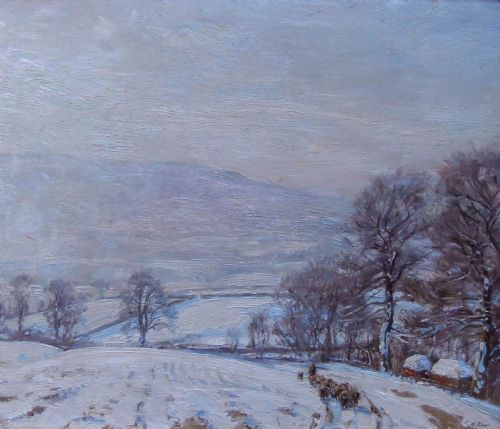
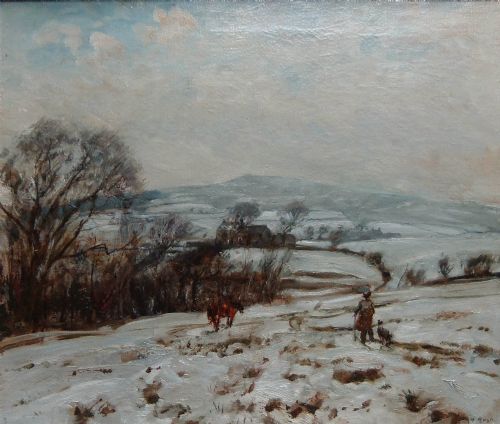
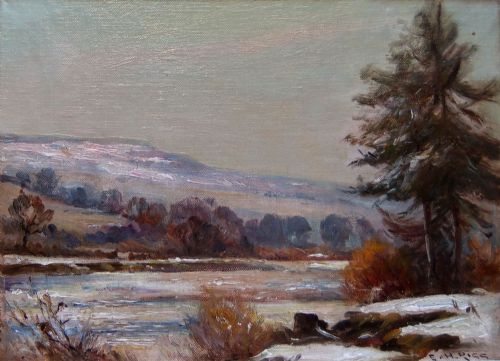
Yorkshire winter landscape art captures frozen dales, snowy vales and barren fells across the early to mid twentieth century. These works depict specific local scenes such as Wharfedale, Wensleydale, Swaledale, Farndale, Nesfield, Beamsley Beacon, East Keswick, Redmire and Castle Bolton. The selection on this page consists entirely of paintings, works on paper and original artwork rendered by British painters working within regional impressionist and modern traditions.
You are most likely to encounter oil paintings on canvas and wood alongside watercolours and pastels on paper, dating predominantly from the 1910s to the 1930s, with occasional examples from the 1960s. These pieces focus on rural northern subjects, recording farm buildings, snowbound valleys and bleak moorlands under winter skies. Each canvas or sheet acts as a direct record of northern topography during the twentieth century, combining topographical recognition with distinct painterly styles.
How they were made
These works rely on traditional painting media, principally oil paint applied to canvas or wood panels, alongside watercolour and pastel paints worked onto paper. Oil paint permits rich impasto and layered application, allowing artists to build textured representations of snow and frozen earth. Watercolour and pastel offer a more fluid or direct application, capturing the translucent light of brief winter days on paper supports.
The physical construction of these pieces involves stretched canvas over wooden frames, wooden support boards, and paper sheets protected by mounting and framing. Painters of the early twentieth century applied pigment using brushes and occasionally palette knives to build depth, form and atmospheric perspective. The combination of these materials determines the visual weight and textural quality of each landscape.
Several canvases record the exact moment sheep gathered for winter feeding near Nesfield.
What varies in quality
Quality in these Yorkshire winter landscapes rests upon the handling of light, atmospheric depth and the confidence of brushwork across the composition. A stronger piece demonstrates a sure command of tone, capturing the specific chill and muted colour palette of a northern snow scene without heavy-handed application. The integration of local topography with expressive mark-making distinguishes accomplished regional works from more routine topographical recordings.
Condition and preservation also differentiate examples, particularly regarding the stability of oil on canvas or wood, and the freedom from foxing or fading in watercolours on paper. The strength of the provenance, the clarity of the signature, and the degree to which the artist evokes the specific mood of locations like Wharfedale or Swaledale define the upper tier of the range.
Herbert Royle·Fred Lawson·Ernest Higgins Rigg·William Greaves·Angus Rands
The Yorkshire Winter Landscape Art Glossary
- Impasto
- Paint applied thickly to a canvas or panel, standing out from the surface so that the texture of the brush or palette knife remains visible. This technique is frequently utilised in oil paintings to give tactile weight to snow and winter foliage.
- Watercolour
- A painting method where fine pigment is suspended in a water-soluble binder, traditionally applied to paper supports. It relies on the white of the paper showing through transparent washes to create luminous effects.
- Pastel
- A dry painting medium consisting of powdered pigment and a binder, shaped into sticks for direct drawing on paper. It allows artists to blend soft atmospheric tones across winter skies and snowfields.
- British Impressionism
- A painting style influenced by French impressionist theories but adapted by British artists to capture local light, weather and landscape. It emphasises broken brushstrokes and plein-air observation.
- Provenance
- The documented history of ownership surrounding an artwork, establishing its authenticity and lineage. A clear record adds historical context to regional landscape paintings.
Yorkshire Winter Landscape Art: Frequently Asked Questions
What periods do these paintings cover?
The available selection spans the early to mid twentieth century, with concentrations in the 1910s, 1920s and 1930s, alongside mid century examples from the 1960s.
These dates align with the active periods of the regional British artists who painted the Yorkshire dales during winter.
Which materials were used for these artworks?
Painters employed oil paint on canvas and wood panels, alongside watercolour paint and pastel on paper supports. These traditional media were chosen for their ability to capture atmospheric northern light and snow effects.
Support types vary according to the medium, with oils utilising stretched canvas or wooden boards and works on paper utilising standard fine art sheets.
Where do the depicted locations lie?
The scenes focus on Yorkshire valleys, fells and villages, including Wharfedale, Wensleydale, Swaledale, Farndale, Nesfield, Beamsley Beacon, East Keswick, Redmire and Castle Bolton.
These northern locations provided artists with distinct topography characterised by stone walls, bare trees, rolling dales and winter snow.
How should I display a watercolour?
Watercolours on paper require framing behind glass with acid-free mounts to protect the pigments from atmospheric moisture and handling. Direct sunlight should be avoided to prevent fading of the delicate washes.
Positioning the work on an interior wall away from direct heat sources ensures the paper and pigments remain stable over time.
How do oil paintings differ from watercolours here?
Oil paintings utilise heavy pigments on canvas or wood, often exhibiting textured impasto that physically represents deep snow and frozen ground. Watercolours rely on thin washes across paper to capture the crisp, luminous light of cold winter days.
Both media approach northern landscapes differently, with oils offering robust surface depth and watercolours providing delicate atmospheric transparency.