






Snow Landscape Wall Art
These snow landscape wall art pieces capture winter scenes across various periods, offering buyers atmospheric oil paintings and watercolours that bring historic frost and snow into a room.
Snow Landscape Wall Art
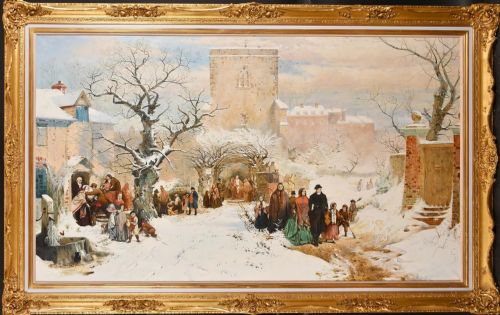
Buyers seeking snow landscape wall art encounter framed oil paintings on canvas, watercolours, and shadow box dioramas depicting winter settings. These works range from nineteenth-century Victorian sporting scenes and alpine views to twentieth-century impressionist village scenes and expressionist war-era canvases.
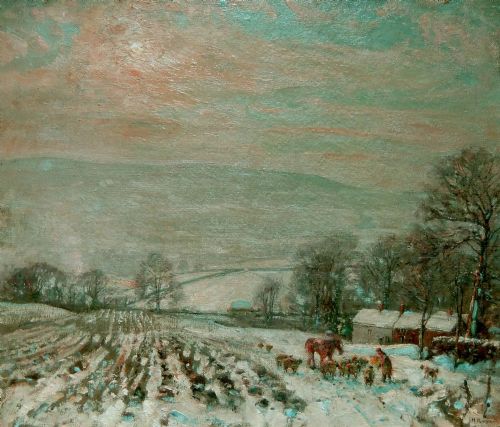
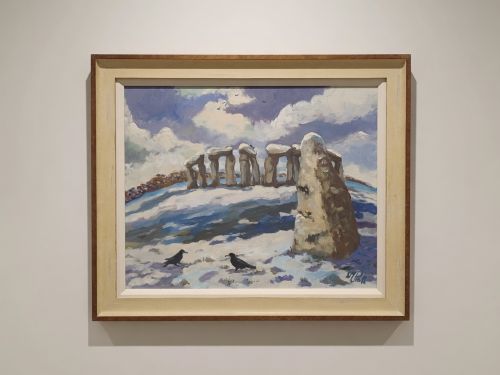
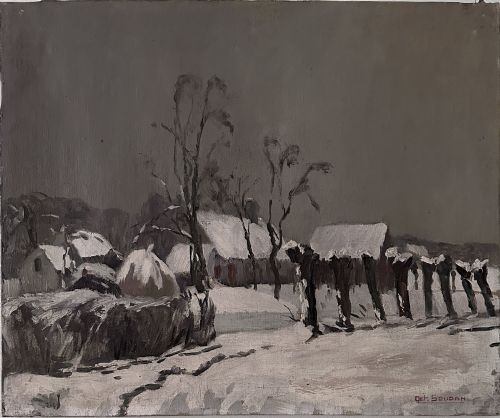
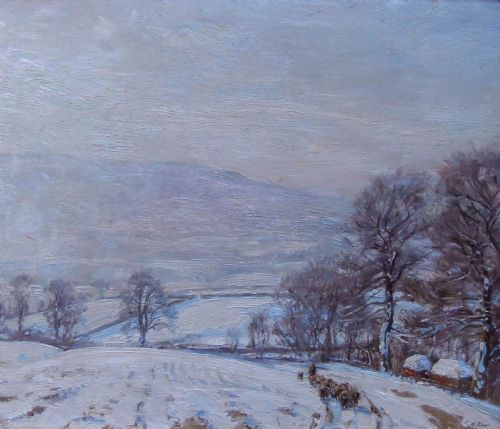
The selections on this page feature seasonal subjects such as winter feeding near rivers, snowy mountain lakes, hunting dogs in the snow, and figures collecting firewood near cottages. Dating from the nineteenth century through to later twentieth-century production, these items reflect diverse artistic interpretations of cold weather and frost.
Materials and technique
Artists rendering snow landscape wall art utilised oil paint on canvas or wood panels, alongside watercolour on paper for lighter compositions. These painted surfaces were frequently housed within wood frames, incorporating gesso or giltwood detailing to finish the piece.
Makers constructed three-dimensional shadow box dioramas using wood and mixed materials to build folk art depictions of winter townscapes. Technique varied from the expressive brushwork of German expressionism and British impressionism to the detailed realism of Victorian sporting and genre art.
Listings feature oil paint, canvas, wood frames, gesso, and giltwood across nineteenth and twentieth-century painting styles.
What varies in quality
Quality in snow landscape wall art rests upon the dexterity of the brushwork and the artist's ability to convey light and cold atmosphere across canvas or paper. Stronger examples display confident handling of winter light on snow-covered ground, while simpler pieces rely on standard folk art construction.
The preservation of the original paint layer and the associated frame, whether gesso, giltwood or plain wood, influences the integrity of the piece. Works attributed to named artists or specific regional movements exhibit a higher degree of compositional skill than unsigned or vernacular examples.
Herbert Royle·Lucy Pratt·Fannie Moody·Sydney Kendrick·John Ritchie·Eveline Lance·James Pollard
The Snow Landscape Wall Art Glossary
- Oil on Canvas
- Pigment mixed with drying oil applied to stretched woven fabric. This medium allows for thick impasto application, which artists often employed to render the heavy texture of snow.
- Gesso
- A paint mixture consisting of a binder mixed with chalk, gypsum, or pigment. It is applied to wooden frames to create a smooth surface for gilding.
- Giltwood
- Wood that has been treated with gold leaf or gold paint. Frames finished in this manner were used to elevate the status of nineteenth-century paintings.
- Shadow Box
- A glass-fronted recessed box that holds objects in three dimensions. Folk art examples use this format to construct miniature townscapes in the snow.
- Impressionism
- An art movement characterised by relatively small, thin, yet visible brush strokes and an emphasis on accurate depiction of light. British examples capture muted winter daylight.
Snow Landscape Wall Art: Frequently Asked Questions
What periods do these snow paintings cover?
The available selection spans from the nineteenth century through Edwardian and Victorian eras into twentieth-century works produced around the nineteen-forties and fifties, alongside items dated later than nineteen-sixty.
These dates derive directly from the recorded titles and historical attributions associated with each individual canvas or watercolour.
Are all these pieces painted in oil?
While oil on canvas and oil paint on wood represent the majority of the works, the selection also includes watercolour paintings on paper.
Additionally, folk art examples incorporate mixed materials within shadow box dioramas to construct three-dimensional winter scenes.
How were these winter scenes framed?
Many works are housed in traditional wood frames, with several incorporating gesso or giltwood decorative elements typical of nineteenth-century presentation.
These frames complement the seasonal subjects by enclosing alpine views, hunting dogs, and village cottages in winter snow.
Who painted these winter landscapes?
The works include pieces by named artists such as Herbert Royle, Lucy Pratt, Fannie Moody, Sydney Kendrick, John Ritchie, Eveline Lance, and James Pollard.
Other listings comprise unsigned folk art dioramas and nineteenth-century village scenes attributed to specific regional traditions.