




Yorkshire River Landscape Art
Yorkshire river landscape art captures the rural streams and abbeys of the county through nineteenth and early twentieth century brushwork.
Yorkshire River Landscape Art
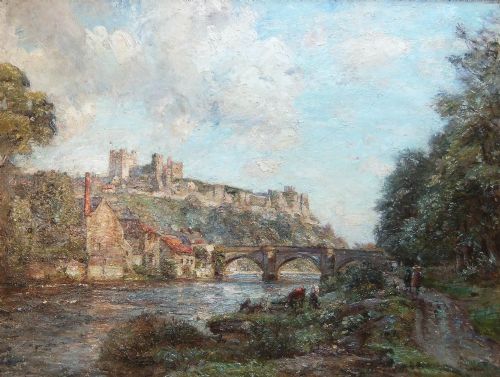
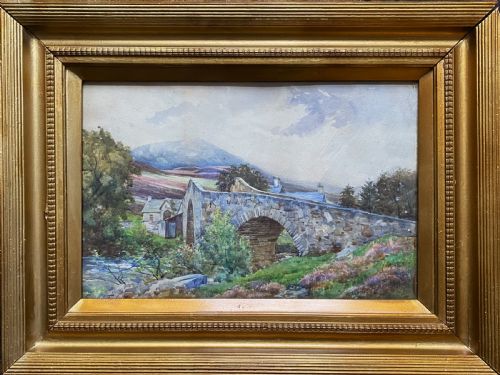
Yorkshire river landscape art comprises original paintings and watercolours depicting scenes along local waters such as the Wharfe, Swale, and Nidd. These works range from nineteenth century depictions to early twentieth century pieces influenced by British Impressionism and Victorian naturalism.
You will most frequently meet watercolours and oil paintings bearing specific local place names like Bolton Abbey, Richmond, and Wharfedale. The subjects focus on rural bridges, mills, and riverbanks painted by regional and visiting artists.
Materials and Techniques
Artists painted these river scenes using watercolour paint on paper or oil paint applied to canvas and wood panels. The choice of medium dictated the texture, with oils offering heavier brushwork and watercolours relying on transparent washes.
Works typically sit within traditional wood frames that complement the regional British fine art styles of the Georgian, Victorian, and Edwardian eras.
Materials documented in these river scenes include oil paint on canvas and wood, alongside watercolour paint on paper.
Factors That Distinguish Quality
Quality rests upon the confidence of the brushwork and the clarity of light and atmosphere captured by the painter. Stronger examples demonstrate a sure handling of water reflections and regional topography.
The reputation of the artist and the specific historical significance of the named Yorkshire location also influence the distinction between standard topographical views and accomplished fine art.
Herbert Royle·Alfred George Morgan·Arthur Reginald Smith·Owen Bowen·Florence Hess·William Joseph Boyes·William Mellor·Fred Stead·William Manners·Henry Barlow Carter·Frederick Williamson·William Bradley·Amos Green·Ernest Higgins Rigg·Fred Lawson·Walter John Bayes·Ernest Moore·John D Walker·Tom Dudley·T Watts·Bernard Walter Evans·Walter Meegan·Everett Watson Mellor·Joseph Newington Carter
The Yorkshire River Landscape Art Glossary
- Watercolour paint
- A medium consisting of pigment suspended in a water-based solution, applied to paper to create translucent washes.
- Oil painting
- The process of painting with pigments that are bound with a medium of drying oil, typically executed on canvas or wood.
- British Impressionism
- An art movement in late nineteenth and early twentieth century Britain that focused on loose brushwork and natural light.
- Victorian Naturalism
- An artistic approach emphasising detailed and realistic representation of the natural world without romantic idealisation.
Yorkshire River Landscape Art: Frequently Asked Questions
What periods do these paintings come from?
The works span from the nineteenth century through the early twentieth century, including Victorian, Edwardian, and Georgian periods.
Most pieces date between eighteen hundred and nineteen forty, reflecting shifts in British fine art styles.
How do I care for antique watercolours?
Watercolours are sensitive to light and require framing behind glass with acid-free mounts to prevent paper degradation.
Keep them away from direct sunlight and damp environments to preserve the pigments.
Are these paintings signed by the artists?
Many examples carry signatures or inscriptions naming the specific Yorkshire river or location depicted by the artist.
Signatures often appear in the lower corners of the canvas or paper.
Where were these river scenes painted?
The views concentrate on recognizable Yorkshire waterways and landmarks such as Wharfedale, Swaledale, Bolton Abbey, and Whitby.
Artists frequently recorded precise local mills, bridges, and falls across the county.