




Yorkshire Dales Landscape
When you search for a yorkshire dales landscape, you step directly into the sweeping limestone valleys, winding rivers and quiet stone villages of northern England.
Yorkshire Dales Landscape
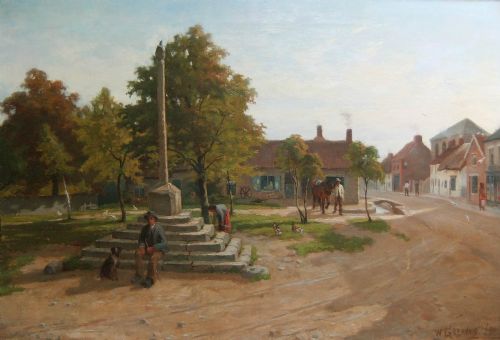
A yorkshire dales landscape captures the rugged topography, remote farmhouses and vast skies of the northern uplands through the eyes of artists working from the late Victorian era into the mid-twentieth century. The selection centres heavily on regional practitioners who walked these very dales, recording local landmarks like Bolton Castle, Wensleydale and Wharfedale across changing seasons.
Buyers encounter works spanning diverse movements, from traditional Victorian realism and Edwardian observations to British impressionism and mid-century modernism. Watercolours and ink drawings sit alongside substantial oil paintings on canvas, board and wood panel, reflecting how different hands chose to interpret the distinct northern light.
How They Were Made
Artists captured these northern scenes utilising traditional media including watercolour, ink and oil paint applied to paper, canvas, wood panels or board. Many pieces began as en plein air studies where painters faced the biting winds of Wharfedale or Swaledale, working quickly to map changing weather patterns and winter snow.
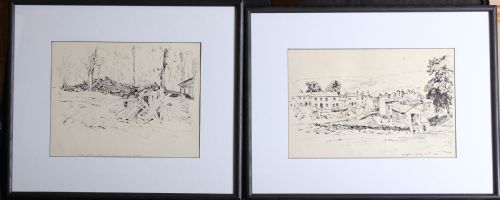
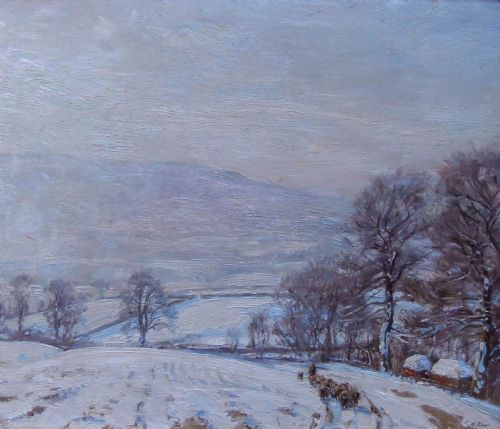
Watercolour works often rely on precise ink outlines washed with fluid pigments to define stone barns and steep gills, while oil paintings build up heavy impasto textures to represent heather moors, heavy timber and rough pastureland.
Listings feature works executed in oil paint, watercolour, ink and pencil across canvas, paper and board.
What Varies in Quality
Quality rests in the sureness of the draftsmanship and the artist's ability to render the specific geological character of limestone scars and river valleys without falling into generic formulas. Stronger examples demonstrate a confident handling of local atmosphere, capturing damp morning mists or sharp winter light with economy and purpose.
The distinction also lies in provenance and direct connection to the region, where works by established regional figures who immersed themselves in daily Dales life carry greater conviction than standard topographical exercises.
Fred Lawson·Ernest Higgins Rigg·Herbert Royle·Owen Bowen·Reginald Grange Brundrit·Arthur Reginald Smith
The Yorkshire Dales Landscape Glossary
- Ghyll
- A steep, narrow mountain valley or ravine typical of the northern landscape, frequently appearing in titles depicting rocky watercourses. It offers artists dramatic contrasts of shadow and cascading water.
- Impasto
- Paint laid on an area of the surface in very thick layers, usually thick enough that the brush or painting-knife strokes are visible. This technique brings tangible texture to oil paintings of winter snow or rough moorland.
- Plein air
- The act of painting outdoors, capturing subjects in direct natural light. This method defined much of the early twentieth-century work produced across the Yorkshire valleys.
- Watercolour
- A painting method in which the paints are made of pigments suspended in a water-based solution. Artists utilised this medium for swift, transparent washes on paper.
- British Impressionism
- A painting style developed in the late nineteenth and early twentieth centuries focusing on loose brushwork and natural lighting. Practitioners applied this approach to rural English subjects.
Yorkshire Dales Landscape: Frequently Asked Questions
What periods do these paintings cover?
The available works span from the late Victorian period through the Edwardian era, British Impressionism and mid-century modernism. Most pieces date between the late nineteenth century and the nineteen-sixties.
This broad timeline demonstrates how successive generations of regional painters returned to familiar valleys like Wensleydale and Swaledale with fresh stylistic interpretations.
Which materials were commonly used?
Artists recorded the northern terrain using watercolour, ink and oil paint. Support surfaces vary from traditional paper and canvas to wooden panels and artist boards.
Watercolours often feature delicate ink underdrawing, while oil paintings showcase heavier brushwork suited to capturing winter snow and rugged hillsides.
Where do these scenes take place?
The subjects focus strictly on northern topography, specifically identifying locations across the Yorkshire Dales such as Bolton Castle, Wharfedale, Wensleydale and Swaledale. Specific villages, bridges and waterfalls anchor the compositions in actual geography.
Local landmarks like Aysgarth Falls and individual stone barns recur frequently as artists returned to favoured viewpoints across the seasons.
How should I frame a vintage watercolour?
Works on paper require conservation mounting using acid-free materials to protect the delicate pigments and paper from degradation over time. Glazing with UV-filtering glass helps prevent fading from ambient light.
Keeping the paper separated from the glass surface prevents moisture damage and preserves the integrity of early twentieth-century drawings.