


Yorkshire Coastal Painting
When you search for a yorkshire coastal painting, you encounter maritime scenes and rugged shores captured by generations of regional artists.
Yorkshire Coastal Painting
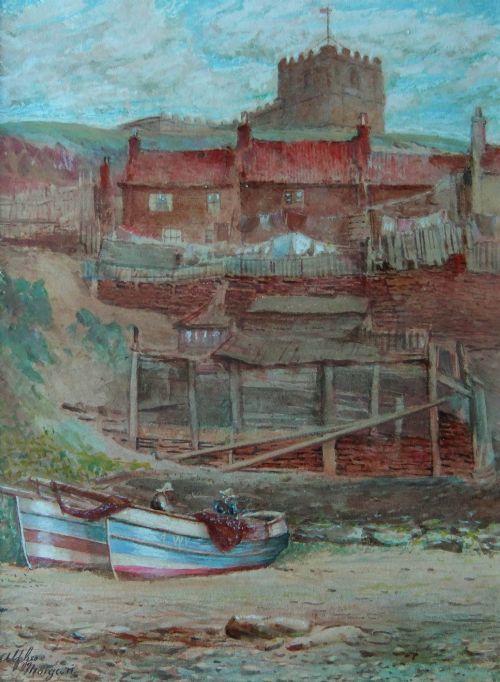
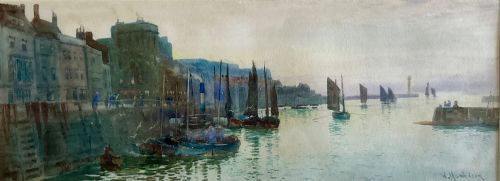
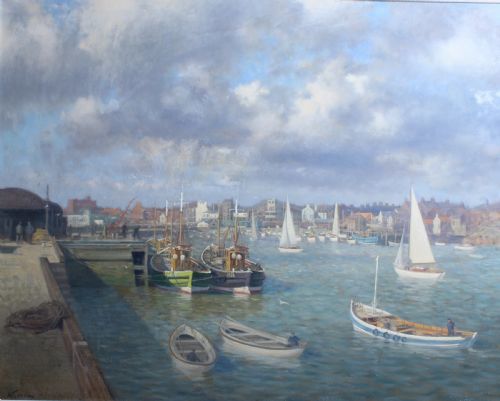
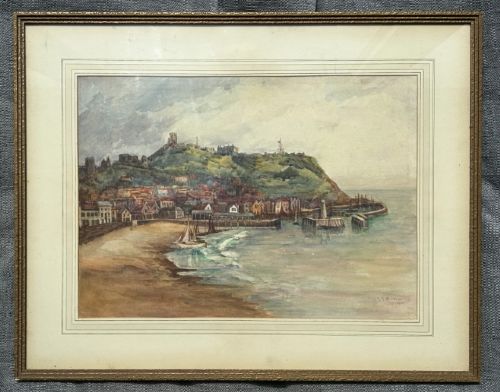
A yorkshire coastal painting captures recognisable landmarks like Whitby Harbour, Scarborough Bay, and the steep alleys of Staithes across various periods. These works record local maritime life, fishing fleets, and sweeping cliff views from the nineteenth century into the mid-twentieth century.
Watercolour paintings and oil paintings dominate the selection, translating the changing light of the North Sea onto paper and canvas. You will find townscapes, harbour scenes, and open coastal vistas created by artists working within British Impressionism and Victorian Realism.
Materials and methods
Artists relied upon watercolour pigment applied to paper to capture the translucent light and atmospheric conditions of the North Yorkshire coast. Others utilised oil paint on canvas or panel, building rich textures for heavier seas and overcast skies.
The physical support ranges from traditional stretched canvas and wooden panels to heavy watercolour paper, often framed by the distinct styles of their respective decades.
Several artists captured the specific toil of local flither pickers scavenging along the rocky Scarborough and Whitby foreshores.
Judging the works
The strength of a piece rests in the artist's handling of coastal light and the immediacy of their brushwork or wash. Works that successfully convey the atmosphere of the North Sea without overworking the detail tend to hold greater artistic weight.
Provenance and clear attribution to known regional painters elevate individual works, particularly when the specific harbour or stretch of cliff is rendered with topographical confidence.
Alfred G. Morgan·William Matthison·Walter Goodin·Arthur Tucker·Robert Leslie Howey·Tom Clough·James Watson·Florence Hess·George Hamilton Constantine·James Thomas Watts·Frederick William Booty·Kate E Booth·Frederick Williamson·Percy Brooke·Alfred Robert Quinton·William Kay Blacklock·Rowland Henry Hill·Harry Wanless·Thomas Clavering Alder·Joseph Newington Carter·William Moore Junior·Robert Farren·Walter Emsley·Frank Rousse·William Greaves
The Yorkshire Coastal Painting Glossary
- Coble
- A traditional open fishing boat native to the North East coast of England, featuring a high bow and flat bottom. These vessels frequently appear in regional marine paintings.
- Flither pickers
- Collectors of limpets and other small shellfish from the rocks, used chiefly for fishing bait. This traditional occupation is a characteristic subject in nineteenth-century coastal art.
- Watercolour pigment
- Finely ground colour particles mixed with a water-soluble binder, used to create transparent washes on paper. It remains the primary medium for many early twentieth-century British marine views.
- Impressionism
- An artistic approach focusing on accurate depiction of light in its changing qualities rather than minute detail. British interpretations of this style often soften the rugged Yorkshire landscape.
Yorkshire Coastal Painting: Frequently Asked Questions
What subjects appear most often?
Harbours, fishing vessels, and sweeping cliff views form the primary focus of these works. Locations such as Whitby, Scarborough, and Staithes recur frequently across the periods.
Artists also recorded local working life, including the gathering of seaweed and the collection of bait along the shore.
How do watercolours differ from oils here?
Watercolour paintings offer a lighter, more translucent interpretation of coastal mist and open skies. They rely on the white of the paper to generate luminosity.
Oil paintings utilise heavier pigment on canvas or panel, allowing artists to build richer textures for stormy seas and dark cliffs.
Which periods are represented?
The selection spans from the nineteenth century through the Victorian era and into the mid-twentieth century. Edwardian and interwar periods are particularly well represented.
Each era brings its own palette, moving from Victorian realism towards brighter interpretations influenced by British impressionism.
How should I display these paintings?
Works on paper require framing behind glass with conservation mount board to protect the pigment from ultraviolet light. Oil paintings on canvas benefit from stable indoor environments away from direct heat sources.
Grouping regional views together helps establish a cohesive historical display within a room.