





Yomut Woven Rug
When you search for a yomut woven rug, you are looking at tribal textiles made by Turkmen nomadic weavers in the Trans-Caspian steppes.
Yomut Woven Rug
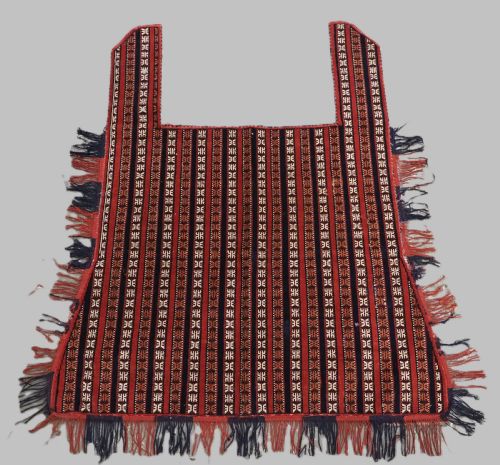
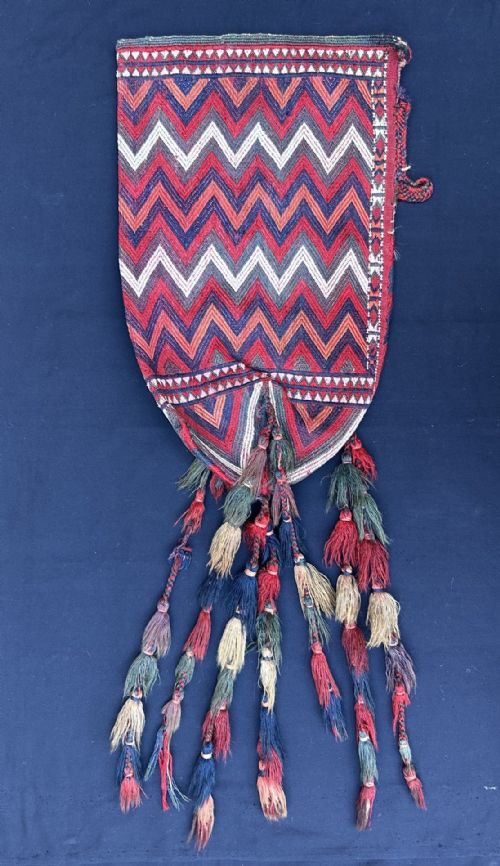
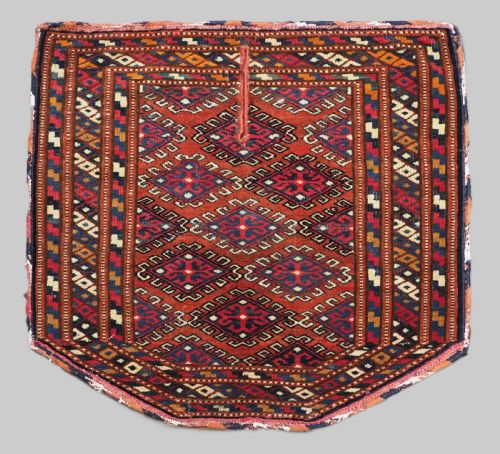
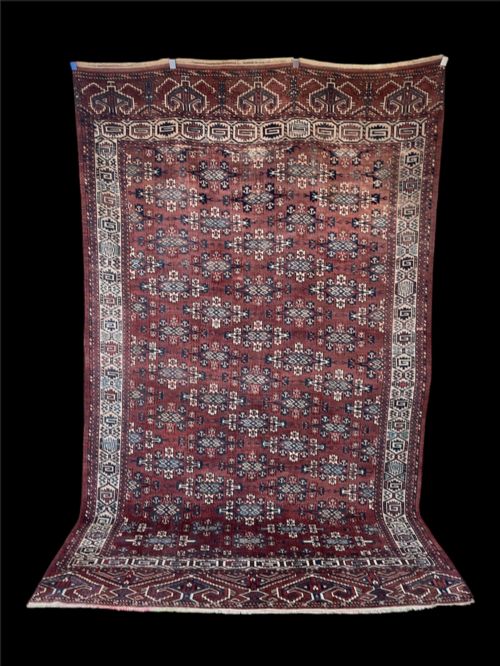
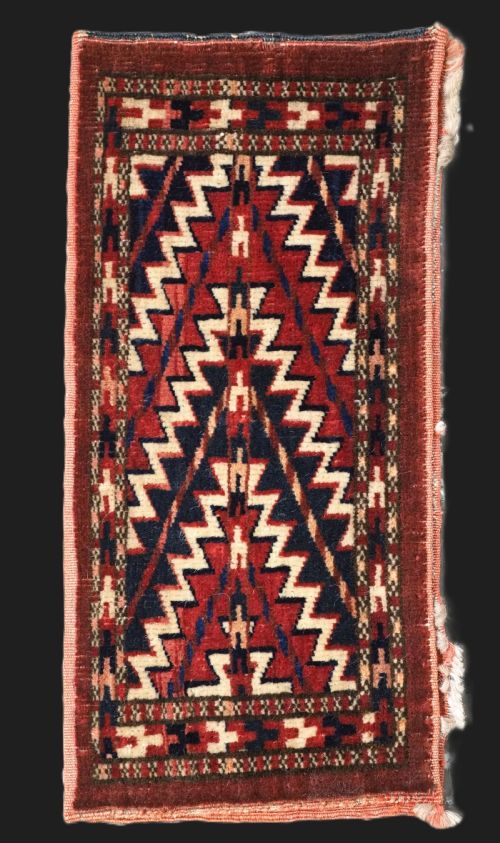
A yomut woven rug encompasses floor coverings, ceremonial horse covers, storage bags and tent-band components produced across the nineteenth and early twentieth centuries.
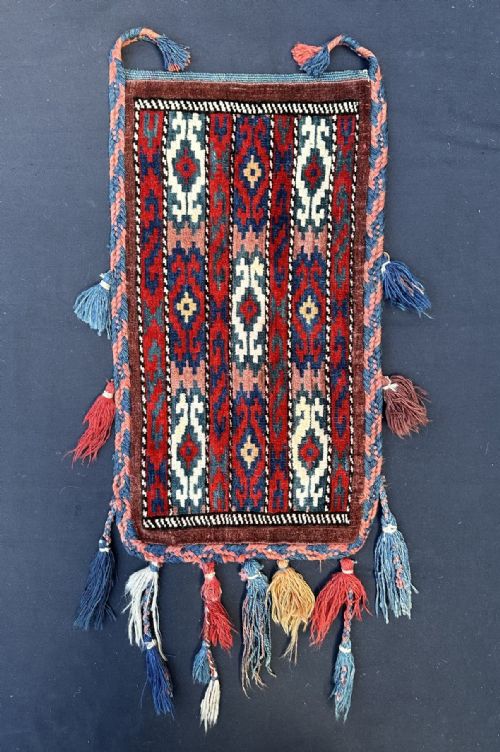
The most common examples encountered are functional household and tent items such as torbas, chuvals and spindle-bags, alongside main carpets.
These pieces originate from the tribal traditions of Central Asia and reflect the nomadic culture of the Trans-Caspian steppes.
How they were made
Weavers constructed these textiles using hand-spun wool and cotton foundations, dyed with natural colorants to create deep saturated tones.
Construction techniques include pile weaving, flatweave structure, banded soumak kilims and plain weave backs.
What varies in quality
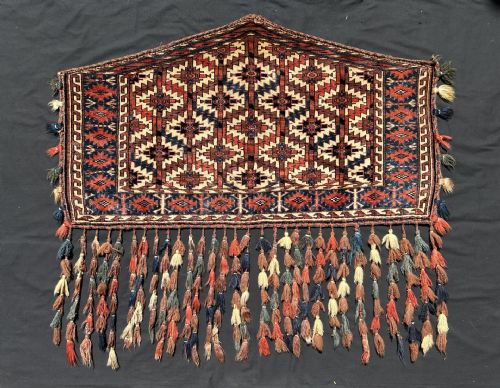
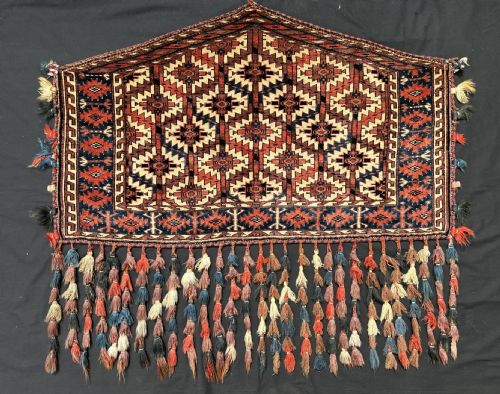
Differences in quality depend upon the fineness of the knotting, the precision of the tribal motifs such as the kepse and dyrnak guls, and the clarity of the natural dyes.
The survival of original elements like long kilim ends, plain weave backs and tassels distinguishes standard utility items from well-preserved ceremonial pieces.
The Yomut Woven Rug Glossary
- Gul
- A primary octagonal medallion or floral motif repeated across Turkmen carpets and bag faces. These geometric emblems often identify the specific tribe or clan.
- Torba
- A small horizontal wall-hanging storage bag used within the yurt. They frequently display intricate tribal designs and flatweave backs.
- Chuval
- A large storage sack made by nomadic weavers for household belongings. These pieces are often collected as wall art due to their generous format.
- Asmalyk
- A ceremonial pentagonal trapping placed on the flanks of a bride's camel during wedding processions. These scarce items represent peak tribal artistry.
- Soumak
- A wrapping technique used in flatweaves that creates a braided surface texture on the front and loose threads on the reverse. It provides structural durability without pile.
- Igsalyk
- A specialised spindle-bag designed to hold wool-spinning tools. They typically feature narrow proportions and plain weave backs.
Yomut Woven Rug: Frequently Asked Questions
What is a yomut woven rug?
These are nomadic tribal textiles created by the Yomut tribe of the Trans-Caspian steppes. They include large floor carpets and various functional bags.
Weavers utilised hand-spun wool and natural dyes to construct items for daily nomadic life and ceremonial occasions.
How were these bags used?
Nomadic families utilised these woven pieces inside tents for storing household possessions, bedding and spinning tools. Specific items held tent poles or served as horse covers.
Ceremonial examples were reserved for weddings and tribal rituals rather than daily domestic storage.
How do I identify a guls motif?
The guls are repeated octagonal medallions arranged across the field of the textile. Different tribal groups developed distinct geometric variations like the kepse and dyrnak designs.
Studying these specific repeated emblems helps determine the origin of the weaving.
Where should I place wall art?
Smaller bag faces, asmalyks and spindle-bags suit wall display because of their manageable dimensions and detailed geometric patterns. Hanging them relieves floor wear on delicate wool pile.
Ensure proper mounting support distributes the weight evenly across the upper edge of the textile.