





Yomut Tribal Rug Bag
These woven pieces are yomut tribal rug bag examples from Central Asian nomadic weavers, offering genuine character and historic textile artistry for your home.
Yomut Tribal Rug Bag
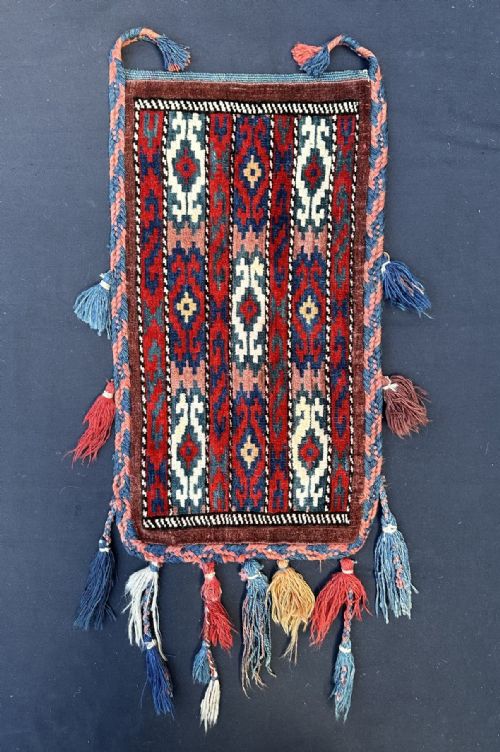
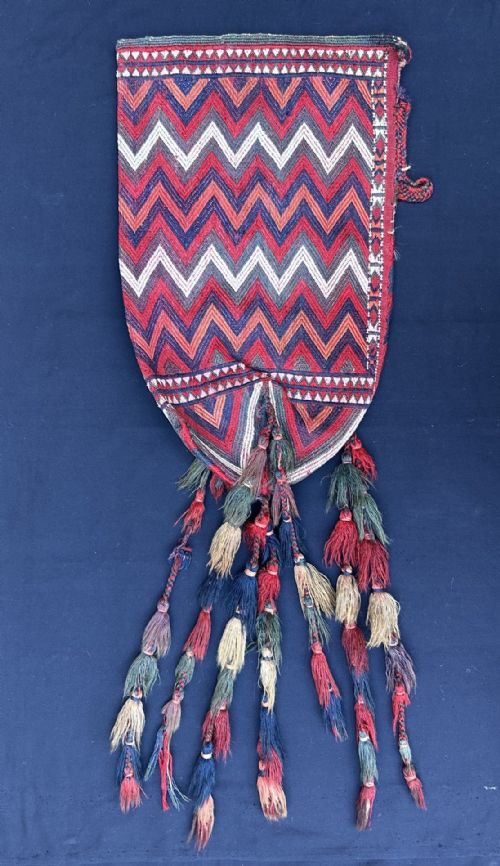
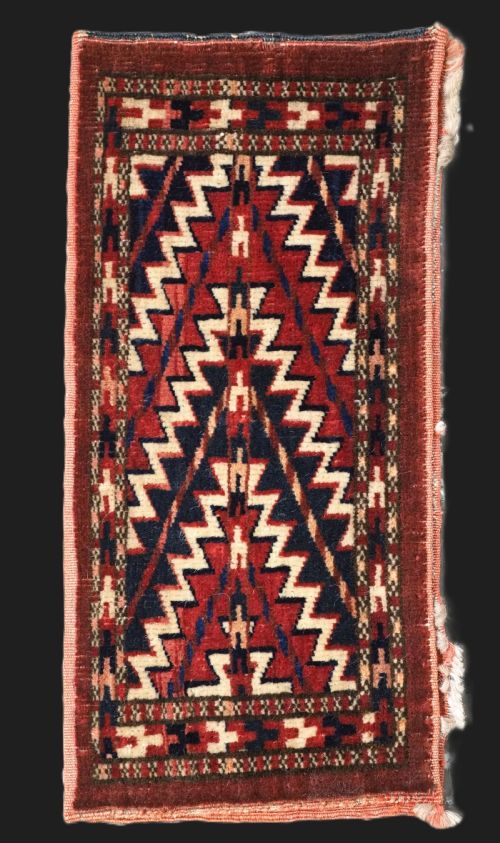
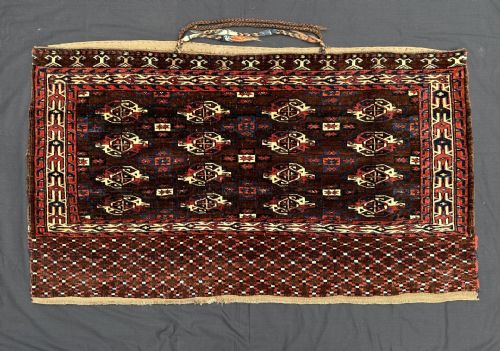
When you search for a yomut tribal rug bag, you encounter utilitarian nomadic weavings from the Trans-Caspian steppes produced during the nineteenth and early twentieth centuries. These items served functional roles in daily tribal life, constructed by Yomut weavers for storage inside tents.
The most frequent examples on this page comprise spindle bags, torbas, chuvals, and tent-pole bags known as uk bash or okbash. They display distinct tribal motifs such as the kepse gul, aishk gul, and banded flatweave designs originating from Turkmenistan.
Makers utilised traditional formats like bag faces with plain weave backs or complete utility sacks. Their forms reflect the nomadic lifestyle of Turkmen tribes across Central Asia.
Materials and construction
Weavers constructed each yomut tribal rug bag using hand-spun wool and cotton foundation threads. Natural dyes provided the deep polychrome palette seen across these nomadic textiles.
Techniques combine pile weaving with flatweave structures, incorporating dyed yarn to articulate precise geometric motifs. Many surviving pieces retain their original plain weave backs or complete structural integrity.
Every listed yomut tribal rug bag originates from Central Asia, with production dates spanning the nineteenth century into the early twentieth century.
Judging quality in tribal weavings
Quality rests in the precision of the knotting and the clarity of the primary gul motifs, such as kepse or aishk patterns. Tightly packed structures and saturated natural dyes elevate certain examples above simpler utility pieces.
The survival of complete backs, original plain weave sections, and structural integrity distinguish superior survivals. Finer pile density and balanced proportions separate utilitarian items from exceptional textile art.
The Yomut Tribal Rug Bag Glossary
- Torba
- A small storage bag produced by Turkmen tribes for domestic use inside the yurt. These rectangular hangings typically feature prominent gul patterns.
- Chuval
- A large storage sack utilised by nomadic families for bedding and household possessions. They frequently display multiple rows of primary guls.
- Gul
- A medallion motif repeated across Turkmen carpets and bags to denote tribal identity. Different clans employed distinct geometric variations.
- Uk bash
- A specialised tent-pole bag designed to cover the wooden struts of a yurt. They exhibit distinctive triangular or hood-like shapes.
- Kap
- A general term for a small Turkmen bag or pouch. These functioned as utility containers within nomadic dwellings.
Yomut Tribal Rug Bag: Frequently Asked Questions
What is a yomut tribal rug bag used for?
These textiles served practical storage functions within traditional nomadic tents across the Trans-Caspian steppes. Families used them to hold spindle wool, clothing, bedding, and tent poles.
Today, collectors mount these bag faces and complete sacks as wall art or display them within traditional interiors. Their rich geometric patterns translate well to contemporary decorative schemes.
How do I date an old tribal bag?
Dating relies upon analysing the wool quality, the chemical composition of the dyes, and the structural characteristics of the weave. Pieces on this page span the nineteenth and early twentieth centuries.
Nomadic items lack maker signatures, so period attribution stems from stylistic comparisons with known tribal weaving traditions. Earlier examples tend to display softer hand-spun wool and deeper natural palettes.
Where did these bags originate?
These pieces originate from the Trans-Caspian steppes of Turkmenistan in Central Asia. They were woven by Yomut tribal groups living a nomadic or semi-nomadic lifestyle.
The harsh desert and steppe environment influenced the durable materials and practical closed-form designs required for daily camp life.
How do I care for a textile bag?
Protect wool and cotton weavings from direct sunlight to prevent natural dye fading over time. Gentle vacuuming with a mesh screen safeguards the pile without pulling loose threads.
Avoid hanging heavy bags by isolated suspension points to prevent structural distortion along the foundation. Professional textile conservators should handle any deep cleaning requirements.
What is a kepse gul design?
The kepse gul is a stylised lattice or rhombus motif frequently woven by Yomut artisans. It forms the primary visual focus on many torba faces and storage sacks.
This geometric emblem represents traditional Turkmen iconography passed down through generations of tribal weavers. Its precise execution indicates the skill of the maker.